Education is changing rapidly across the world, and the teaching profession is evolving faster than many people expected. Technology, artificial intelligence, digital learning platforms, and modern curriculum reforms are transforming classrooms and redefining the role of the teacher.
In Kenya and many other countries implementing Competency-Based Education (CBE), teachers are no longer expected to be mere transmitters of content. They are now facilitators, mentors, innovators, researchers, and digital guides.
For young teachers, this reality carries a serious warning: adapt continuously or risk becoming professionally irrelevant.
Many young educators still believe that obtaining a diploma or degree is enough to sustain them throughout their careers. Unfortunately, modern education systems no longer reward certificates alone.
Schools and employers increasingly seek teachers who can integrate ICT into teaching, manage digital classrooms, design learner-centered lessons, analyze learner performance data, and guide students using practical and innovative teaching methods.
A teacher who cannot adapt to changing educational demands may slowly find themselves overtaken by colleagues who embrace continuous learning and professional development.
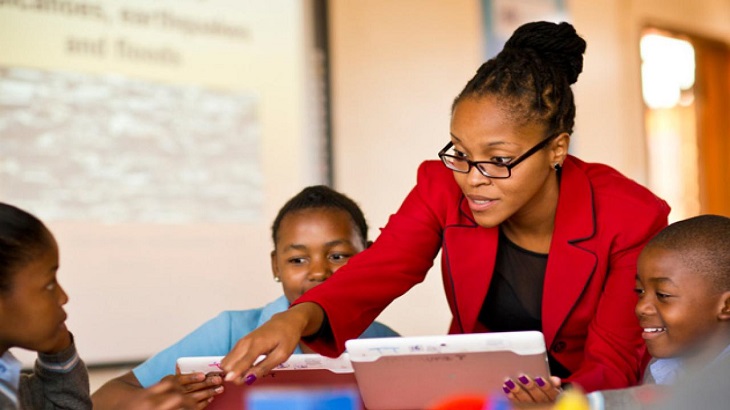
Technology has become deeply embedded in education. Smart boards, online learning systems, educational applications, virtual classrooms, and AI-assisted learning tools are increasingly becoming common even in rural schools.
ALSO READ:
Back-to-back school-term examinations poison the school atmosphere
Learners today are exposed to information through mobile phones, tablets, television, and the internet. They expect interactive, engaging, and technology-driven lessons rather than outdated lecture methods.
Teachers who resist digital transformation may struggle to remain effective in modern classrooms.
Artificial Intelligence is also reshaping the profession. AI tools can now generate lesson plans, assessments, presentations, summaries, and explanations instantly. This does not mean teachers will disappear, but it does mean teachers who add little value beyond what technology can already provide may face professional challenges in the future.
The teacher of tomorrow must therefore offer what machines cannot fully replace: mentorship, emotional intelligence, classroom leadership, creativity, guidance, discipline, ethical formation, and human connection.
There is also a growing possibility that in the near future, many heads of institutions may be required to hold doctorate degrees or equivalent advanced qualifications. As education systems become more research-driven and globally competitive, leadership positions may increasingly favor highly qualified professionals capable of handling curriculum reforms, policy implementation, strategic planning, institutional management, and technological transformation.
Already, universities and many tertiary institutions largely prefer leaders with PhD qualifications. This trend is gradually expanding across the education system, and it is not far-fetched to imagine a future where leadership roles in secondary, junior, and even foundational education may increasingly attract postgraduate qualifications.
In fact, we are slowly but steadily getting there.
In many developed countries, early childhood and primary education are treated as highly specialized and respected stages of learning. These countries invest heavily in teacher training because they understand that strong foundations determine national educational success.
In such systems, the teaching profession has become highly competitive, and academic advancement is common. It is no longer unusual to find highly qualified educators, including master’s and PhD holders, participating in early childhood and primary education through classroom teaching, curriculum development, demonstration schools, research projects, and teacher mentorship programs.
This reality leads to an important question for the future: what happens when PhD holders, degree holders, and diploma holders are all competing for the same limited teaching positions?
In an increasingly competitive labour market, it is possible that many PhD holders will apply for the same classroom jobs as degree and diploma holders. This scenario is not far-fetched, especially as more people continue to pursue higher education while job opportunities grow at a slower pace. This situation leads to what can be described as academic saturation—where qualifications increase faster than job availability.
ALSO READ:
Double tragedy as Utumishi Girls parent dies in Kariandusi crash while rushing to school
However, even in such a scenario, selection will not depend on academic titles alone. Education systems will still prioritize:
Specialization in relevant teaching areas such as ECDE or primary education
Practical classroom experience and teaching practice performance
Competence in child development and learner engagement
ICT integration and adaptability to modern teaching tools
Communication skills, emotional intelligence, and professionalism
Because of this, even if there are 15 PhD applicants, 30 degree holders, and 50 diploma holders competing for 10 ECDE teaching positions, the final selection will not automatically favour PhD holders.
In many cases, diploma and degree holders trained specifically in ECDE methodology may still be more suitable for classroom practice with young learners, unless the PhD holders have specialization and practical experience in early childhood education.
This reality highlights a critical truth for young teachers: higher qualification does not always guarantee employment advantage, especially in foundational education where practical teaching skill matters as much as academic achievement.
At the same time, the growing number of highly educated applicants means that competition will become even more intense in the future. Young teachers should therefore not only focus on upgrading certificates but also on becoming highly skilled, adaptable, and practically competent in real classroom environments.
Continuous professional development is no longer optional. Upgrading ICT skills, pursuing postgraduate studies, engaging in educational research, attending training programs, and developing leadership capacity are essential investments for long-term career survival.
ALSO READ:
Kenya’s school uniform debate is no longer about clothing — it’s about equality, cost and control
Importantly, upgrading skills is not just about academic titles. It is about becoming more effective, more relevant, and more impactful in the classroom. Communication skills, emotional intelligence, teamwork, creativity, adaptability, and professionalism are equally important in shaping a successful educator.
At the same time, qualifications alone do not make a great teacher. A doctorate without passion, humility, patience, and the ability to connect with learners may achieve little. The strongest educators will always be those who combine knowledge, experience, and genuine dedication to learners.
The harsh truth is that redundancy rarely comes suddenly. It begins gradually when a teacher becomes resistant to learning, uncomfortable with technology, disconnected from modern learners, and unable to adapt to change. By the time the danger becomes visible, more dynamic professionals may already have taken the lead.
The future belongs to teachers who embrace lifelong learning, continuous improvement, and professional adaptability. Those who prepare early will not only remain relevant but may also become tomorrow’s principals, researchers, curriculum experts, and educational leaders.
In a rapidly changing world, the greatest risk is not change itself — it is refusing to change.
By Hillary Muhalya
You can also follow our social media pages on Twitter: Education News KE and Facebook: Education News Newspaper for timely updates.
>>> Click here to stay up-to-date with trending regional stories
>>> Click here to read more informed opinions on the country’s education landscape