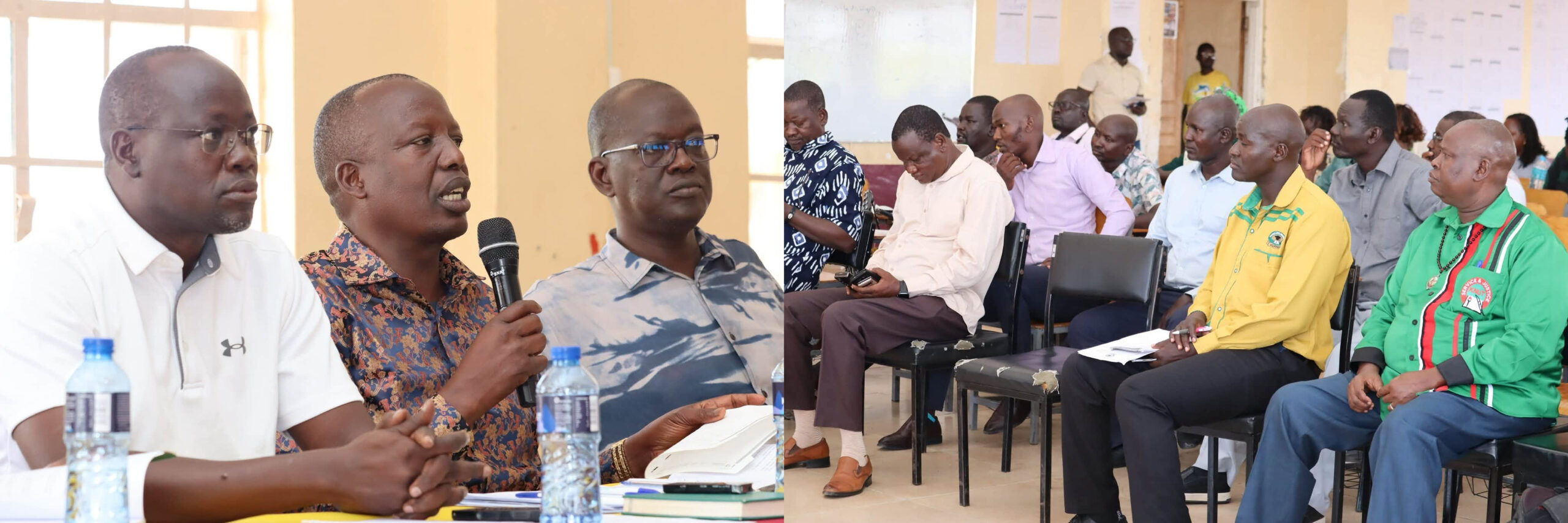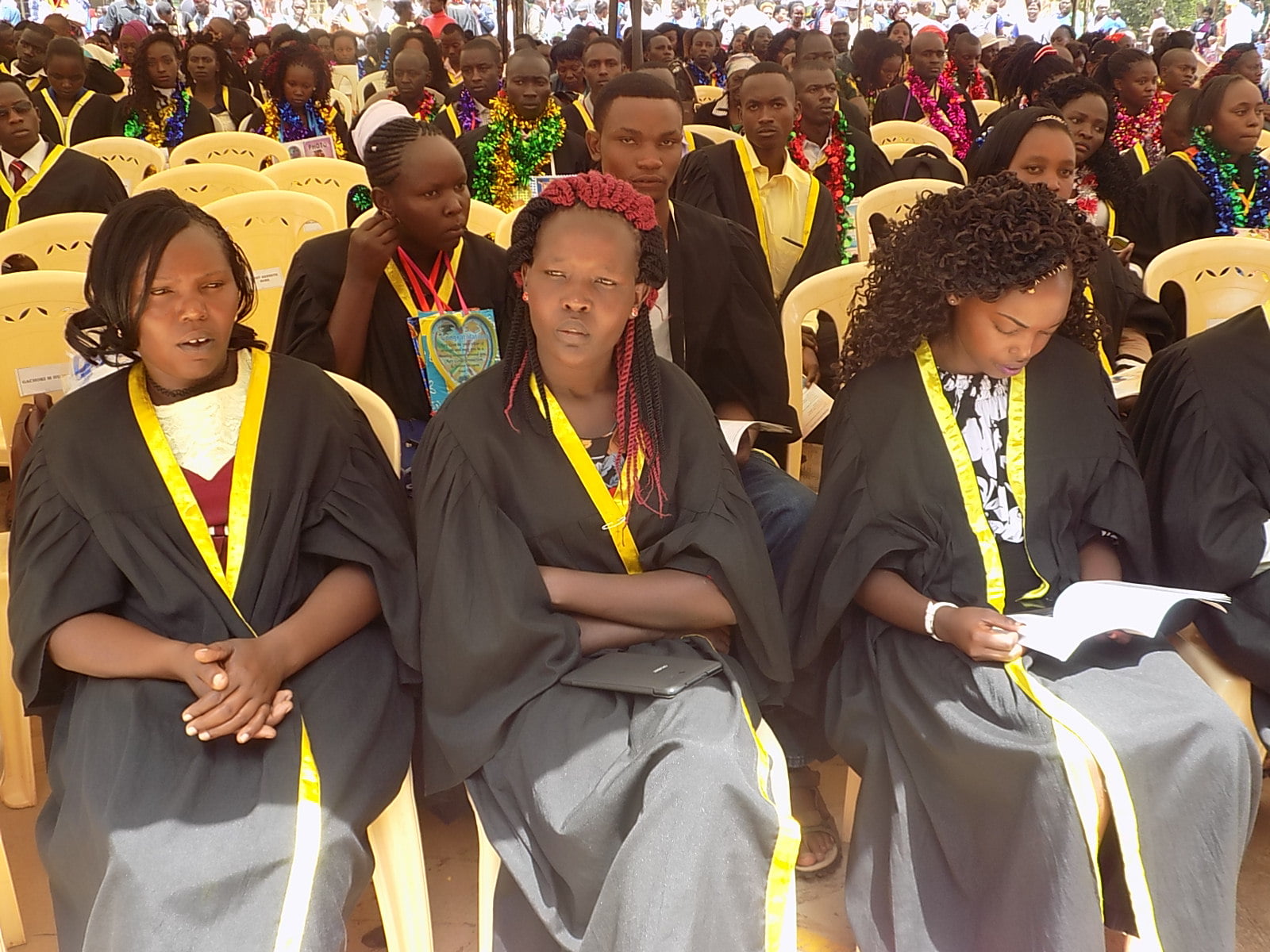
P1 teachers in Kenya continue to face enormous professional and structural challenges despite forming the largest teaching force in the country. For many years, they have remained the silent workforce carrying the foundation of learning in public schools, yet their struggles often receive limited attention within broader education reforms and policy discussions.
As education systems evolve and academic qualifications increasingly define promotion, deployment, and leadership opportunities, many P1 teachers find themselves competing in an environment dominated by diploma and degree holders.
This competition has become increasingly difficult, especially for experienced teachers who entered the profession through the once highly respected P1 pathway but now face slower career progression within a rapidly changing educational structure.
One of the greatest frustrations among many P1 teachers is prolonged stagnation in the same job groups for years despite decades of service, strong classroom experience, and proven instructional ability.
Many continue to shoulder heavy teaching responsibilities, mentor younger teachers, manage classrooms effectively, and sustain learning in difficult environments, yet remain professionally disadvantaged by qualification-based systems that often overlook practical competence and institutional memory.
The rollout of Junior School (JS) further intensified debate within the profession, particularly regarding recruitment and deployment priorities. Many teachers strongly believe that P1 teachers who later upgraded to diploma and degree qualifications should have been given first priority in JS employment opportunities because they already possessed both academic advancement and extensive classroom experience.
Having served for years within the primary school system, many of these teachers had developed deep understanding of learner transition, classroom management, curriculum delivery, and child development, making them uniquely positioned to support the successful implementation of Competency-Based Education (CBE).
ALSO READ:
If well implemented, CBE Career Pathways could fix Kenya’s unemployment crisis in future
Even as Kenya continues to refine its education reforms under the CBE framework, one reality remains constant yet often under-emphasized: the central, historic, and continuing role of P1 teachers in sustaining the nation’s learning system. Behind policy shifts, recruitment drives, upgrading programmes, and structural transitions lies a workforce whose contribution has shaped generations — yet whose recognition has not always matched its sacrifice.
The teaching profession in Kenya has expanded significantly over the years. Current Teachers Service Commission (TSC) and parliamentary reports estimate that the country now has approximately 400,000–405,000 registered teachers, with about 380,000–390,000 actively deployed across public basic education. This workforce serves in primary schools, Junior Schools (JS), and secondary schools, reflecting one of the largest organized professional cadres in the public sector.
Yet within this expanding system lies a structural tension: growth in numbers has not translated into equal growth in opportunity, recognition, or progression for all cadres.
Kenya’s education workforce is broadly structured into four key categories: P1 (certificate), diploma, degree, and postgraduate teachers. At the foundational level, P1 teachers remain the largest single cadre in primary education, estimated at approximately 146,000–150,000 teachers. This group forms the historical and operational backbone of Kenya’s primary school system.
Diploma teachers have grown steadily, now standing at around 38,000–41,000, largely driven by upgrading programmes that transition P1 teachers into diploma qualifications. Degree holders in primary education account for approximately 25,000–30,000, while secondary schools continue to absorb the majority of degree-qualified teachers. The fastest-growing segment is Junior School (JS), which now hosts approximately 76,000–80,000 teachers deployed since the rollout of CBE.
One of the most important realities often overlooked in policy discussions is the numerical weight of P1 teachers within the entire system. With approximately 150,000 P1 teachers out of a total workforce of about 400,000, they constitute roughly 37.5% of Kenya’s entire teaching workforce. In simple terms, more than one in every three teachers in Kenya is a P1-trained educator. This is not a marginal presence — it is a structural majority within the foundational level of education delivery. The remaining 62.5% is distributed among diploma, degree, and postgraduate teachers.
The ongoing World Bank-supported and TSC-led upgrading initiatives have further highlighted this workforce structure. Recent reports indicate that approximately 38,849 P1 teachers were shortlisted nationally for competency enhancement programmes aimed at preparing educators for Junior Secondary implementation and strengthening delivery under CBE.
ALSO READ:
Govt calls for privacy of learners after Utumishi Girls’ fire tragedy
Beyond these figures lies a deeper truth that continues to define Kenya’s education journey — the formation of the P1 teacher as a deeply grounded, practical, and highly adaptable professional.
For decades, especially up to the late 2010s, the P1 grade was widely regarded as the pearl and fragrance of the teaching profession in Kenya. It was the backbone of primary education, producing educators who could manage classrooms, interpret curriculum demands, and nurture foundational learning with remarkable consistency.
The training that produced P1 teachers was intentionally rigorous and practical, emphasizing classroom management, child psychology, teaching methodology, subject integration, assessment, and intensive teaching practice. It created educators who were not only instructors, but also problem-solvers within complex learning environments.
One of the defining strengths of P1 teachers has always been versatility — the ability to adapt across subjects, learners, and contexts. Many can effectively handle multiple learning areas such as Mathematics, English, Kiswahili, Science, Social Studies, Creative Arts, and Religious Education, often within the same school environment. In many underserved regions, this versatility has kept entire schools functioning where staffing shortages would otherwise have disrupted learning.
It is also important to recognize the socio-economic journey behind many of these teachers. A significant number entered teacher training colleges not out of privilege, but necessity. The P1 pathway was often the most affordable and accessible route into professional life, offering individuals from challenged backgrounds an opportunity for upward mobility, stability, and service to their communities.
Despite their contribution, structural challenges remain visible. Promotion systems often prioritize academic qualifications over long service and classroom effectiveness, leaving many experienced teachers in the same job groups for years. Leadership roles, curriculum coordination positions, and administrative appointments increasingly favour higher academic credentials, sometimes overlooking deep practical experience.
Access to specialized training, international benchmarking programmes, digital transformation opportunities, and policy-level engagement has also been uneven. Many experienced teachers are included mainly at implementation level rather than in shaping reforms.
At the same time, Kenya continues to experience a paradox: teacher unemployment alongside persistent shortages in Junior Secondary and STEM-related areas. This reflects not only a numerical imbalance but also deeper issues of deployment, planning, and utilization of available human resource capacity.
Within this reality, one principle stands out clearly: no group should be disadvantaged simply because it is many. Numerical strength should not become a weakness. Instead, large professional cadres should be strengthened, supported, and integrated strategically, because they carry the weight of service delivery in education.
ALSO READ:
Yet perhaps the most overlooked dimension of this conversation is the long-term intellectual influence of the P1 foundation. While not all university lecturers come from the P1 pathway, many of Kenya’s most grounded, practical, and versatile educators — including those who later advanced into universities and postgraduate teaching — began their journey in the structured discipline of P1 training.
That early grounding in classroom practice, learner psychology, and teaching methodology often shaped educators who later became effective lecturers, researchers, and academic leaders. The ability to simplify complex ideas, manage diverse learners, and maintain clarity in instruction is a teaching strength that often traces back to foundational training environments where practical teaching was central.
In this sense, the P1 pathway did not only produce primary school teachers — it helped cultivate a teaching culture that continues to echo even in lecture halls and higher academic spaces.
The transition to Competency-Based Education demands a more balanced and inclusive approach to teacher management. Reform cannot succeed if it deepens divisions within the workforce. A stable education system depends on motivated teachers who feel valued, included, and fairly treated across all cadres.
This calls for structured upgrading pathways, transparent promotion systems, expanded access to training, mentorship frameworks, and inclusive policy engagement that reflects classroom realities.
Ultimately, the strength of Kenya’s education system lies not in one cadre of teachers, but in the collective force of all educators. P1 teachers remain a living archive of the system’s history, resilience, and continuity. Their contribution is deeply embedded in every learner they have taught, every school they have sustained, and every generation they have shaped.
A truly progressive education system will not be measured by how many it sidelines, but by how many it uplifts together.
By Hillary Muhalya
You can also follow our social media pages on Twitter: Education News KE and Facebook: Education News Newspaper for timely updates.
>>> Click here to stay up-to-date with trending regional stories
>>> Click here to read more informed opinions on the country’s education landscape