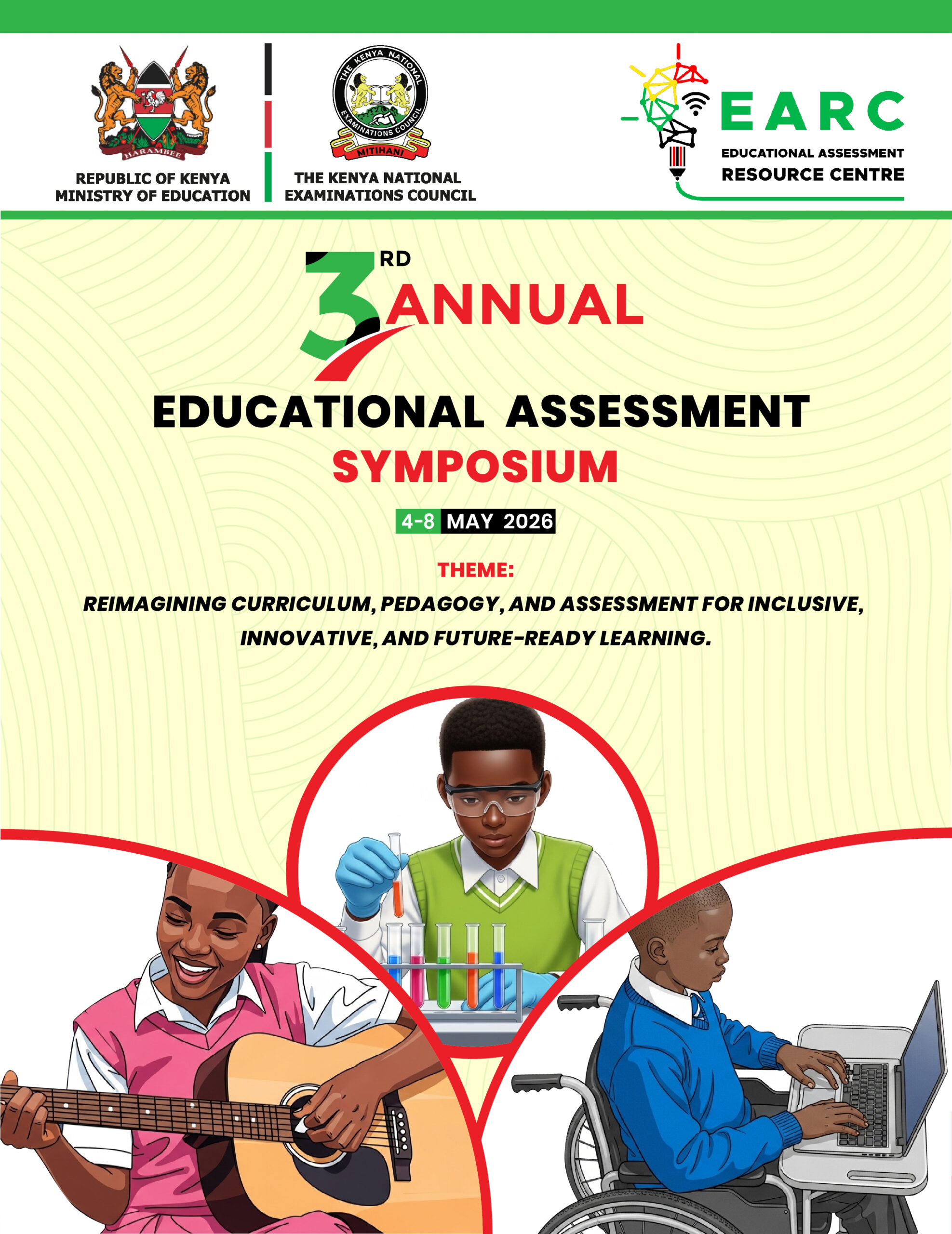
The forthcoming Kenya National Examinations Council to the 3rd Annual Educational Assessment Symposium is far from a routine professional engagement – it is a strategic convergence point for shaping the trajectory of education in Kenya. At a time when the country is deepening its transition to Competency-Based Education (CBE), the symposium carries substantial national, institutional and pedagogical weight.
At its foundation, the symposium embodies a critical paradigm shift in how assessment is conceptualised. Assessment is no longer a terminal exercise designed to rank and sort learners; it is increasingly positioned as a continuous, formative process that drives learning quality, informs progression and shapes policy. The older model – where examinations marked the end of instruction – is steadily giving way to a more dynamic, responsive framework. This transformation, however, requires deliberate alignment across curriculum design, pedagogy and assessment. The symposium provides the intellectual and operational space where this alignment can be rigorously examined, challenged, and refined.
One of the most significant contributions of the symposium lies in its function as a policy–practice interface. Education reform is inherently complex and cannot be effectively driven from a single locus of control. By convening policymakers, researchers, teacher educators, classroom practitioners and industry stakeholders, the symposium creates a multi-sectoral dialogue that is both necessary and strategic. Policies must be grounded in classroom realities, and classroom practices must reflect national aspirations. This reciprocal relationship is often weak in reform processes; the symposium strengthens it by ensuring that diverse perspectives inform decision-making.
Equally important is the symposium’s emphasis on data-driven decision-making. Kenya’s national assessments – such as KPSEA and KJSEA – generate extensive datasets that hold valuable insights into learner achievement, systemic gaps and emerging trends. Yet data, in isolation, does not improve outcomes. Its value lies in interpretation and application. The symposium elevates assessment from a reporting mechanism to a diagnostic and improvement tool by enabling stakeholders to interrogate data critically, identify patterns and translate findings into actionable strategies that can enhance teaching and learning.
The focus on inclusive assessment further underscores the symposium’s relevance. Traditional assessment systems have often disadvantaged learners with special educational needs through rigid, standardised approaches. By foregrounding inclusion, the symposium reinforces the principle that equity must be embedded within assessment design. Discussions on accessible frameworks, appropriate accommodations and differentiated evaluation methods signal a commitment to fairness and responsiveness. In this respect, the symposium advances the broader goal of ensuring that every learner is assessed in a manner that reflects their abilities and potential.
The integration of technology and artificial intelligence introduces a forward-looking dimension that cannot be ignored. Digital assessment systems offer opportunities to enhance efficiency, improve reliability and enable personalised learning pathways. At the same time, they raise legitimate concerns around data privacy, ethical use, and equitable access. The symposium’s engagement with these issues reflects a balanced approach – one that embraces innovation while insisting on responsible implementation. It positions technology as an enabler of pedagogy, not a substitute for it.
Another layer of significance lies in the deliberate effort to strengthen teacher capacity. Teachers remain the central agents of any meaningful educational reform. Without a deep understanding of assessment principles – what to assess, how to assess and how to interpret results – reforms risk remaining theoretical. The symposium addresses this by promoting assessment literacy and competency-based pedagogy, equipping educators with the tools needed to translate policy into practice. This investment in professional capacity is, ultimately, an investment in improved learner outcomes.
The symposium also engages with the evolving architecture of Senior School, particularly the introduction of diverse pathways such as Creative Arts and Sports. Conventional academic assessments are insufficient for capturing competencies in these domains. By advocating for authentic, performance-based assessment models, the symposium acknowledges the multiplicity of learner talents and the need for evaluation systems that reflect real-world application. This shift is essential for nurturing well-rounded individuals and aligning education with learners’ strengths and aspirations.
A particularly strategic dimension is the alignment of education with industry standards and employability outcomes. The disconnect between educational outputs and labour market demands has long been a concern. By incorporating industry perspectives and promoting concepts such as dual certification, the symposium bridges this gap. It reframes education as a system that not only facilitates academic progression but also prepares learners for meaningful participation in the economy.
The introduction of Assessment Hubs further amplifies the symposium’s transformative potential. Envisioned as centres of innovation and quality assurance, these hubs provide spaces where learner competencies can be demonstrated, validated and refined. They extend assessment beyond the confines of the classroom, making it more visible, collaborative and experiential. If effectively implemented, they could redefine how achievement is conceptualised and recognised.
Finally, the symposium plays a crucial role in shaping a national consensus on educational reform. The deliberations and recommendations distilled into a formal communiqué will likely influence policy direction, institutional strategies and implementation frameworks. In this sense, the symposium is not an isolated event but a critical node within a broader, ongoing reform process.
READ ALSO: KNEC to convene 3rd Annual Educational Assessment Symposium in Nairobi
In conclusion, the Educational Assessment Symposium stands as a vital instrument within Kenya’s education reform architecture. It consolidates expertise, fosters collaboration, and drives innovation across the system. More importantly, it signals a deliberate commitment to building an assessment framework that is inclusive, data-informed, technologically adaptive and aligned with future demands. Its ultimate significance, however, will not be measured by the sophistication of its discussions but by the tangible improvements it catalyses in classrooms and the lasting impact it has on learners across the nation.
By Ashford Kimani
Ashford, an invited delegate, teaches English and Literature in Gatundu North Sub-county and serves as Dean of Studies.
You can also follow our social media pages on Twitter: Education News KE and Facebook: Education News Newspaper for timely updates.
>>> Click here to stay up-to-date with trending regional stories
>>> Click here to read more informed opinions on the country’s education landscape
>>> Click here to stay ahead with the latest national news.