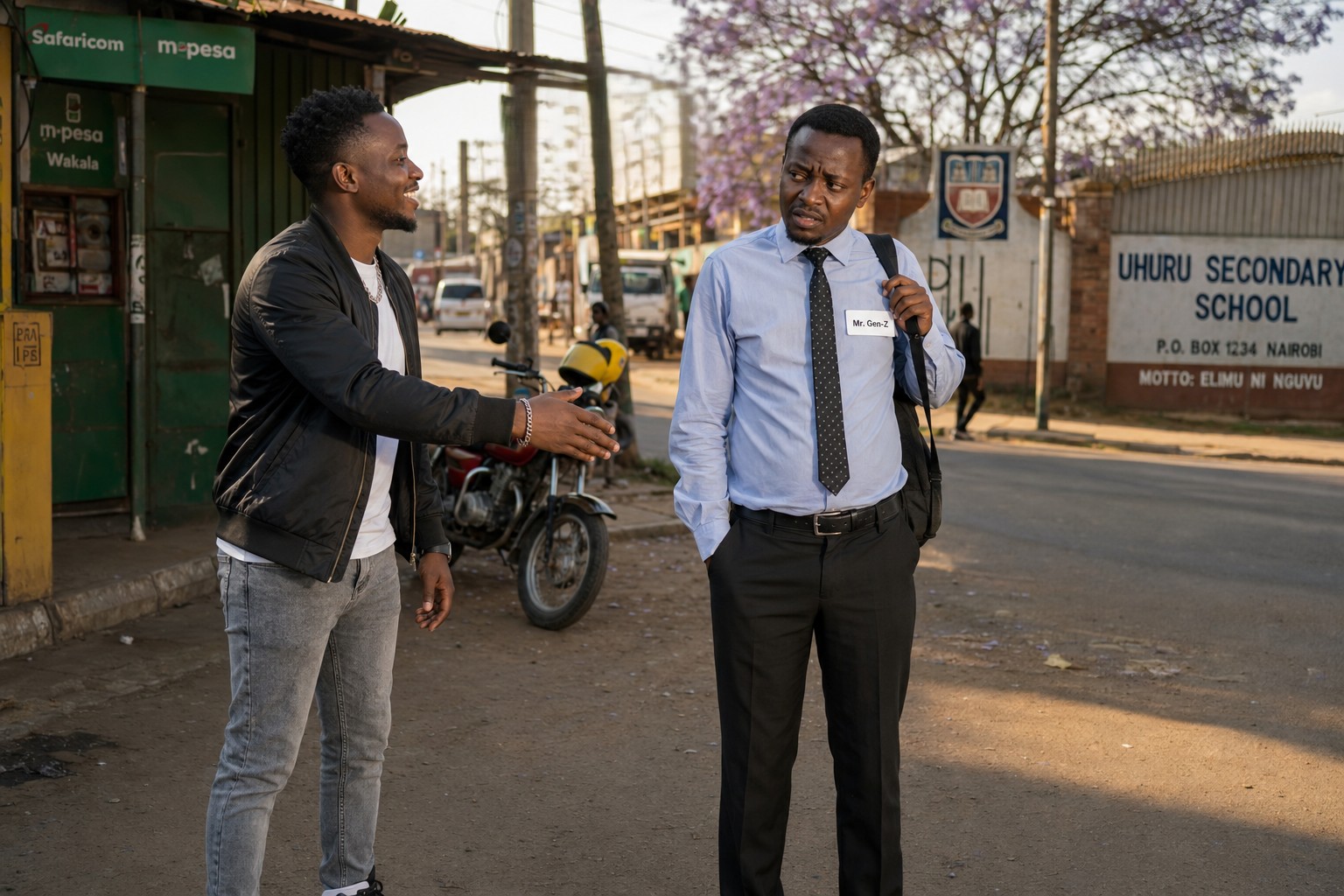
In Kenya and across much of East Africa, the word mwalimu carries a special kind of respect. It is a title associated with knowledge, discipline, guidance and responsibility. For generations, students and members of the community have used it as a respectful way of addressing teachers.
Yet an interesting question often arises: why do some teachers prefer not to be called “mwalimu” outside the school compound? At first, the request may sound unusual. After all, being called mwalimu is generally considered an honour. But for some teachers, the issue is not about rejecting their profession or the respect attached to it. Rather, it is about knowing when to switch off from work.
Teaching is a demanding profession. A teacher spends much of the day instructing students, managing classrooms, marking work, preparing lessons and dealing with the many responsibilities that come with educating young people. When the school day ends, some teachers want to leave those responsibilities behind. Imagine meeting a teacher at a shopping centre, restaurant, church function or family gathering, and someone immediately calls out, “Mwalimu!” For some, that is perfectly fine. For others, it is a reminder that their professional identity has followed them outside the classroom.
Interestingly, this raises a question about how we treat professional titles in society. Doctors are commonly called Doctor, engineers are called Engineer, mechanics are proudly identified by their profession, and managers are often addressed as Manager even outside their workplaces. In many cases, these professionals do not seem to have a problem carrying their professional titles into social spaces. Why, then, do some teachers feel differently about the title mwalimu? There is no single answer. Every professional has the right to decide how they would like to be addressed. However, the contrast is worth discussing because mwalimu is not an ordinary title; it has traditionally carried enormous respect and social responsibility.
ALSO READ:
Ruto formally appoints Sossion, Lentoijoni as TSC commissioners for six-year term
The Expectations That Come With the Title
One possible explanation is the expectations attached to the word mwalimu. Teachers are often expected to be role models wherever they go, and their behaviour, language and appearance may attract greater scrutiny because of their profession. A teacher having a difficult day, for instance, may be judged more harshly if someone says, “But you are a mwalimu!” This can create a feeling that teachers are expected to remain in their professional roles even when they are off duty. Yet teachers are human beings too. They get tired, make mistakes, have personal opinions and need time to relax. Leaving the school compound does not mean they stop being teachers, but it can mean they deserve the freedom to live their personal lives without constant professional expectations.
There is also a deeper issue of personal identity
There is also a deeper issue of personal identity. A person’s profession is only one part of who they are. A teacher can also be a parent, friend, spouse, farmer, entrepreneur, musician, sports enthusiast or community member. When someone is constantly addressed by their occupation, it can sometimes feel as though their entire identity has been reduced to their job. The same argument, however, could apply to doctors, engineers, mechanics and managers, yet many professionals embrace their titles as part of their identity and do not necessarily see being called by their professional name outside the workplace as a burden. Perhaps the difference lies not in the titles themselves, but in how society relates to different professions and in how individual professionals perceive their own identities.
It is important not to generalise. Many teachers are perfectly comfortable being called mwalimu everywhere. Some even take pride in carrying the title wherever they go. The key issue is personal preference. If a teacher asks to be addressed by their name outside school, that request should not automatically be interpreted as disrespect for the teaching profession, nor should it be viewed as arrogance or embarrassment about being a teacher. At the same time, teachers who proudly embrace the title mwalimu should also be respected; there is nothing wrong with seeing the title as a badge of honour. Ultimately, respect works both ways. If a person has a preferred way of being addressed, that preference deserves consideration.
ALSO READ: Why parents must let Grade 10 learners choose pathways that fit their talent
Perhaps we should also ask ourselves why the word mwalimu sometimes carries such different feelings compared with titles like Doctor, Engineer or Manager. Traditionally, mwalimu has represented much more than employment. A teacher is often regarded as a mentor, counsellor, role model and builder of future generations. A doctor may treat the body, an engineer may design and build, and a mechanic may repair machines, but the teacher plays a fundamental role in preparing the people who eventually become doctors, engineers, mechanics, managers and professionals in every other field. For that reason, there is arguably no shame in being called mwalimu. If anything, it is a title that deserves to be worn with pride.
Perhaps the bigger lesson is that we should learn to distinguish between a person’s profession and personality. Teachers deserve the same freedom as everyone else to decide how they want to be addressed, while society should continue to recognise and appreciate the dignity attached to the teaching profession. A teacher can love teaching without wanting to be “the teacher” every hour of the day. Equally, a teacher can proudly carry the title mwalimu wherever they go. After all, when the final bell rings and the school gate closes, the teacher may have finished work for the day. But the honour of being a mwalimu does not necessarily have to end at the school gate.
By Edwin Jemenya
Get more stories from our website: Education News
To write to us or offer feedback, you can reach us at: editor@educationnews.co.ke
You can also follow our social media pages on Twitter: Education News KE and Facebook: Education News Newspaper for timely updates.
>>> Click here to stay up-to-date with trending regional stories
.