A closer reading of recent assessment findings reveals a trend that is both subtle and deeply significant for the education sector. It is not simply that primary school and lower cadre teachers are performing better in certain development indicators, it is that a greater proportion of them, compared to their secondary school counterparts, are advancing in both professional and personal development.
This distinction shifts the conversation from isolated excellence to systemic movement. It is about where the majority is progressing, not just where the strongest individuals are located.
In practical terms, this means that within primary education, development is becoming more widespread, more uniform, and more embedded in daily practice. In secondary education, by contrast, development remains more uneven, strong in pockets, but not as broadly distributed across the entire cadre.
At the heart of this pattern lies the structure of reform and engagement within the primary school system. The rollout of the competency-based education (CBE) framework has been one of the most influential forces reshaping teacher development in Kenya’s foundational education level. Under the coordinated oversight of institutions such as the Teachers Service Commission and the Kenya Institute of Curriculum Development, primary school teachers have been placed at the centre of continuous transformation.
Unlike earlier systems where training was occasional and often optional, the current environment demands constant adaptation. Teachers are regularly engaged in curriculum interpretation sessions, pedagogical retraining, assessment redesign, and integration of digital learning tools. This sustained exposure has created a situation where development is no longer a personal choice for a few motivated individuals, it has become a collective expectation.
ALSO READ;
Christine Agutu’s bold bid to unseat union giant Omboko Milemba in high-stakes KUPPET Race
As a result, a greater proportion of primary school teachers are actively involved in structured professional growth. Whether in urban or rural settings, many are participating in similar training cycles, working under comparable instructional frameworks, and being evaluated through standardized mechanisms. This uniformity has naturally elevated the overall development index within the cadre.
In contrast, the secondary school system presents a more fragmented pattern. While there are highly skilled, deeply experienced, and exceptionally innovative teachers within the secondary level, they do not constitute a similarly large proportion of the total workforce. The system tends to produce excellence in clusters rather than across the board.
Secondary education remains heavily anchored in subject specialisation and examination performance. This focus, while academically valuable, often narrows the scope of continuous pedagogical development. Teachers are primarily judged by learner performance in national examinations, which can unintentionally reduce emphasis on broader professional growth such as instructional innovation, emotional intelligence development, or reflective practice.
The difference is not necessarily one of competence, but of systemic pressure. At the primary level, the system itself pushes for continuous engagement with new methods. At the secondary level, the system often allows for stability in practice, which can result in slower rates of widespread transformation.
This is where the idea of proportional development becomes critical. It is not enough to ask whether secondary school teachers are developing; the more important question is how many of them are developing consistently. On this measure, primary school teachers currently show a higher proportion of active engagement in both professional and personal growth.
Personal development, in this context, is just as significant as professional advancement. It includes adaptability, communication skills, emotional intelligence, resilience, collaboration, and self-reflection. These are qualities that shape not only how teachers perform in classrooms, but also how they interact with learners, colleagues, and the broader school community.
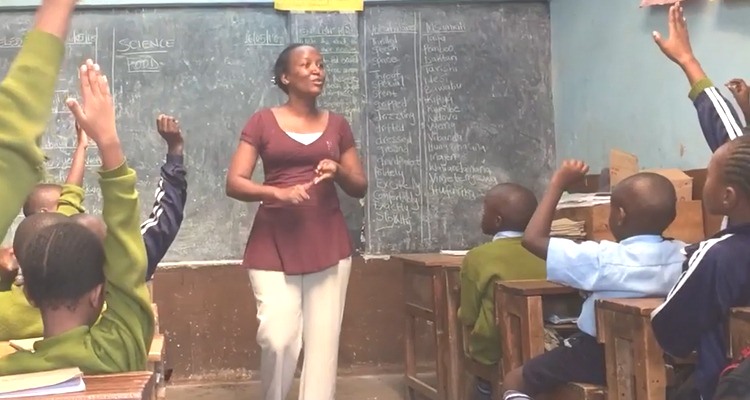
Primary school teachers, by the nature of their work, are immersed in environments that demand these attributes daily. They deal with young learners whose needs are diverse, dynamic, and often unpredictable. They interact frequently with parents, manage continuous assessments, and engage in collaborative planning. This environment naturally fosters personal growth alongside professional development.
Over time, many primary school teachers develop stronger organizational habits, improved emotional regulation, and enhanced interpersonal skills. They learn to balance instructional demands with behavioural management, administrative responsibilities, and community engagement. In doing so, personal development becomes an inseparable part of their professional identity.
Secondary school teachers also experience growth, but the pathways are often more individualized rather than system-wide. The autonomy granted to secondary educators allows for subject mastery and independent instructional styles, but it does not always guarantee structured or consistent personal development across the cadre.
In many secondary school settings, professional growth depends heavily on individual initiative. Teachers who seek additional training, engage in peer collaboration, or pursue further studies tend to advance significantly. However, those opportunities are not always evenly distributed or systematically enforced across the entire workforce. This leads to a situation where excellence exists, but is not proportionally widespread.
Another contributing factor is the difference in supervision and accountability structures. Primary school teachers often operate under more frequent instructional oversight, with regular appraisals and continuous monitoring. While this may feel demanding, it creates a rhythm of reflection and improvement that reinforces development.
Secondary school teachers, on the other hand, often work in environments characterized by greater autonomy. While this autonomy supports professional independence, it can also reduce the frequency of structured feedback and compulsory development interventions. In such a system, growth becomes more dependent on individual motivation than institutional design.
ALSO READ;
Moi University faces shutdown as court freezes accounts over KSh1 billion debt row
The result is a divergence in developmental distribution. At the primary level, development is broad-based—many teachers moving forward together under shared expectations. At the secondary level, development is more stratified—some teachers advancing rapidly, others maintaining stable but less evolving practices.
This divergence has important implications for the education system as a whole. Learners move through both levels of education, and inconsistencies in teacher development can create gaps in learning experience, teaching quality, and learner support.
The emerging picture suggests that the strength of the primary school system lies in its ability to push a larger proportion of teachers into continuous growth simultaneously. This creates a strong foundational base for learners during their early years of education. However, if secondary education does not replicate similar developmental breadth, the momentum built at the foundation risks weakening as learners progress.
Addressing this imbalance does not require diminishing the progress made at the primary level. Instead, it calls for scaling up similar structures within secondary education. Continuous professional development should not be optional or unevenly accessed; it should be systematically embedded across all levels of teaching.
ALSO READ;
Lobby group demands audit of third-party deductions on teachers’ salaries
Secondary school teachers would benefit from more structured mentorship programs, regular pedagogical retraining, reflective practice sessions, and integrated personal development frameworks. Emotional intelligence training, classroom innovation workshops, and collaborative teaching models could help expand the proportion of teachers actively engaged in holistic growth.
At the same time, the gains achieved at the primary level must be sustained and strengthened. The systems that have successfully increased participation in development activities should continue to evolve, ensuring that teachers are not only trained but also supported in applying new skills meaningfully in classrooms.
Ultimately, the most important insight from this assessment is not the comparison itself, but what it reveals about system design. When structures are strong, expectations are clear, and support is consistent, a greater proportion of professionals will grow together. When these elements are uneven, development becomes selective rather than collective.
Education systems are strongest when growth is not confined to a few individuals, but experienced by the majority. The goal, therefore, should not be to celebrate isolated excellence, but to expand the conditions under which excellence becomes widespread.
The current trend among primary school teachers demonstrates what is possible when development is embedded in the system rather than left to chance. The challenge now is to ensure that this pattern is not limited to one level of education, but becomes the standard across the entire teaching profession.
Because in the end, the true measure of an education system is not how high a few can rise, but how far and how consistently the many can grow.
By Hillary Muhalya
You can also follow our social media pages on Twitter: Education News KE and Facebook: Education News Newspaper for timely updates.
>>> Click here to stay up-to-date with trending regional stories
>>> Click here to read more informed opinions on the country’s education landscape