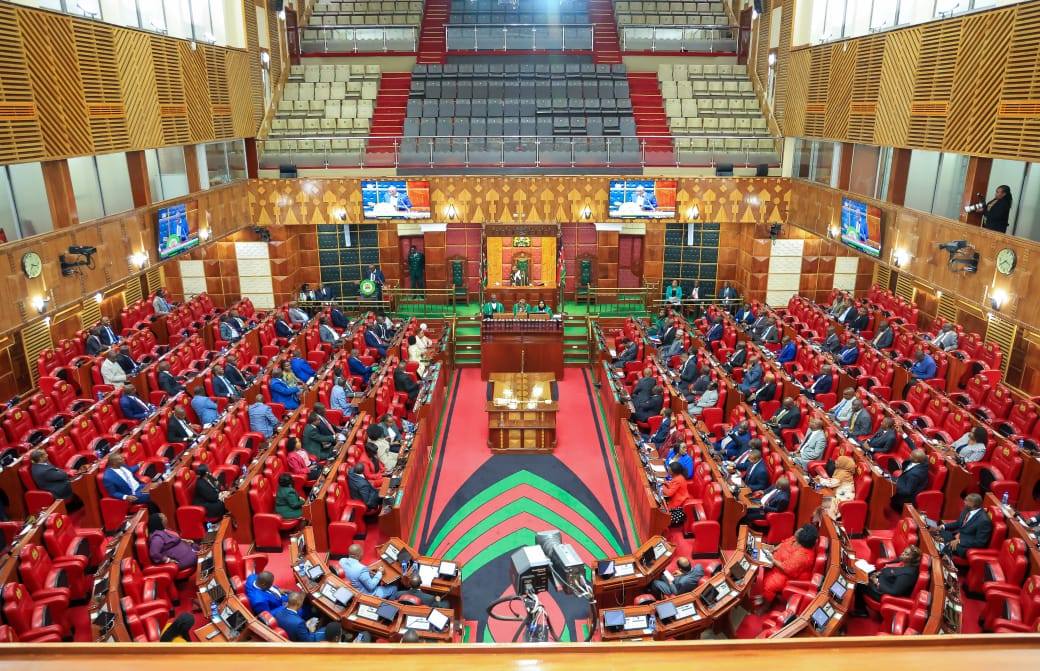
Members of Parliament (MPs) have taken a decisive step toward bridging gaps in the education system by backing the Basic Education (Amendment) Bill, 2025, which seeks to formally integrate Alternative Provision of Basic Education and Training (APBET) institutions into the national framework.
The move would unlock government support for millions of children currently learning in informal schools across the country.
The Bill, sponsored by Mathare MP Anthony Oluoch, aims to address long‑standing inequalities by recognising APBET institutions. These schools operate in informal settlements and include non‑formal centres, adult learning facilities, mobile schools, and night schools. These institutions have historically been excluded from the Basic Education Act, 2013, which only recognises public and private schools.
As a result of this exclusion, learners in APBET schools are not registered under the National Education Management Information System (NEMIS), denying them access to government capitation and registration for national examinations. Oluoch told the House that nearly three million children remain outside the formal education system, a situation he described as a violation of the constitutional right to education.
ALSO READ:
TSC warns teachers against gambling amid rising debt concerns
The MPs argued that the continued neglect of APBET schools undermines efforts to achieve universal access to education. Deputy Speaker Gladys Boss said the proposal would strengthen inclusivity, noting that many children are forced into informal schools due to limited access to formal institutions.
Ruaraka MP Tom Kajwang’ warned that lack of recognition limits learners’ transition to higher levels of education. Kajwang’ cited the 2024 National Schools Census, which reported 1.2 million learners in Ruaraka but revealed that actual enrolment in APBET schools exceeded three million.
Kibra MP Peter Orero told Parliament that APBET institutions significantly outnumber public schools in the constituency, therefore making many students end up in APBET schools
ALSO READ:
The proposed law seeks to incorporate APBET institutions into the definition of basic education, provide them representation on the National Education Board, and require county education directors to maintain updated data on the institutions.
The bill also proposes funding for infrastructure and learning materials, introducing flexibility in registration requirements, and mandates counties to maintain a database of such schools.
By Masaki Enock
You can also follow our social media pages on Twitter: Education News KE and Facebook: Education News Newspaper for timely updates.
>>> Click here to stay up-to-date with trending regional stories
>>> Click here to read more informed opinions on the country’s education landscape