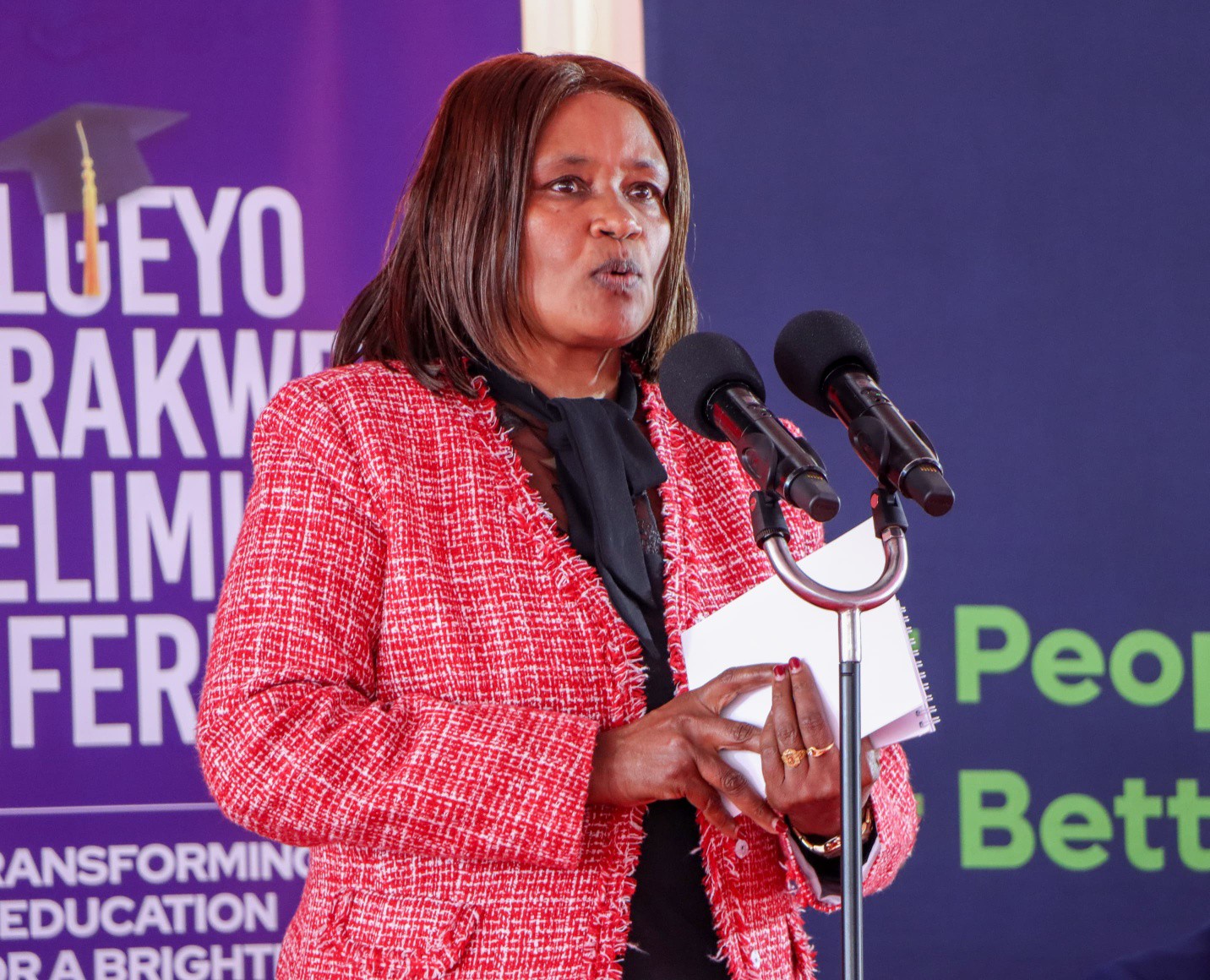
The Teachers Service Commission (TSC) in Kenya has for years operated under intense pressure shaped by rising learner enrolment, persistent teacher shortages, ongoing reforms in education delivery, and recurring demands for improved welfare and career progression.
These challenges have frequently tested the stability of the education system, at times triggering industrial tensions, staffing imbalances, and administrative delays that affected learning outcomes. Yet, within this demanding environment, leadership associated with Evelyn Mitei has been widely linked with a reform approach aimed not only at introducing structural changes but also at carefully navigating the complexities of implementation in a way that preserves institutional stability.
Evelyn Mitei is a Kenyan education administrator associated with senior engagement within the Teachers Service Commission, where she has been involved in teacher management coordination, policy implementation processes, and institutional strengthening of Kenya’s education system. Her professional work is largely centred on improving efficiency in teacher deployment, supporting reform implementation, and addressing systemic challenges affecting education delivery across the country. Over time, she has become associated with a leadership approach that emphasises structured reform, stakeholder engagement, and evidence-based decision-making within the education sector.
A defining feature of her leadership is county-level engagement across the republic, where she has visited schools and education offices to directly interact with teachers and officers. These engagements have provided first-hand insight into the realities faced on the ground, including teacher shortages, workload pressures, infrastructure gaps, and regional disparities in resource allocation. By engaging directly with field officers, she has strengthened the Commission’s ability to respond to localised challenges in a more practical and targeted manner.
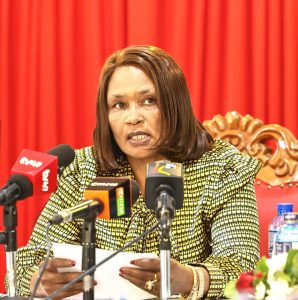
Closely linked to this field-based approach is her repeated appearances before parliamentary committees, where she has presented and defended the Commission’s position on key education challenges. In these sessions, she has highlighted issues such as funding shortfalls, staffing deficits, the financial pressure of large-scale recruitment, and the demands created by the implementation of the Competency-Based Education system. These parliamentary engagements have helped align national policy discussions with ground realities while also advocating for increased budgetary support and sustainable reform financing.
At the centre of the stabilisation agenda is the expansion of teacher recruitment and staffing. The introduction of the Competency-Based Education system and the establishment of Junior Secondary School created an immediate surge in demand for teachers, exposing deep gaps in staffing levels across the country. Insights drawn from both county visits and parliamentary engagements have reinforced the urgency of recruitment expansion. This has supported more targeted staffing interventions aimed at easing classroom congestion and improving subject delivery across schools.
Closely tied to recruitment has been the conversion of teacher interns into permanent and pensionable employment. While this reform has significantly improved job security and morale, it has also created financial and planning challenges due to the scale of absorption required. Through structured policy engagement and field feedback, this transition has been managed in phases to balance fiscal sustainability with workforce stability, ensuring continuity in learning institutions while improving employment conditions for teachers.
Another major area of reform has been support for Competency-Based Education implementation. This system shift required a complete reorientation of teaching methods, assessment approaches, and classroom practices. Parliamentary committee engagements have played a key role in communicating training needs, resource gaps, and infrastructure demands associated with the transition. At the same time, county-level feedback has helped refine teacher retooling programmes, ensuring that training is responsive to actual classroom conditions rather than generalised assumptions.
Teacher welfare reforms, particularly in medical insurance and working conditions, have also been central to her engagement approach. Field visits have revealed challenges faced by teachers in accessing healthcare services, especially in remote regions, while parliamentary discussions have focused on funding structures and the sustainability of welfare systems. This combination of grassroots insight and policy-level advocacy has contributed to more responsive welfare planning and transitional arrangements aimed at protecting teachers during systemic changes.
Financial and budgetary restructuring remains one of the most persistent challenges facing the Commission. Demand for recruitment, promotions, training, and salary adjustments consistently exceeds available resources. Her appearances before parliamentary committees have been instrumental in articulating these funding gaps and advocating for increased allocations. At the same time, data and insights from county visits have helped prioritise spending based on actual staffing shortages and regional inequalities, ensuring more efficient use of limited resources.
Institutional modernisation through digitisation has also been strengthened through this dual engagement approach. While digital systems for registration, transfers, and performance appraisal have improved efficiency, implementation challenges such as connectivity limitations and digital literacy gaps have been identified through field visits. These insights have informed phased rollouts and training support initiatives to ensure that modernisation enhances rather than disrupts service delivery.
Beyond structural reforms, stakeholder engagement remains central to stabilising the education system. Historically, tensions between the Commission and teacher unions have resulted in industrial action that disrupted learning. However, continuous dialogue through both parliamentary oversight and county-level interactions has improved communication and reduced escalation of disputes. This has contributed to more stable industrial relations and a more predictable academic calendar.
At the operational level, decision-making within TSC increasingly relies on a combination of data analysis, field insights, and parliamentary feedback. Teacher deployment, recruitment priorities, and resource allocation are guided not only by statistical evidence but also by firsthand observations and legislative discussions. This integrated approach has improved fairness, responsiveness, and alignment between policy and implementation.
Institutional discipline and performance management systems also form part of the broader stabilisation strategy. Continuous appraisal of teacher performance is complemented by insights from field engagement and parliamentary oversight, ensuring accountability systems remain balanced, context-aware, and supportive of professional development.
In essence, the stabilisation of TSC under this reform agenda is anchored on six interconnected pillars—teacher recruitment expansion, conversion of interns into permanent employment, Competency-Based Education support, teacher welfare reforms, financial restructuring, and digital modernisation. What strengthens these pillars is a leadership profile defined by active county engagement, consistent parliamentary appearances, structured policy coordination, and field-informed decision-making.
READ ALSO: How Evaleen Mitei shifted TSC positional authority to functional authority
In conclusion, while Kenya’s education system continues to face structural pressures, Evelyn Mitei’s professional role within TSC reflects a leadership approach focused on balancing reform with practical realities. Through direct engagement with counties and sustained appearances before parliamentary committees, she has helped bridge gaps between policy, funding, and classroom implementation. This combined approach has strengthened institutional responsiveness and contributed to ongoing efforts to stabilise and improve the education system.
By Hillary Muhalya
You can also follow our social media pages on Twitter: Education News KE and Facebook: Education News Newspaper for timely updates.
>>> Click here to stay up-to-date with trending regional stories
>>> Click here to read more informed opinions on the country’s education landscape
>>> Click here to stay ahead with the latest national news.