- Teaching children in their first language improves comprehension, literacy, participation, and emotional well‑being, forming the bedrock for future multilingual skills.
- Mother tongue instruction preserves indigenous knowledge, strengthens cultural identity, fosters parental involvement, and promotes national unity through Kenya’s linguistic diversity.
- Countries like Finland, Ethiopia, Tanzania, and South Africa show its success, while Kenya’s Competency‑Based Curriculum highlights its role in reducing dropouts, boosting innovation, and driving national development.
Education is universally acknowledged as the most powerful instrument for transforming societies, reducing poverty and accelerating economic growth. However, the effectiveness of any education system depends not only on the curriculum, quality of teachers or availability of learning resources, but also on the language through which knowledge is delivered.
Language is the bridge that connects learners to ideas, skills, culture and identity. When children are taught in a language they understand from birth, they learn with confidence, curiosity and greater comprehension. Conversely, when they are introduced to education through an unfamiliar language, many struggle to grasp concepts, participate in class and realise their full academic potential.
Mother tongue, commonly defined as the first language a child acquires at home, is therefore more than a means of communication. It is the language through which children first understand their environment, develop reasoning abilities, express emotions and interact with the world around them. It shapes cognitive development and forms the foundation upon which all future learning is built.
Across the world, education experts have increasingly emphasised that children should begin their schooling in their mother tongue before gradually transitioning to national and international languages. This approach is supported by decades of educational research and has been endorsed by the United Nations Educational, Scientific and Cultural Organisation (UNESCO), which has consistently advocated for mother tongue-based multilingual education. UNESCO argues that children learn best when they first receive instruction in a language they already speak and understand because comprehension precedes meaningful learning.
Studies conducted in different regions have consistently demonstrated that learners taught in their mother tongue during their early years outperform their peers who begin education in unfamiliar languages. They develop stronger literacy and numeracy skills, exhibit better classroom participation, demonstrate higher levels of critical thinking and are less likely to repeat grades or drop out of school. According to UNESCO, nearly 40 per cent of the world’s population lacks access to education in a language they understand, a challenge that contributes significantly to poor learning outcomes in many developing countries.
ALSO READ:
Kenya’s Competency-Based Education (CBE) curriculum appreciates the importance of language in learning by recommending the use of the language of the catchment area during the foundational stage wherever practical. This learner-centred approach recognises that children understand concepts more effectively when instruction is delivered in a familiar language. It also aligns with the philosophy of CBE, which prioritises competence, creativity, communication, collaboration and problem-solving over rote memorisation.
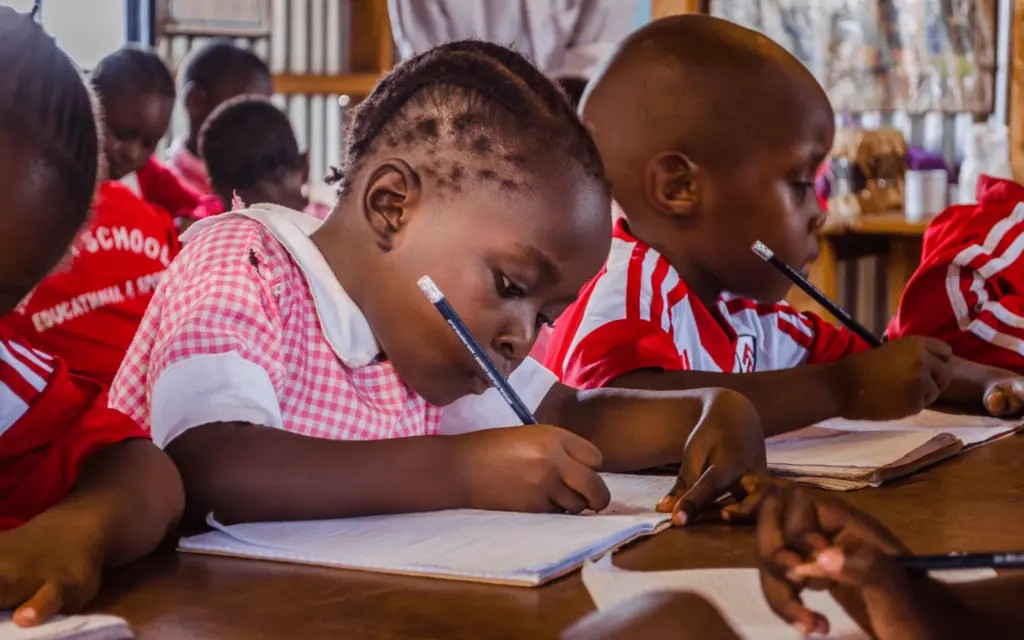
The benefits of mother tongue instruction begin with improved comprehension. Young learners naturally think, dream and reason in the language they speak at home. When teachers explain mathematical concepts, scientific principles or social studies in that familiar language, children spend their mental energy understanding the lesson rather than struggling to interpret unfamiliar vocabulary. This enables them to grasp concepts more quickly and retain information for longer periods.
Mother tongue education also strengthens literacy development. Reading is fundamentally about making meaning from written symbols. Children who begin reading in a language they already understand find it easier to recognise sounds, identify words and comprehend texts. Once literacy skills are firmly established in the first language, these skills can easily be transferred to additional languages such as Kiswahili and English. Rather than hindering multilingualism, mother tongue education creates the cognitive foundation necessary for mastering multiple languages.
Another significant advantage is increased classroom participation. Children are naturally curious, yet many become silent observers when instruction takes place in a language they barely understand. Fear of making mistakes often discourages them from asking questions or expressing opinions. However, when teaching is conducted in their mother tongue, learners participate confidently in discussions, collaborate effectively with classmates and communicate their ideas without hesitation. Such active participation improves learning outcomes while nurturing creativity and independent thinking.
Mother tongue education also contributes significantly to emotional and psychological well-being. The transition from home to school can be intimidating for young children. Using a familiar language eases this transition by creating a welcoming learning environment where children feel valued and respected. It strengthens self-confidence, reduces anxiety and promotes a sense of belonging, all of which are essential ingredients for successful learning.
Beyond cognitive development, mother tongue serves as a powerful vehicle for preserving cultural heritage. Every language carries centuries of accumulated knowledge, traditions, beliefs, customs and indigenous wisdom. Folktales, songs, riddles, proverbs and oral histories contain valuable lessons about leadership, environmental conservation, conflict resolution and social responsibility. When schools incorporate indigenous languages into education, they help safeguard this cultural wealth while passing it on to future generations.
Kenya’s remarkable linguistic diversity, with more than 40 indigenous languages, represents one of the nation’s greatest cultural assets. Each language reflects unique histories, worldviews and ways of understanding nature and society. Promoting mother tongue education therefore strengthens national unity by demonstrating respect for every community while celebrating cultural diversity as a source of strength rather than division.
Parents also become more actively involved in their children’s education when schools embrace familiar languages. Many parents, particularly in rural communities, possess rich knowledge and practical experiences but may not be fluent in English. Mother tongue instruction enables them to assist with homework, participate in school activities and communicate effectively with teachers. This partnership between schools and families enhances learner performance and creates a supportive educational environment.
From an economic perspective, investing in mother tongue education yields substantial long-term benefits. Learners who understand classroom instruction from the beginning are less likely to repeat grades, require remedial education or drop out before completing school.
This reduces education costs while producing a more skilled workforce capable of driving innovation, entrepreneurship and national development. Strong foundational learning ultimately translates into higher productivity and improved economic competitiveness.
Several countries have demonstrated the effectiveness of mother tongue education. Finland, whose education system consistently ranks among the world’s best, ensures that children receive instruction in their native language during their formative years. Ethiopia has expanded mother tongue education across many regional languages, leading to improved enrolment and literacy rates. Tanzania has successfully used Kiswahili as the language of instruction in primary education for decades, contributing to national cohesion and widespread literacy. South Africa similarly recognises multiple official languages and encourages their use in early education to promote equitable learning opportunities.
Despite these successes, implementing effective mother tongue education remains challenging. Developing quality textbooks, digital resources and assessment tools in multiple indigenous languages requires substantial financial investment. Teacher training institutions must also equip educators with skills in multilingual instruction and culturally responsive teaching methods. Urban schools, where learners come from diverse linguistic backgrounds, face additional complexities in determining the most appropriate language of instruction.
Negative perceptions toward indigenous languages present another challenge. Some parents mistakenly believe that introducing English from the first day of school automatically guarantees academic success and better employment opportunities. While English remains essential as an international language, research consistently shows that children who establish a strong educational foundation in their mother tongue eventually become more proficient in English and other languages than those forced to learn everything simultaneously through an unfamiliar language.
ALSO READ:
Koskei faults parents over fee arrears, pushes for fairer investment in local schools
Technology now offers exciting opportunities to strengthen mother tongue education. Digital learning platforms, mobile applications, electronic storybooks and artificial intelligence-powered translation tools can help produce affordable learning resources in indigenous languages. Radio, television and community-based digital initiatives can also promote literacy while preserving endangered languages for future generations.
As Kenya continues implementing the Competency-Based Education curriculum, greater investment in multilingual education will be critical. Government agencies, teacher training colleges, universities, curriculum developers, publishers and local communities should collaborate to develop quality instructional materials, document indigenous languages and strengthen teacher capacity. Public awareness campaigns are equally important in changing negative attitudes toward mother tongue education and helping parents appreciate its long-term academic benefits.
The future belongs to multilingual citizens who are rooted in their culture while remaining globally competitive. Children who first master their mother tongue acquire stronger cognitive skills, communicate more effectively, preserve their cultural identity and transition more easily into learning national and international languages. Such learners become confident innovators, responsible citizens and lifelong learners capable of contributing meaningfully to local communities and the global knowledge economy.
Ultimately, the debate should never be whether mother tongue should replace English or Kiswahili. Rather, the focus should be on recognising that every language has its place within a modern education system. Mother tongue provides the strongest foundation during the formative years, Kiswahili promotes national cohesion and regional integration, while English opens doors to international communication, higher education, science, technology and global commerce. Together, these languages complement one another in preparing learners for success.
An education system that values the child’s first language is an education system that values the child. By embracing mother tongue as the cornerstone of foundational learning, Kenya can improve literacy, strengthen educational equity, preserve its rich cultural heritage and nurture a generation of competent, innovative and globally competitive citizens ready to drive sustainable national development.
By Hillary Muhalya
You can also follow our social media pages on Twitter: Education News KE and Facebook: Education News Newspaper for timely updates.
>>> Click here to stay up-to-date with trending regional stories
>>> Click here to read more informed opinions on the country’s education landscape