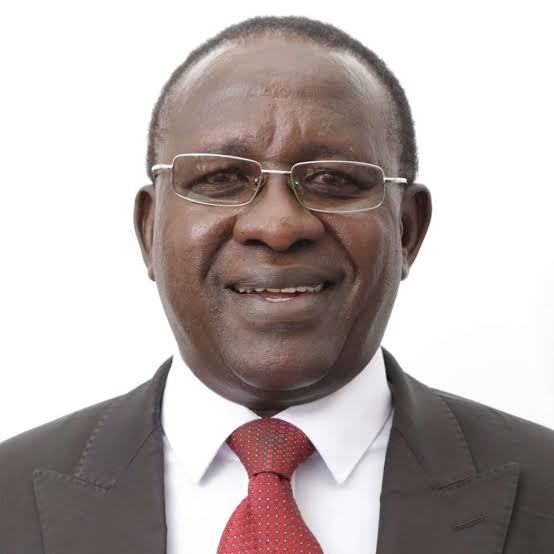
- Mohammoud Kadiri argues that TSC should clearly separate document verification from promotion interviews.
- He highlights the need for teachers to understand exactly what panels assess and how marks are allocated.
- Kadiri says transparent stages would strengthen confidence in the promotion process while protecting its integrity.
Across Kenya, thousands of teachers are once again facing one of the most consequential moments in their professional careers: the Teachers Service Commission’s promotion interviews.
The exercise has entered its second phase, with interviews for secondary-school teachers, Teacher Training College personnel and Curriculum Support Officers running from September 17 to 25, 2026. The first phase, covering primary-school teachers, concluded on September 15. The wider exercise is part of a promotion drive involving 34,016 advertised vacancies across various designations.
For many teachers, this is not simply another interview.
It represents years of teaching, professional development, additional responsibilities, service in challenging environments and the hope of finally moving to the next stage of a career that has sometimes appeared frozen by limited opportunities.
That is precisely why the process deserves the highest possible standards of clarity, consistency and transparency.
At the heart of the debate is a simple but important distinction: document verification and interviewing are two different exercises and should not be treated as though they are the same thing.
Document verification answers a fundamental question:
Does the teacher possess the qualifications, experience and evidence claimed in the application?
The interview answers a different question:
Having established that the teacher is eligible, how does the teacher perform against the prescribed competitive criteria for the advertised position?
The distinction matters.
A teacher may have a degree, diploma, certificates, years of experience, evidence of additional responsibilities and other professional documentation. Those documents establish facts about the teacher’s qualifications and career history.
But the possession of those documents should not, by itself, turn the verification process into a second interview.
Likewise, an interview should not become an informal document-verification exercise in which candidates are repeatedly asked to prove matters that have already been established through the prescribed verification process.
The teacher deserves to know what is being assessed
A promotion interview is a high-stakes process.
Teachers arrive before panels knowing that their professional future may depend on the outcome. They therefore deserve to know precisely what the panel is assessing, how each component is weighted and what evidence is required.
TSC has assured teachers that the current exercise is being conducted fairly and transparently and has reminded candidates to provide verifiable evidence supporting their testimonials and qualifications.
That assurance should be matched by a process that is easily understood by the people being assessed.
If a document is required for eligibility, let it be verified.
If a particular professional achievement attracts marks, let the evidence be authenticated and the corresponding marks clearly provided for.
If an interview question is intended to assess leadership, professional knowledge, problem-solving or suitability for a particular responsibility, let the candidate be assessed on that competency.
The three should not be unnecessarily blurred.
There is a legitimate reason for TSC to insist on authentic documents.
The Commission must protect the integrity of the teaching service. False certificates, exaggerated claims and unverifiable testimonials cannot be allowed to determine professional advancement.
But the solution is not to make the interview itself an endless exercise in document interrogation.
The better approach is to establish a clear chain:
Application → eligibility screening → document verification → shortlisting → structured interview → scoring → final selection.
Each stage should have a distinct purpose.
Indeed, TSC’s published promotion framework has previously provided for shortlisting and interviews at different administrative levels, depending on the grade and position. The guidelines also specify the documents candidates are required to present to interview panels.
The lesson is straightforward: a transparent process requires transparent stages.
The county level deserves particular attention
As the current second phase unfolds across the country, county-level panels occupy an especially important position.
They are where national policy meets individual teachers.
A teacher in Garissa, Kisumu, Mombasa, Turkana, Kakamega or any other county should be confident that the same rules apply regardless of geographical location.
The panel should not merely be fair; the process should be demonstrably fair.
That means candidates should understand the criteria, the evidence required, the scoring framework and the role of the interview itself.
The Commission has also been urged to publish aggregate promotion slots by county so that teachers can better understand the opportunities available in their respective areas. Such disclosure would not require revealing individual candidates’ information and could strengthen public confidence in the process.
Vacancies must remain part of the conversation
Another uncomfortable reality is that promotion is not simply a reward for having served for many years.
According to the National Assembly’s record of TSC’s position, competitive promotions are subject to the availability of vacancies and budgetary provision, alongside considerations such as merit and ability, seniority and experience, time served in a grade and validity of teaching certificates.
This is important because teachers should not be left with the impression that a successful interview automatically creates a vacancy where none exists.
Transparency therefore requires TSC to communicate not only the criteria for competing but, where practicable, the number and distribution of available opportunities.
A teacher who walks into an interview should know what they are competing for.
Ultimately, this debate is bigger than the 2026 promotion interviews.
It is about trust in the institution responsible for managing Kenya’s teaching service.
Teachers can accept competition. They can accept that not everyone who applies will be promoted. They can accept that vacancies are limited and that candidates must meet prescribed standards.
What becomes difficult is uncertainty about how the decision was reached.
A credible promotion system should therefore make it possible for a teacher to understand:
- whether they were eligible;
- whether their documents were successfully verified;
- why they were shortlisted;
- what the interview assessed;
- how the available marks were allocated; and
- ultimately, how the final decision was arrived at.
That is not asking for preferential treatment.
It is asking for procedural clarity.
TSC does not need to choose between rigorous verification and meaningful interviews.
It can have both.
Verify the documents thoroughly. Interview the candidate professionally. Score according to published criteria. And keep the two processes clearly distinguishable.
That would protect the Commission from fraudulent claims while also protecting teachers from uncertainty about what is actually being assessed.
READ ALSO: Beyond revision: Do we really understand the learners we prepare?
As the second phase of the nationwide promotion interviews continues, this is an appropriate moment for TSC to demonstrate that fairness is not merely an assurance issued to candidates but a principle visible throughout the entire process.
For teachers, promotion is about more than a new designation or an improved payslip.
It is recognition of a professional journey.
That journey deserves a promotion system that is clear, consistent, transparent and worthy of the confidence of the teachers it serves.
By Mohammoud Kadiri
Get more stories from our website: Education News
To write to us or offer feedback, you can reach us at: editor@educationnews.co.ke
You can also follow our social media pages on Twitter: Education News KE and Facebook: Education News Newspaper for timely updates.
>> Click here to stay up-to-date with trending regional stories