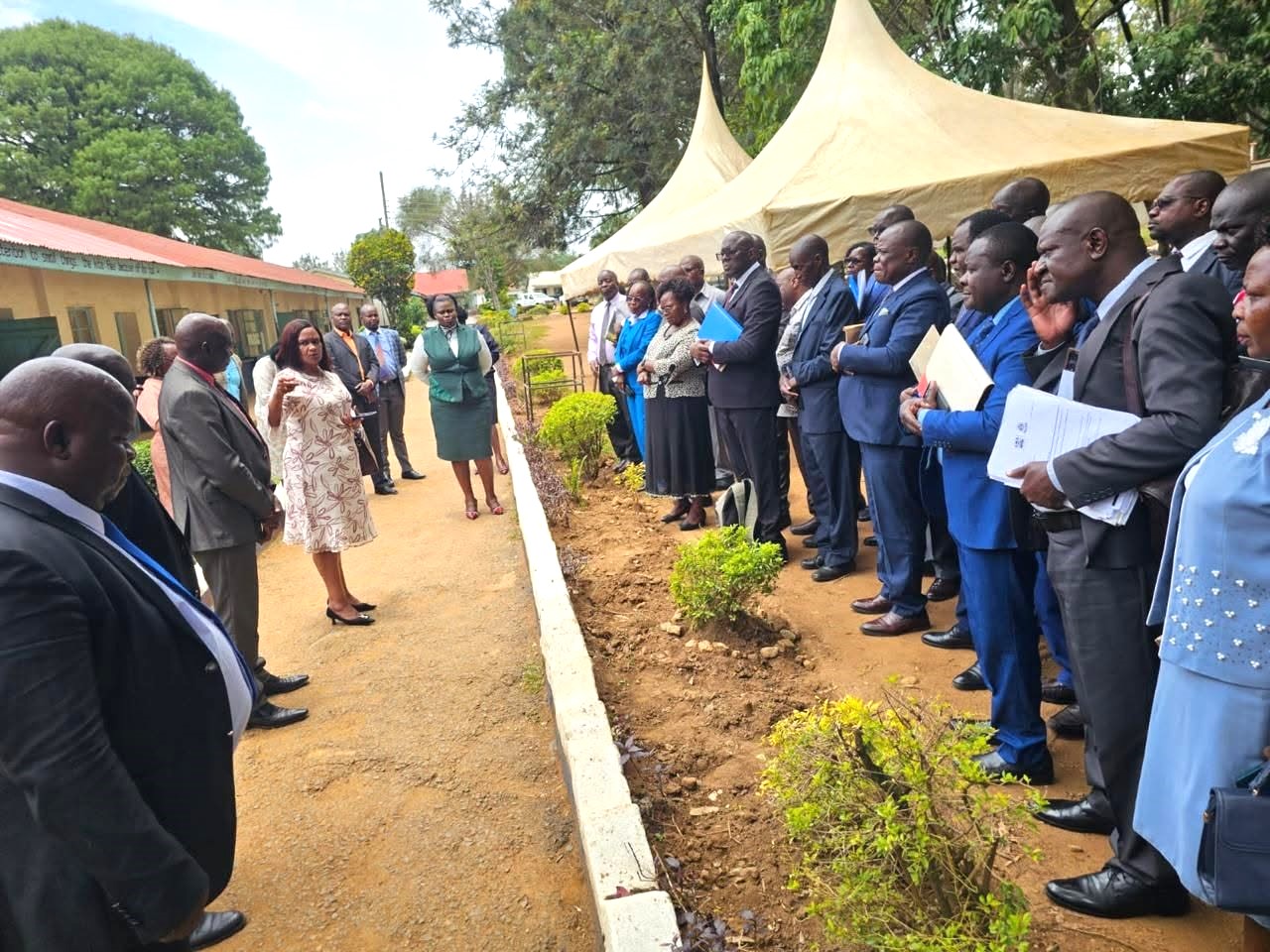
- Professional boundaries are essential to maintaining stable, effective and accountable learning institutions.
- Astiba Kebong’o argues that clearly defined roles can prevent gossip, interference and informal networks from undermining schools.
- She says TSC’s TIME-C programme and continuous staff sensitisation can help strengthen professionalism and keep learners at the centre.
A school can have qualified teachers, impressive infrastructure, adequate learning resources and carefully prepared curriculum documents, yet still struggle to deliver quality education when professional boundaries are routinely violated.
The health of a school is determined not only by what happens inside the classroom. It is equally shaped by relationships, leadership, communication, professional ethics and whether every member of the institution understands their role.
When those boundaries collapse, chaos quietly takes root.
Gossip becomes a substitute for evidence. Rumours are repeated until they acquire the appearance of truth, while those who question them may be branded difficult or disloyal. Eventually, an institution can find itself spending more energy managing perceptions and personalities than concentrating on its core business — educating learners.
This is where professional boundaries become critical.
Respect is not the absence of accountability.
Teachers, administrators, support staff, Boards of Management, parents and the wider community all have legitimate places within the education system. But legitimate participation does not mean unrestricted interference.
A teacher must understand the expectations of the teaching profession. Support staff must understand their responsibilities. Administrators must appreciate the limits of their authority. Boards of Management must understand their governance mandate, while parents and community members must recognise that schools operate within established laws, policies and professional structures.
When these roles become blurred, confusion follows.
A school may then have people influencing decisions outside their mandate, confidential matters circulating in the community, personal relationships determining professional decisions and informal networks becoming more powerful than established procedures.
That is a recipe for institutional instability.
TIME-C provides an important foundation
The Teachers Service Commission deserves recognition for its Teacher Induction, Mentorship and Coaching (TIME-C) programme, which provides an important framework for strengthening professionalism among teachers.
Induction is particularly important because entering a new school is not simply about reporting to a workstation. A teacher needs to understand the institution’s culture, expectations, professional responsibilities, communication channels and standards of conduct.
TSC’s strategic framework recognises continuous teacher induction, mentorship and coaching as an important part of professional development.
But induction should not end when a teacher receives a posting.
Schools should continuously reinforce professional expectations. Staff meetings, departmental meetings, mentorship sessions and professional development forums should be used to remind employees about their responsibilities, ethical conduct, confidentiality and appropriate channels for raising concerns.
Boards of Management also have a role to play.
Their responsibility should not become visible only when there is a crisis, an infrastructure project or a financial matter requiring attention. BOMs can help schools strengthen institutional culture by supporting regular seminars and sensitisation programmes for teaching and non-teaching staff.
Support staff should not be forgotten in professional development conversations.
A school is a system. Cleaners, cooks, security personnel, clerical staff, teachers and administrators all contribute to the learning environment. Each should know what is expected of them and where their authority begins and ends.
Clarity prevents unnecessary friction.
Policy must not be confused with politics
Schools are community institutions, and communities have every right to take an interest in their schools.
Parents provide support. Communities contribute resources. Local leaders can champion educational development.
However, community participation should not become political interference or an avenue for importing local rivalries into school administration.
The community should bring positive energy, partnership and accountability — not factionalism, gossip and pressure that undermine institutional stability.
A school cannot effectively implement the curriculum when teachers are distracted by internal conflicts or when administrative decisions are constantly influenced by informal political networks.
There is also an uncomfortable question that schools must confront: are we implementing education reforms or merely creating the appearance of implementation?
An institution can have curriculum files, meeting minutes, lesson plans and beautifully written reports. Yet the reality inside classrooms may remain unchanged.
True curriculum implementation requires professional teachers, effective monitoring, adequate resources, learner engagement and leadership that follows up on what is actually happening.
A system cannot claim success simply because the paperwork is complete.
Every employee deserves an opportunity to raise genuine concerns.
But concerns must be channelled through appropriate structures.
Rumours should not become verdicts. Allegations should not automatically become facts. Personal opinions should not be elevated into institutional truth.
A healthy school should encourage responsible communication, protect confidentiality and provide mechanisms through which legitimate complaints can be heard and addressed.
The answer is not to silence people. It is to create a culture where people can speak without destroying the reputation or dignity of others.
Boundaries are not walls designed to isolate people. They are structures that make professional relationships healthier.
They protect teachers from inappropriate interference. They protect administrators from unnecessary pressure. They protect support staff from being assigned responsibilities beyond their mandate. They protect Boards of Management from crossing into operational management. Most importantly, they protect learners from an unstable educational environment.
The TSC Code of Regulations requires teachers to perform their duties responsibly and professionally and to maintain appropriate relationships with fellow teachers, learners and members of the public.
That principle should be reflected in the daily life of every school.
The school must put its house in order
The education sector does not need institutions that merely look organised from the outside.
It needs schools where roles are clear, communication is professional, accountability is real and curriculum implementation can be seen in practice rather than only in files.
TSC’s TIME-C provides an important foundation for strengthening professional culture among teachers. Schools, however, must complement this effort through continuous induction, mentorship, staff sensitisation, clear job descriptions and regular reinforcement of institutional boundaries.
The message should be simple:
Know your role. Respect another person’s role. Follow policy. Use the right channels. Challenge wrongdoing responsibly. Keep learners at the centre.
The community has a place in the school. Teachers have a place. Support staff have a place. Administrators and Boards of Management have their respective mandates.
READ ALSO: KUCCPS offers 34 KMTC courses, opening healthcare pathways for C and D students
When everyone respects those boundaries, trust grows, accountability becomes possible and the school can concentrate on what matters most — providing every learner with quality education in a safe, orderly and professional environment.
By Astiba Kebong’o
Get more stories from our website: Education News
To write to us or offer feedback, you can reach us at: editor@educationnews.co.ke
You can also follow our social media pages on Twitter: Education News KE and Facebook: Education News Newspaper for timely updates.
>>> Click here to stay up-to-date with trending regional stories