Wakhungu Andanje, a Malava-based reporter in Kakamega County, reports on the growing concerns over media freedom and the increasing harassment of journalists in Kenya.
As the world prepares to celebrate Press Freedom Day on Sunday, May 17, 2026, calls to defend media independence, honour journalists who have lost their lives, and remind governments to respect their commitment to press freedom have intensified.
Proclaimed by the United Nations (UN) in 1993, the day highlights that a free and pluralistic press is essential for democracy, human rights and informing the public.
Despite these calls, the relationship between the media and those in power has largely never been cordial since time immemorial.
It is worth noting that in 1969, Spiro Agnew, who was then Vice President under Richard Nixon of the United States (USA), delivered a series of scathing attacks against journalists, describing them as a “tiny, enclosed fraternity of privileged men elected by no one and enjoying a monopoly sanctioned and licensed by government.”
The vice president was famously hostile towards the media — specifically television networks — because he believed they were heavily biased against the Nixon administration and unfair in their coverage of the Vietnam War.
In 2017, Mike Pence, the Vice President to Donald Trump, appeared to borrow from Spiro Agnew’s infamous speech by describing American journalists as the “unelected elite” and blasting them as “pusillanimous pussyfooters,” “vicars of vacillation,” and “the hopeless, hysterical hypochondriacs of history.”
Generally, around the world, the media often finds itself at crossroads with politicians, particularly during electoral periods, high-stakes policy debates or times of civil unrest.
This strained relationship is often viewed as a permanent feature of democratic societies, where the media acts as a watchdog to hold power accountable while politicians seek to control the narrative.
Here in Kenya, this trend has started taking a worrying dimension for those who closely monitor the media space.
The sentiments were echoed by George Sunguh, who was recently elevated to the position of Chair of the Kenya Editors Guild Media Freedom Sub-Committee.
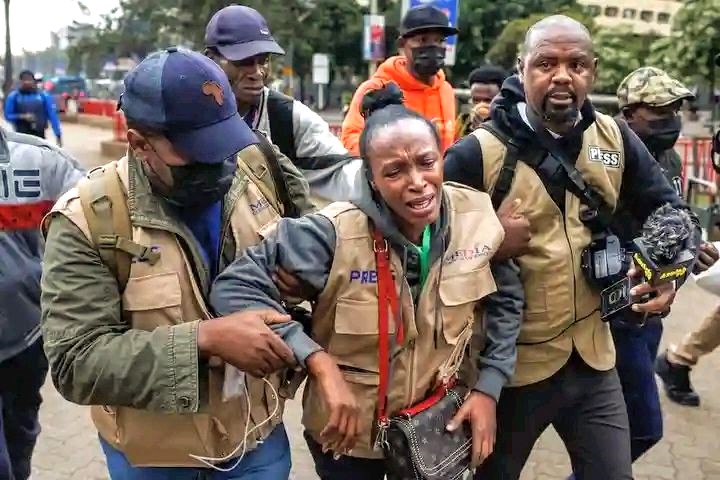
He said a number of journalists were beaten and injured when Kenya faced intense street protests in the last two years over taxes proposed in the Finance Bill 2024 to meet International Monetary Fund (IMF) revenue targets.
Sunguh stated that the journalists were only on duty covering the volatile demonstrations when they encountered police brutality.
The Kenya Editors Guild (KEG), through its President Zubeida Kananu, has repeatedly condemned harassment by security agencies and individuals believed to be working for various politicians while journalists were on duty covering functions.
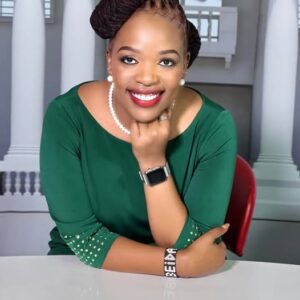
He also condemned the recent barring of a section of journalists from one media house from covering functions presided over by President William Ruto over perceived bias against the government.
“This act directly flouts Article 34 of the Constitution of Kenya (2010), which guarantees freedom of the media and prohibits the State from exercising control over or interfering with any person engaged in broadcasting, producing or circulating publications or disseminating information,” he quoted.
READ ALSO: Fine line between activism and misuse of freedom of speech in Kenya’s social media space
He added that the action was an affront to media freedom and constitutional rights, a hindrance to journalistic service, and a suppression of the free flow of information guaranteed under the 2010 Constitution.
“It is our fear that a precedent is being set here from the highest office in the land, and it is likely to be followed by those holding lesser offices itching to settle scores with the media. Such actions are wrong and unacceptable in our society,” he said.
By Wakhungu Andanje
You can also follow our social media pages on Twitter: Education News KE and Facebook: Education News Newspaper for timely updates.
>>> Click here to stay up-to-date with trending regional stories
>>> Click here to read more informed opinions on the country’s education landscape