- Hillary Muhalya argues that Haiti’s teacher-development experience offers Kenya lessons on recognising classroom excellence.
- He says awards should identify effective practice and turn outstanding teachers into mentors and national resources.
- Kenya, Muhalya argues, must look beyond examination results when defining and rewarding exceptional teaching.
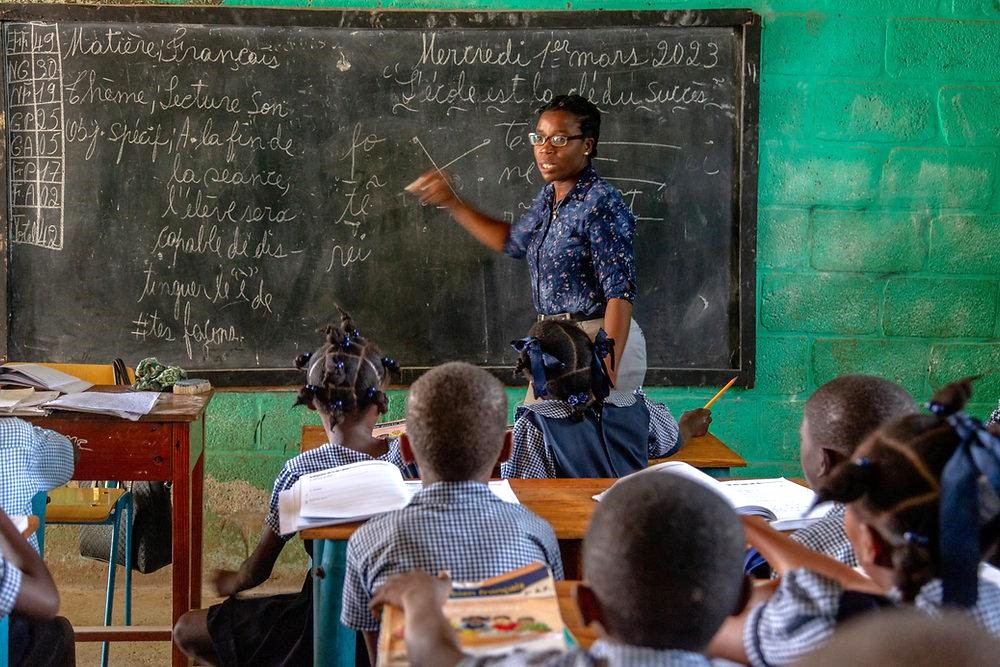
Haiti’s teachers are attracting international attention for a reason that goes beyond trophies and titles. In a country whose education system has endured poverty, political instability, natural disasters and severe shortages, exceptional educators have continued to keep classrooms functioning and learners engaged.
But the often-repeated claim that Haiti has produced 16 winners of “top teacher” awards requires careful qualification. The evidence does not establish that Haiti has produced 16 winners of the Global Teacher Prize. What is clearer is that Haitian educators have repeatedly earned significant recognition, while the country has developed deliberate programmes for identifying, celebrating and developing outstanding teachers.
That distinction matters because the real Haitian story is not the number 16. It is the culture behind the recognition.
One of Haiti’s best-known internationally recognised educators is Guy Etienne, who was among the 10 finalists for the inaugural Global Teacher Prize in 2015. The official Global Teacher Prize records confirm Etienne as a Top 10 finalist from Haiti.
His achievement challenged a common assumption that the world’s best teachers must come from wealthy education systems equipped with sophisticated technology, abundant resources and comfortable classrooms.
Haiti demonstrated the opposite.
Exceptional teaching can emerge from difficult circumstances when teachers possess commitment, creativity, resilience and a strong sense of responsibility to their communities.
Making teacher excellence visible
Haiti’s difficult environment has made that resilience particularly important. Teachers have had to continue educating children despite disruptions caused by political instability, insecurity, poverty and disasters.
Yet the most important lesson for Kenya is not simply that Haitian teachers are resilient.
It is that Haiti has increasingly sought to make teacher excellence visible.
Programmes associated with P4H Global have focused on teacher development, coaching, classroom practice and professional support. UNESCO says its “Training Teachers to Transform Haiti” programme has benefited about 8,000 educators and 350,000 students across all 10 departments of Haiti.
Such initiatives recognise a fundamental truth about education: improving learning is not achieved simply by changing the curriculum. It requires improving the person delivering that curriculum.
Teacher awards can therefore serve a purpose beyond ceremonies.
When properly designed, they can identify innovative teachers, showcase effective classroom practices, motivate colleagues and create a pool of professional mentors. An exceptional teacher should not only receive a certificate and disappear from the national conversation. Their methods should be studied, documented and shared.
Kenya should broaden how excellence is measured
This is where Kenya has an opportunity.
Kenya has thousands of outstanding teachers working in difficult conditions. Some teach large classes with limited resources. Others work in remote communities where infrastructure remains inadequate. Many support learners facing poverty, disability, family instability and other barriers to education.
Yet teacher excellence is sometimes reduced to examination results.
Academic performance matters, but it cannot be the only measure of a great teacher.
A teacher who dramatically improves attendance, transforms a struggling learner, introduces an effective special-needs intervention, develops an innovative science project, integrates technology successfully or keeps vulnerable children in school is also producing educational value.
Kenya’s Competency-Based Education reforms make this broader definition of excellence even more important. A competency-based system requires teachers to develop creativity, critical thinking, collaboration, communication and practical skills rather than merely prepare learners to reproduce information in examinations.
The country therefore needs a teacher-recognition system that reflects the education system it is trying to build.
Recognition could cover innovation, inclusion, mentorship, community engagement, technology, environmental education, learner welfare and improvement in struggling schools. Examination results could remain one component, but not the entire definition of excellence.
Turn outstanding teachers into mentors
Kenya could also establish a stronger link between recognition and professional development.
The best teachers should become mentors and demonstration teachers. Their successful classroom practices could be documented and shared through teacher-training institutions and professional development programmes. Outstanding rural teachers should receive the same visibility as those working in prestigious urban schools.
This would change the meaning of a teacher award.
It would no longer be merely an individual reward. It would become a mechanism for spreading effective practice throughout the education system.
Kenya already has proof that its teachers can compete at the highest international level. Peter Tabichi won the Global Teacher Prize in 2019 and became the first African recipient of the award.
His story should not remain an isolated inspirational episode.
It should provoke a larger question: How many other Peter Tabichis are teaching in Kenyan classrooms without ever being discovered?
That is ultimately the more important question raised by Haiti.
The country’s experience suggests that nations should not wait for international awards to identify their best teachers. They should build systems capable of discovering excellence at home.
Kenya should therefore move from occasionally celebrating outstanding teachers to systematically identifying, developing and multiplying their success.
The greatest teacher award is not necessarily a trophy.
It is the opportunity to influence thousands of other classrooms.
If Kenya can turn its best teachers into mentors, innovators and national education ambassadors, teacher recognition will cease to be ceremonial. It will become part of education reform itself.
Haiti’s lesson, therefore, is not that it has produced a particular number of award winners.
Its deeper lesson is that teachers who perform extraordinary work under extraordinary circumstances deserve to be seen, supported and used as catalysts for wider educational improvement.
Kenya has no shortage of such teachers.
READ ALSO: Gambling debt pushing Kenyan teachers to the brink
What it needs is a stronger system for finding them.
By Hillary Muhalya
Get more stories from our website: Education News
To write to us or offer feedback, you can reach us at: editor@educationnews.co.ke
You can also follow our social media pages on Twitter: Education News KE and Facebook: Education News Newspaper for timely updates.
>> Click here to stay up-to-date with trending regional stories