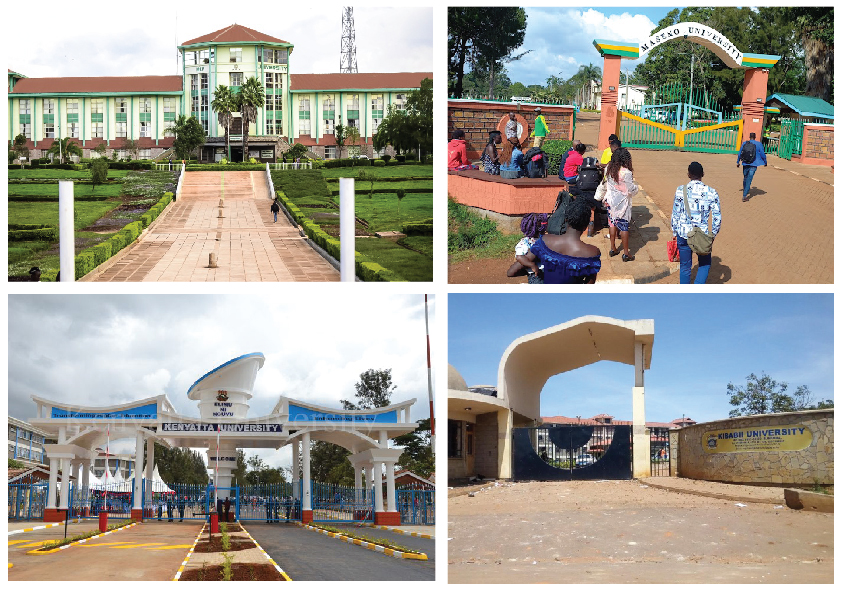
- Universities have accumulated approximately Ksh300 million in unpaid placement fees owed to KUCCPS, contributing to the agency falling short of its revenue target for the 2025/2026 financial year.
- MPs have demanded a breakdown of the defaulting institutions and the recovery measures KUCCPS has put in place.
- The committee has also questioned the Jomo Kenyatta Foundation over reporting 100 per cent budget absorption despite an 81 per cent cut in Exchequer disbursement
Universities have accumulated a staggering Ksh300 million debt owed to the Kenya Universities and Colleges Central Placement Service (KUCCPS), prompting Parliament to demand answers on who is refusing to pay and why the placement agency has allowed the arrears to grow.
The debt emerged when the National Assembly Education Committee subjected KUCCPS to scrutiny over its budget implementation for the 2025/2026 financial year, turning the spotlight on institutions that have failed to remit the Ksh1,500 placement fee charged after students are placed. The committee, chaired by Julius Melly, was told that KUCCPS collected Ksh261.57 million against a target of Ksh284.16 million, falling short of its expected revenue.
KUCCPS Chief Executive Officer Dr Agnes Wahome attributed the underperformance largely to institutions that had failed to honour their obligations, telling MPs the agency had approximately Ksh300 million in outstanding placement fees, with universities accounting for the bulk of the debt. The revelation triggered questions about the identity of the defaulters and the measures KUCCPS has taken to recover the money. Committee vice-chairperson Eve Obara demanded a breakdown showing whether the defaulting institutions were public universities, private institutions or TVETs, and sought details of the legal and administrative measures being deployed to recover the outstanding money.
ALSO READ:
TSC unveils grade-specific scoresheets, 1:3 shortlisting ratio for 2026/27 teacher promotions
The questions expose a potentially uncomfortable gap in the management of education-sector finances: how institutions entrusted with educating students can receive a government service, yet leave the agency providing that service with hundreds of millions of shillings in unpaid bills. Dr Wahome explained that the Ksh1,500 fee is a one-off charge linked to the placement and subsequent validation of students. After students report to universities, KUCCPS validates their data every semester, enabling universities and the Higher Education Loans Board to process student funding, but some universities have failed to remit the fees. Dr Wahome said the situation was now being addressed through an agreement under which universities had committed to paying the accumulated debt in instalments, an arrangement that could help KUCCPS recover the money, though Parliament’s demand for a breakdown of the defaulters points to a deeper concern: recovery should not depend solely on goodwill from institutions that have already failed to pay.
The Ksh300 million arrears also come against the backdrop of KUCCPS reporting an 89 per cent absorption rate for its approved Ksh796.5 million budget during the financial year. The agency absorbed about Ksh710 million, with the entire budget being internally generated.
The Education Committee also questioned the Jomo Kenyatta Foundation over its reported 100 per cent budget absorption. Managing director David Mwaniki was asked to explain how JKF could report full absorption when actual Exchequer disbursement had been reduced by 81 per cent, leaving some of its core operations fundamentally underfunded. The National Council for Nomadic Education in Kenya (NACONEK), which also appeared before the committee, reported a much higher overall budget utilisation rate of 96.46 per cent, spending Ksh5.44 billion out of a revised budget of Ksh5.64 billion.
ALSO READ: KUCCPS says it has technical capacity to handle Junior-to-Senior School placement
For KUCCPS, the real measure of financial discipline will therefore not simply be how much of its budget it spends, but whether it can recover the Ksh300 million owed by institutions and put mechanisms in place to prevent such arrears from recurring. Parliament’s insistence on knowing the categories of institutions involved could be the first step toward greater accountability. If universities are the biggest beneficiaries of KUCCPS placement services, they must also demonstrate financial responsibility by paying for those services. The bigger question now is simple: who owes KUCCPS the Ksh300 million, how long have they owed it, and when will the money be paid?
By Hillary Muhalya
Get more stories from our website: Education News
To write to us or offer feedback, you can reach us at: editor@educationnews.co.ke
You can also follow our social media pages on Twitter: Education News KE and Facebook: Education News Newspaper for timely updates.
>> Click here to stay up-to-date with trending regional stories