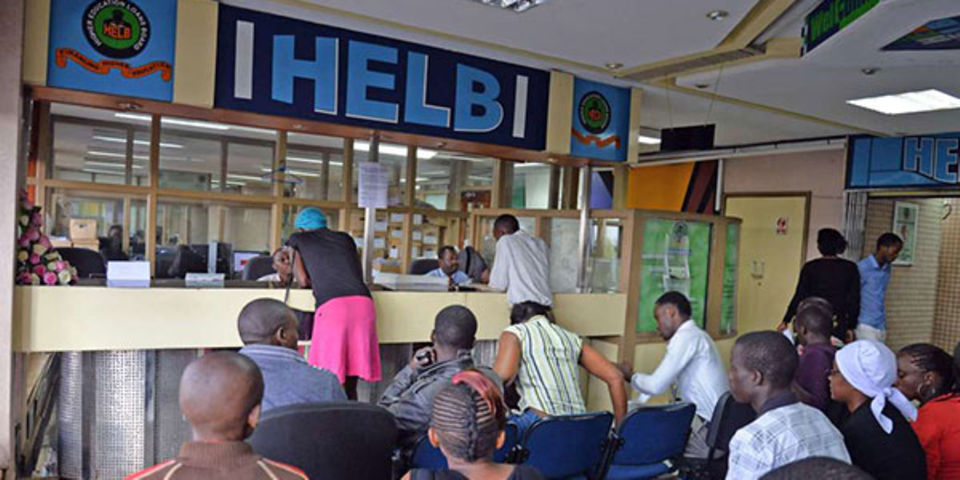
In Kenya’s higher education financing landscape, access to university and college education is significantly shaped by the support provided through the Higher Education Loans Board (HELB). This institution plays a central role in enabling thousands of students to pursue their academic dreams, particularly those who come from financially constrained backgrounds. However, the allocation of this support is not automatic.
It is guided by a structured assessment system that relies heavily on documentation to determine each applicant’s level of need. Whether a student is an orphan, a vulnerable child, a person living with a disability, or a student without any disability or special vulnerability, the requirement for accurate and complete documentation remains the foundation of the entire process.
For orphaned students, the application process begins with proving a painful reality; the absence of one or both parents. This is not merely a procedural requirement but a necessary step to ensure that financial support reaches those who lack parental backing. The most important documents in this category include death certificates of the deceased parent or parents.
These certificates provide official confirmation of loss and are considered primary evidence. In situations where death certificates are not available, perhaps due to delays or administrative challenges, burial permits may be accepted as alternative proof. However, these must be supplemented with a letter from the local administration, usually issued by the chief or assistant chief, confirming the orphan status of the applicant.
ALSO READ:
This letter serves as a community-level validation of the student’s circumstances. In more complex cases where documentation is incomplete or disputed, a sworn affidavit may be required as a legal declaration of truth. For double orphans, where both parents are deceased, documentation for both parents is mandatory. This ensures accurate classification and often results in placement into higher funding bands due to increased vulnerability.
Closely linked to this category are vulnerable children, who may not necessarily be orphans but live under extremely difficult socio-economic conditions. These conditions may include extreme poverty, neglect, unstable family structures, or reliance on charitable support. For these students, documentation becomes a way of translating hardship into verified evidence.
A letter from the area chief or assistant chief is essential, as it confirms the student’s situation and provides local context. This is often supported by reports from social workers or government departments such as the Children’s Department, which provide professional assessment of the student’s circumstances.
Where applicable, court documents showing guardianship arrangements must be included. Additionally, evidence of support from non-governmental organizations, religious institutions, or well-wishers may strengthen the application. Together, these documents build a clear and convincing picture of vulnerability, ensuring that deserving students are not overlooked.
For students living with disabilities, the system places emphasis on both recognition and support. Disability is not treated as a limitation but as a condition requiring equitable intervention. The most critical document in this category is the National Council for Persons with Disabilities (NCPWD) card, which officially confirms disability status in Kenya. This card is central to the application and serves as the primary proof of eligibility for additional support.
It is accompanied by a detailed medical report from a recognized health facility, which outlines the nature and extent of the disability. In certain cases, especially those involving cognitive, developmental, or learning disabilities, additional assessment reports may be required.
These documents ensure that the funding system responds not only to the presence of disability but also to its specific impact on learning and academic performance. As a result, students in this category often benefit from enhanced funding, including higher loan allocations and increased bursary support.
ALSO READ:
Chepseon Girls’ student reports to school after Bomet Senator pays her school fees
Alongside these special categories, there is also a large group of students without disabilities or exceptional vulnerabilities. These applicants form the majority and are assessed primarily based on household financial capacity. For them, documentation is equally important, though focused on establishing identity, academic eligibility, and economic background.
A national identification card is required to confirm identity and citizenship. An admission letter from a recognized institution is necessary to prove enrollment in higher education. Academic transcripts or result slips are also required to verify academic progression and qualification. In addition, detailed financial information of parents or guardians must be provided.
This may include payslips for salaried individuals, business records for self-employed guardians, or formal income declarations. In some cases, bank statements or additional financial disclosures may be requested to clarify the household’s economic status. These documents enable HELB to accurately assess ability to pay and determine appropriate funding levels.
Across all categories, the Means Testing Instrument remains the central tool used to evaluate financial need and assign funding bands. Students from highly vulnerable backgrounds—such as orphans, vulnerable children, and persons living with disabilities; are often placed in higher funding bands, which come with greater financial support in the form of both loans and bursaries. Even students without special classifications are fairly assessed based on their economic circumstances, ensuring that support is distributed equitably across the board.
ALSO READ: Baringo schools reopen as Operation Maliza Uhalifu restores peace
The effectiveness of this entire system depends heavily on the accuracy, consistency, and authenticity of documentation provided by applicants. Errors, inconsistencies, or missing documents can lead to delays, misclassification, or reduced funding, even for deserving students. It is therefore essential that applicants ensure all names match across documents, official letters are properly signed and stamped, and all supporting evidence is current and verifiable.
Ultimately, this process is not just administrative, it is deeply transformative. It ensures that students’ personal realities are recognized and translated into meaningful educational support. Whether one is facing the hardship of orphanhood, the struggles of vulnerability, the challenges of disability, or the financial constraints of an ordinary household, the documentation provided becomes the bridge between need and opportunity.
In this way, HELB continues to stand as a critical pillar in Kenya’s education system, ensuring that no capable student is left behind simply because of financial limitation.
By Hillary Muhalya
You can also follow our social media pages on Twitter: Education News KE and Facebook: Education News Newspaper for timely updates.
>>> Click here to stay up-to-date with trending regional stories
>>> Click here to read more informed opinions on the country’s education landscape