“My people are destroyed for lack of knowledge.” The enduring warning from the Book of Hosea speaks across centuries with unsettling relevance. Yet, if the prophet Hosea were to survey the modern education landscape—particularly in a country like Kenya—he might be compelled to refine his lament. Today, the crisis is no longer a simple deficit of knowledge. It is, paradoxically, an overabundance of it that is poorly harnessed, unevenly interpreted, and often disconnected from decision-making.
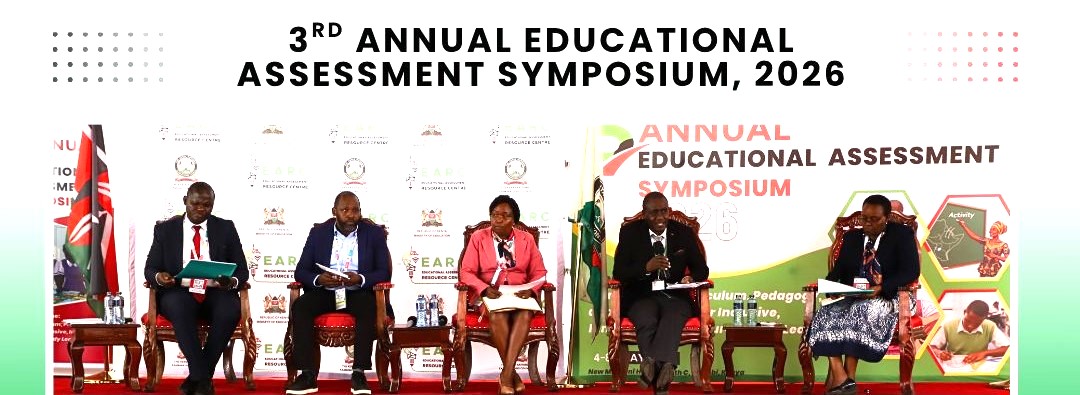
This tension is at the heart of the ongoing KNEC 3rd Annual Educational Assessment Symposium, which enters its third day today at New Mitihani House. Convened by the Kenya National Examinations Council, the symposium is not merely a technical gathering of assessment experts. It is, in many ways, a strategic intervention into a system grappling with a new kind of ignorance—one born not of scarcity, but of excess.
Kenyan schools today are awash with data. Continuous assessment scores, national examination results, competency-based assessment reports, attendance logs, behavioural records, digital learning analytics—the list is extensive and ever-expanding. Add to this the rising influence of Artificial Intelligence in education, and one encounters an ecosystem saturated with information streams. The intuitive assumption would be that such abundance translates into better planning, sharper interventions, and improved learning outcomes. But the reality is far more complex.
Information, in itself, is inert. It acquires value only when it is systematically analysed, contextualised, and translated into actionable insights. Without this transformation, data becomes noise—overwhelming, distracting, and ultimately counterproductive. Schools may diligently collect assessment scores yet fail to interrogate patterns of learner progression. Administrators may receive performance dashboards yet lack the analytical frameworks to extract meaning. Teachers may input continuous assessment data without leveraging it to refine instruction.
This is the contemporary embodiment of Hosea’s warning: not ignorance in the traditional sense, but a failure to convert knowledge into wisdom.
The KNEC symposium arrives at a critical juncture. Its central thrust—strengthening the use of assessment data for planning and decision-making—directly confronts this challenge. By bringing together policymakers, educators, psychometricians, and data specialists, the forum seeks to reframe how knowledge is understood within the education system. It shifts the conversation from “What data do we have?” to “What do we do with the data we have?”
This distinction is not semantic; it is foundational.
Effective educational planning demands a scientific orientation to data. This involves more than basic tabulation or ranking. It requires competencies in trend analysis, cohort tracking, variance interpretation, and predictive modelling. For instance, longitudinal assessment data can reveal whether learning gaps in early grades persist into later years. Item-level analysis can identify specific conceptual misunderstandings among learners. Comparative analytics can highlight disparities across regions, schools, or demographic groups. These insights, when properly utilised, enable targeted interventions rather than blanket solutions.
Yet, such analytical depth is not yet uniformly embedded within school systems. Many institutions remain at the descriptive level—reporting scores without diagnosing underlying issues. The consequence is a cycle of reactive decision-making, where interventions are implemented without a clear evidentiary basis.
Artificial intelligence adds another layer to this evolving landscape. AI-driven tools can process vast datasets, identify patterns invisible to the human eye, and even generate predictive insights about learner performance. However, without critical literacy in interpreting AI outputs, there is a risk of over-reliance or misapplication. Algorithms are only as robust as the data and assumptions that underpin them. Blind trust in automated insights can be as dangerous as ignoring data altogether.
Thus, the challenge is twofold: building capacity to analyse data rigorously, and cultivating judgment to interpret it responsibly.
The KNEC symposium appears acutely aware of this dual imperative. Its emphasis on assessment literacy, data utilisation, and evidence-based decision-making signals a deliberate shift toward a more sophisticated educational ecosystem. It recognises that the future of education will not be determined solely by curriculum reforms or infrastructural investments, but by the system’s ability to learn from itself—continuously, systematically, and intelligently.
For teachers, this shift redefines professional practice. The classroom is no longer just a site of content delivery; it is also a node of data generation and analysis. Instruction must be informed by evidence—diagnostic assessments guiding remediation, formative feedback shaping pedagogy, and performance data informing differentiation. For school leaders, decision-making must move beyond intuition to incorporate empirical evidence. Resource allocation, intervention programs, and performance targets must all be anchored in data-driven insights.
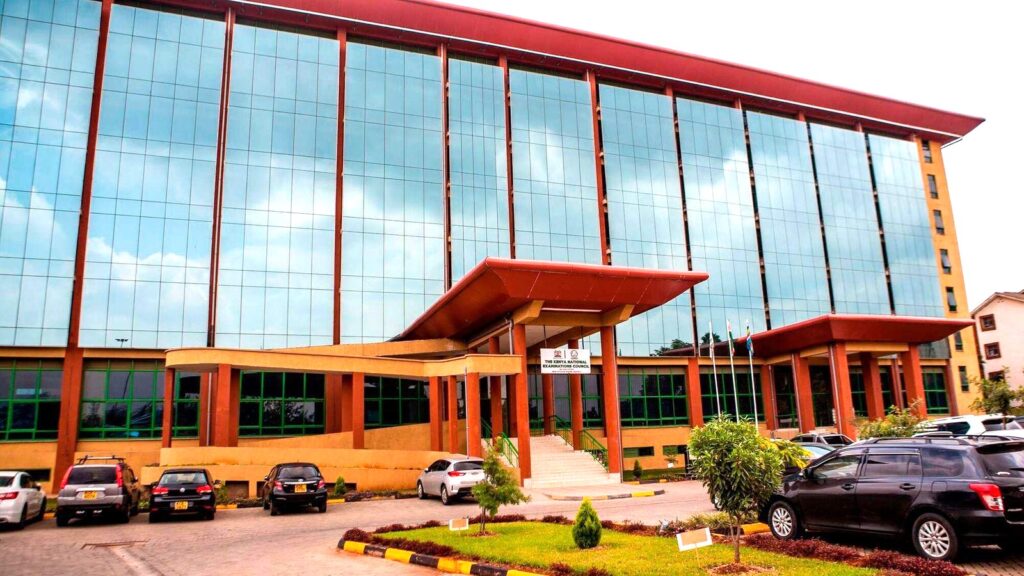
At the policy level, the implications are equally profound. National assessment bodies like KNEC are no longer just certifying institutions; they are knowledge hubs. Their role extends to generating, interpreting, and disseminating data that can inform systemic improvement. The symposium, therefore, is not an isolated event but part of a broader reconfiguration of institutional purpose.
And yet, amid this technical discourse, the moral undertone of Hosea’s message persists. Knowledge—whether scarce or abundant—carries responsibility. The rejection of knowledge in the biblical sense was not merely intellectual failure; it was a moral lapse with societal consequences. Similarly, the misuse or underuse of data in education today has tangible effects on learners’ lives. Misdiagnosed learning gaps, misallocated resources, and misinformed policies ultimately translate into lost potential.
READ ALSO: Why the Annual Educational Assessment Symposium matters for every Kenyan teacher and learner
In this sense, the symposium’s timing is indeed apt. As Kenya deepens its engagement with competency-based education and integrates digital technologies into learning, the question is no longer whether data exists, but whether it is being used wisely. An equal abundance of analytical capacity and ethical judgment must match the abundance of information.
If Hosea’s warning is to be reinterpreted for our time, it might read thus: “My people are hindered not by the absence of knowledge, but by the failure to understand and apply it.” The task before educators, policymakers, and institutions is to bridge this gap—to transform data into insight, and insight into action.
In the halls of New Mitihani House today, that transformation is not merely being discussed; it is being actively pursued. And in that pursuit lies the promise of a more informed, responsive, and ultimately effective education system.
By Ashford Kimani
Ashford, a delegate at the symposium, teaches English and Literature in Gatundu North Sub-county and serves as Dean of Studies.
You can also follow our social media pages on Twitter: Education News KE and Facebook: Education News Newspaper for timely updates.
>>> Click here to stay up-to-date with trending regional stories
>>> Click here to read more informed opinions on the country’s education landscape
>>> Click here to stay ahead with the latest national news.