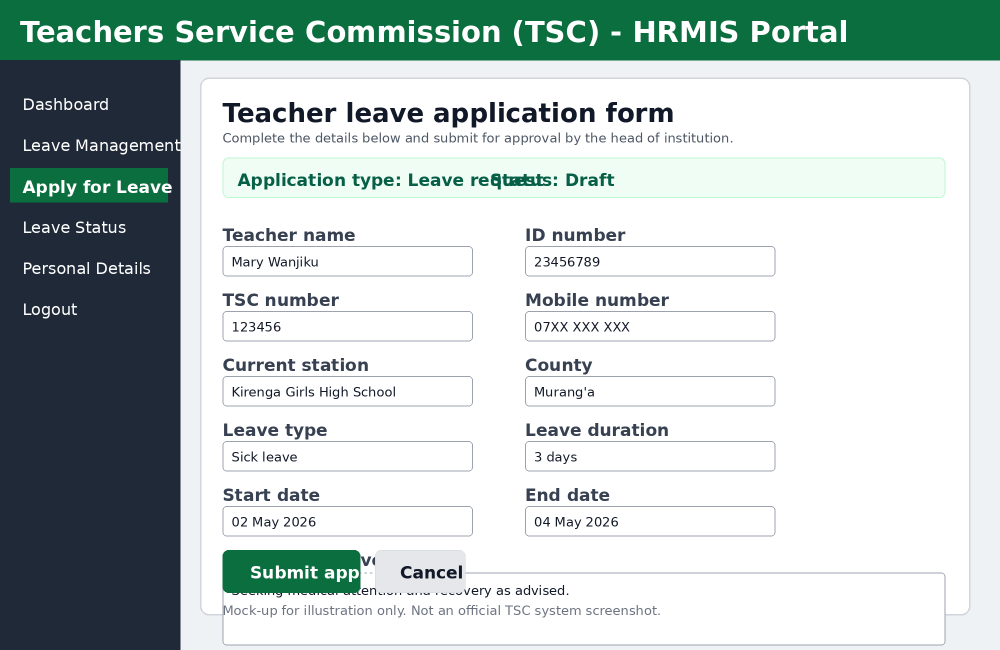
Many teachers across the country have often wondered how to access leave within the Teachers Service Commission (TSC) system, especially as nearly all public service processes are gradually moving to digital platforms. The concern has been particularly common among teachers who are still adapting to the shift from manual paperwork to online systems. In response to these concerns, TSC has fully streamlined the leave application process through the Human Resource Management Information System (HRMIS), a digital platform that allows teachers to apply for, track, and manage their leave requests with greater ease, speed, and transparency.
The need for leave among teachers is not unusual, nor is it unexpected. Teaching is a demanding profession that requires continuous engagement with learners, lesson preparation, assessment, and school administration. As a result, there are moments when a teacher may need to step away from duty for valid and unavoidable reasons. One of the most common reasons is ill health. When a teacher falls sick or requires medical attention, they may be unable to perform their duties effectively. In such cases, sick leave becomes necessary, sometimes supported by medical documentation depending on the severity or duration of the illness. This ensures that recovery is prioritized without compromising accountability.
Closely related to health needs are maternity and paternity responsibilities. Teachers, like any other employees, experience major life events such as childbirth and the arrival of a newborn. Maternity leave is therefore granted to female teachers to allow them time to recover and care for their infants, while paternity leave provides male teachers with the opportunity to support their families during this important period. These forms of leave reflect the recognition that teachers are not only professionals but also individuals with essential family responsibilities.
Family-related emergencies also frequently prompt teachers to seek leave. Life is unpredictable, and situations such as the loss of a close relative, serious illness in the family, or urgent domestic matters may require immediate attention. In such instances, compassionate leave is granted to allow teachers time to attend to these critical personal issues, ensuring that they are supported during difficult moments without unnecessary pressure from professional obligations.
In addition to personal and family needs, professional development is another significant reason for leave applications. Education is a dynamic field that continuously evolves, and teachers are often required to upgrade their skills, pursue further studies, or attend training workshops. Study leave and official duty leave therefore, become essential in enabling teachers to improve their qualifications and stay updated with modern teaching methods and curriculum changes. This not only benefits the individual teacher but also enhances the quality of education delivered to learners.
Annual leave is another important category within the leave structure. This type of leave is part of a teacher’s entitlement and is usually planned within the school calendar. It provides teachers with an opportunity to rest, recharge, and attend to personal matters after long periods of continuous service. Given the demanding nature of teaching, annual leave plays a critical role in maintaining the physical and mental well-being of teachers, ultimately contributing to improved productivity when they return to work.
The introduction of the online leave application system by the Teachers Service Commission was not accidental but part of a broader reform agenda aimed at modernising public service delivery. One of the main motivations behind this initiative was the need to improve efficiency. In the past, the manual leave application process was often slow and cumbersome, with teachers required to fill out physical forms, submit them through several administrative levels, and wait for approvals that sometimes took too long. The digital system has eliminated many of these delays by allowing instant submission and real-time processing of applications.
Another key reason for introducing the system was to enhance accountability and transparency. In a manual system, tracking applications could be difficult, and records were sometimes misplaced or inconsistently handled. With the digital platform, every application is automatically recorded, making it easier to monitor approvals and ensure fairness in decision-making. This has strengthened trust in the leave management process and reduced administrative disputes.
The system also significantly reduces paperwork and administrative burden. Previously, leave applications involved extensive physical documentation, filing, and storage, which consumed time and resources. The HRMIS platform has replaced this with digital records, improving efficiency and reducing the risks associated with lost or duplicated files. This has modernized administrative operations across schools and TSC offices.
Additionally, the system supports better workforce planning and data management. With real-time access to leave data, TSC can now monitor teacher availability more accurately, identify staffing gaps in schools, and plan for replacements where necessary. This ensures that learning continues with minimal disruption even when teachers are away on approved leave.
The introduction of this system also aligns with the government’s broader push toward e-government services, aimed at making public services more accessible and efficient. Teachers can now apply for leave from any location, eliminating the need for physical travel to offices or prolonged administrative procedures, provided they have access to the internet.
To apply for leave, a teacher logs into the official TSC HRMIS portal using their TSC number and password. Once inside the system, they navigate to the leave management section, select the appropriate leave type—such as annual, sick, maternity, paternity, study, or compassionate leave—and fill in the required details, including dates, duration, and reasons. Where necessary, supporting documents such as medical reports or official letters can be uploaded directly into the system before submission.
The application is then automatically forwarded to the head of the institution for initial review before being escalated to TSC for final approval. The teacher can track the application status online, respond to any queries that are raised, and eventually download the approval once granted. Teachers are encouraged to communicate with their heads of institution before applying and ensure that their personal records are accurate in the system to avoid unnecessary delays.
READ ALSO: School in Murang’a bans casual leave requests, orders teachers to follow stipulated TSC rules
Ultimately, the TSC online leave application system represents a major step in improving efficiency, transparency, and service delivery within the education sector, while also ensuring that teachers’ welfare needs are properly addressed within a structured and modern framework.
By Hillary Muhalya
You can also follow our social media pages on Twitter: Education News KE and Facebook: Education News Newspaper for timely updates.
>>> Click here to stay up-to-date with trending regional stories
>>> Click here to read more informed opinions on the country’s education landscape
>>> Click here to stay ahead with the latest national news.