- CUE findings show only 631 professors across 83 university institutions, or 3.84 per cent of 16,341 academic staff, straining postgraduate supervision.
- Yabesh has proposed reforms including supervision workload caps, digital tracking, co-supervision across institutions and faster thesis examination timelines.
- CUE has been urged to publish sector-wide postgraduate completion indicators to hold universities accountable for research outcomes.
Kenya’s postgraduate education system is facing a runaway crisis that universities can no longer disguise with graduation ceremonies and impressive statistics. The latest Commission for University Education (CUE) findings reveal a system struggling to supervise the very researchers the country desperately needs.
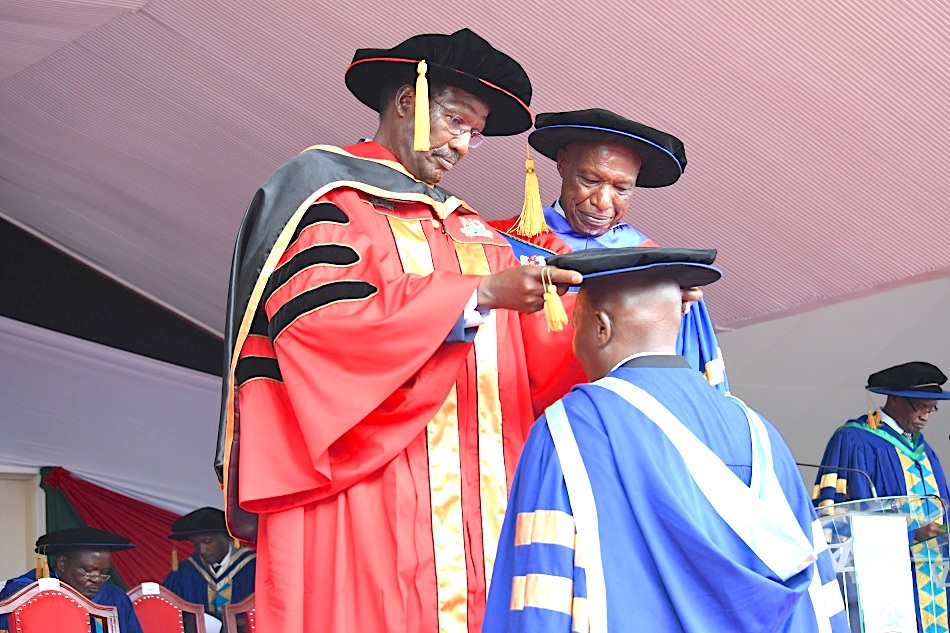
The numbers are sobering. Across the 83 university institutions covered by the latest data, there were only 631 professors, just 3.84 per cent of 16,341 academic staff. CUE warns that rising student-to-staff ratios are producing unsustainable teaching, marking and supervision workloads.
This is not simply an inconvenience for a master’s or PhD candidate. Every delayed proposal, unanswered email, postponed defence or thesis trapped in an academic queue represents wasted years, wasted money and wasted intellectual capacity. Kenya must stop treating postgraduate supervision as an informal favour squeezed between lectures, administration, meetings and examinations. It is a core academic responsibility and must be managed as such.
Fixing Supervision Workloads and Timelines
First, universities need enforceable supervision workloads. A supervisor should not accumulate dozens of postgraduate students simply because an institution lacks enough senior academics. Universities should establish reasonable supervision caps, monitor them centrally and redistribute students when workloads become unmanageable.
Second, supervision must have deadlines. A student should know when a proposal will be reviewed, when corrections will be returned and when the next meeting will occur. Universities should introduce digital supervision-tracking systems recording meetings, submitted chapters, feedback and outstanding actions. Such systems would protect students from disappearing into administrative black holes while also documenting supervisors’ workloads.
Third, universities should stop making the supervisor the only gateway to progress. A postgraduate candidate should have access to a supervisory committee or second reader, particularly at doctoral level. If one supervisor is unavailable, the entire research process should not grind to a halt.
ALSO READ:
Kenya has thousands of PhD holders, but why are there only 551 professors?
Expanding the Supervisor Pool and Strengthening Collaboration
Fourth, Kenya needs to expand its pool of qualified supervisors. CUE’s own findings underline the shortage of professors and doctorate-qualified academics. Universities should invest deliberately in academic staff development, doctoral training and accelerated pathways for promising scholars to become supervisors, while also retaining experienced academics. But recruitment alone will not solve the problem. Universities must also protect supervisors’ research and supervision time, since loading academics with excessive teaching and administrative duties while demanding quality postgraduate supervision is institutional self-sabotage.
Fifth, universities should make greater use of co-supervision across institutions. Where specialised expertise is unavailable at one university, accredited supervisors from another institution should be able to participate through formal arrangements. Digital meetings have made such collaboration far easier, and Kenya should exploit that opportunity instead of forcing every institution to build every area of expertise from scratch.
Sixth, postgraduate programmes need serious project management. At admission, every student should receive a realistic research timetable covering coursework, proposal development, ethics approval, data collection, analysis, writing, examination and corrections. Progress should be reviewed each semester, with intervention triggered when a candidate falls substantially behind.
The responsibility, however, cannot be placed entirely on supervisors. Students must meet agreed milestones, submit work on time and respond seriously to academic feedback. Universities should provide research-methods training, statistical support, academic writing centres, ethics guidance and research-access assistance, so that a student struggling with methodology does not spend months waiting for one supervisor to become available.
Faster Examination, Funding and Accountability
Seventh, examination must become faster without becoming weaker. Universities need transparent timelines for thesis examination, independent tracking of examiners and automatic escalation where reports are overdue. Academic quality cannot mean indefinite delay.
There is also a funding question. CUE has previously identified inadequate research funding, weak infrastructure and poor management, supervision, monitoring and evaluation as persistent challenges in university research. A postgraduate student cannot complete research on time if laboratories, databases, fieldwork funds or research equipment are unavailable.
Finally, CUE should publish sector-wide postgraduate completion indicators. Universities should report admission numbers alongside completion times, supervision ratios, examination turnaround periods and attrition. Institutions should no longer be judged primarily by how many students they admit; they should also be judged by how effectively they shepherd legitimate research to completion. The goal is not to manufacture degrees quickly. It is to eliminate unnecessary delay while protecting academic standards.
ALSO READ: Making Teachers’ Day meaningful: A call for practical support from TSC
Kenya cannot simultaneously complain about weak research capacity and tolerate postgraduate researchers spending years navigating preventable supervision bottlenecks. Universities are supposed to produce knowledge, not warehouses of unfinished theses.
The message from the CUE report should therefore be unmistakable: recruit more qualified academics, cap supervision loads, digitise tracking, strengthen co-supervision, fund research, enforce feedback timelines and hold institutions accountable for completion. A postgraduate degree should be demanding. It should not be unnecessarily slow.
Kenya needs researchers in laboratories, universities, industries, hospitals, government and communities, not talented scholars permanently waiting for the next signature, comment or meeting.
By Yabesh Onwonga
History and language analyst
Get more stories from our website: Education News
To write to us or offer feedback, you can reach us at: editor@educationnews.co.ke
You can also follow our social media pages on Twitter: Education News KE and Facebook: Education News Newspaper for timely updates.
>> Click here to stay up-to-date with trending regional stories