- Schools should shift from inspecting teachers to systematically monitoring whether learners are actually learning.
- The Coherent monitoring cycle- plan, teach, monitor, collect evidence, analyse, identify gaps, intervene, reassess, improve is the foundation of effective academic leadership.
- Schools should distinguish system failures from individual teacher failures and to measure success by improved learning outcomes rather than the volume of monitoring reports produced.
A school can have lesson plans neatly filed away, teachers signing attendance registers every morning, schemes of work completed and classrooms regularly inspected—and still experience declining academic performance. That is because activity is not the same as impact. For too long, academic monitoring in some schools has been reduced to checking lesson plans, signing schemes of work, inspecting learners’ exercise books and occasionally walking into classrooms.
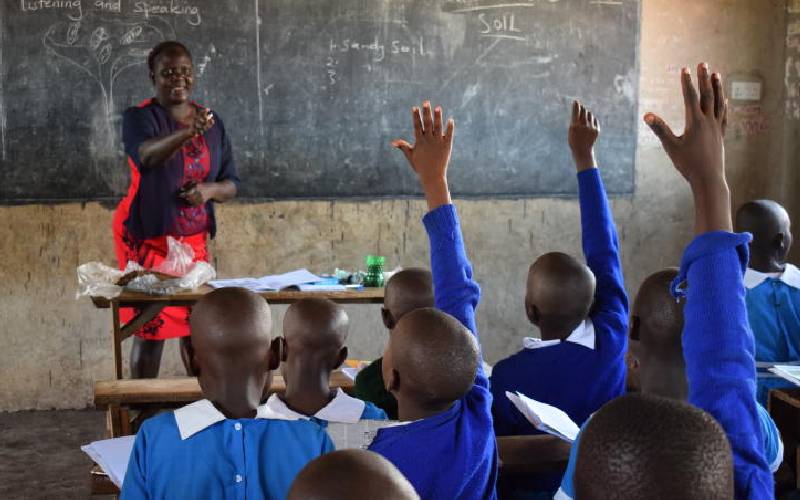
These activities have their place, but they are not the destination. The fundamental question should be much bigger: are our learners actually learning? That single question should sit at the heart of every serious academic monitoring system.
A modern school needs a system capable of telling management what is happening in classrooms, whether the curriculum is on course, how teachers are delivering instruction, whether learners understand what they are taught, where performance gaps are emerging and what the school is doing to close those gaps. Academic monitoring should therefore be viewed not as a policing mechanism, but as the school’s early-warning and improvement system.
The first requirement is clarity. A school cannot monitor everything with equal intensity; it must identify the indicators that genuinely influence learning, including curriculum coverage, lesson preparation, classroom instruction, learner participation, assessment, marking and feedback, attendance, academic progress and intervention. Once these areas are clearly defined, the school should establish simple tools that generate comparable evidence: a lesson-observation tool to capture the quality of instruction, a curriculum tracker to reveal whether teachers are keeping pace with the expected learning programme, an assessment-analysis tool to identify areas of learner difficulty, an exercise-book review to reveal the quality and frequency of learner work, marking and feedback, a performance tracker to show progress over time, and an intervention record to demonstrate whether identified learning gaps are actually being addressed. The objective is not to bury teachers in paperwork, but to turn scattered information into useful intelligence.
ALSO READ:
HELB’s KSh500,000 training lifeline could transform careers of teachers and civil servants
Curriculum coverage deserves particular attention. A teacher can be punctual, hardworking and committed and still fall behind the expected teaching programme. If a class is supposed to have covered eight major areas but has only reached five, management must know early enough to respond, since curriculum gaps discovered shortly before examinations are often too late to correct effectively.
The same principle applies to classroom observation. A beautifully prepared lesson plan does not guarantee a successful lesson; the real evidence is found in what happens when teaching begins. Are concepts explained clearly? Are learners participating? Does the teacher ask meaningful questions? Are misconceptions identified? Are different learner abilities considered? Are teaching and learning resources being used effectively? Does the teacher check whether learners actually understand? These are the questions that matter, but observation must be handled carefully.
If teachers believe that every classroom visit is an attempt to catch them making mistakes, monitoring will create fear rather than improvement, and teachers may begin teaching for inspection instead of teaching for learning. The better approach is supportive accountability: observe, give evidence-based feedback, identify strengths, agree on areas for improvement, provide support, then return later to determine whether improvement has occurred. That transforms classroom observation from an inspection exercise into professional development.
Perhaps the most underrated source of academic evidence is learner work itself. A school can learn a great deal by systematically examining exercise books, assignments, projects and other learner outputs. Are learners receiving sufficient work? Is it marked consistently? Are corrections being done? Does feedback help learners understand their mistakes? Are the same errors appearing repeatedly? The learner’s book can expose learning problems that may never appear in a formal report.
Bomet University freshers face accommodation crisis as 3,889 students report
Assessment should then take the process further, since a school’s responsibility does not end when examination results are released — results should be interrogated. If a significant percentage of learners performs poorly in a particular concept, the school should not immediately conclude that the learners are weak; it should ask why. Was the concept adequately taught? Did learners receive enough practice? Was the assessment aligned with what was taught? Were misconceptions identified early? Did the teacher provide adequate feedback? Was remediation undertaken? Poor performance is evidence requiring investigation, not simply a label to attach to learners.
This is why every school needs a meaningful learner-performance tracking system, not to produce endless rankings but to identify trends: who is improving, who is declining, who has consistently underperformed, which classes are struggling, which topics are creating difficulties, which learners require targeted support, and which interventions are producing results.
The real strength of academic monitoring, however, is revealed after the problem has been identified. Too many monitoring systems stop at diagnosis — a report states that learners are underperforming, a meeting is held, the issue is discussed, and then everyone moves on. That is not enough. A serious academic system must create a clear intervention pathway: identify, diagnose, intervene, reassess, improve. If learners continue struggling, the school must revisit the intervention rather than simply repeating the same strategy. This requires clear responsibility at every level: teachers should monitor learning daily, heads of department should analyse departmental performance and support teachers, academic coordinators should consolidate school-wide evidence, principals should provide leadership, resources and intervention, while boards and proprietors should provide strategic oversight and demand evidence of improvement.
Academic monitoring should also have a rhythm. Curriculum progress can be checked regularly, classroom observations should occur throughout the term, learner work should be sampled consistently, assessment data should be analysed soon after tests and examinations, and termly academic reviews should bring the evidence together. Every review should move beyond “What happened?” to stronger questions: Why did it happen? What are we doing about it? Who is responsible? When will we review the intervention? Has it worked? That final question separates genuine academic leadership from routine administration.
A school does not need hundreds of monitoring forms — it needs a coherent system. The cycle is straightforward: plan, teach, monitor, collect evidence, analyse, identify gaps, intervene, reassess, improve. When that cycle becomes part of the school’s culture, academic monitoring stops being an occasional management activity and becomes a continuous improvement process. This is particularly important as schools navigate increasingly learner-centred approaches, competency development, continuous assessment, technology integration and greater expectations for evidence-based educational leadership. The school of the future cannot rely solely on end-of-term examination results to discover what went wrong; it must detect problems while there is still time to correct them.
There is another important principle: monitor systems, not personalities. If performance is poor, the response should not automatically be to ask which teacher is to blame. Examine the timetable, class size, resources, learner attendance, curriculum coverage, assessment practices, teacher support and leadership decisions instead. Sometimes the problem is an individual; sometimes it is a system. Good academic leadership dares to distinguish between the two.
Auditor-General flags illegal fees, financial anomalies in top secondary schools
Ultimately, the purpose of monitoring is not to create fear among teachers — it is to create clarity across the entire school. Teachers should know what good instruction looks like. Heads of department should know what they are expected to monitor. School leaders should know where academic risks are emerging. Learners should receive timely support. Parents should have confidence that academic challenges are identified and addressed. And management should be able to demonstrate, with evidence, whether the school is actually improving.
The strongest schools are not those that inspect teachers most aggressively — they are those that understand learning most deeply. Academic excellence requires more than hardworking teachers and ambitious school leaders; it requires a system that continuously asks what is being taught, what learners are learning, what evidence exists, where the gaps are, what is being done about them, and whether it has worked. That is the difference between academic administration and academic leadership. Ultimately, the success of an academic monitoring system should not be measured by the number of forms completed or classrooms visited — it should be measured by one thing: whether learners are learning better.
By Hillary Muhalya
Get more stories from our website: Education News
To write to us or offer feedback, you can reach us at: editor@educationnews.co.ke
You can also follow our social media pages on Twitter: Education News KE and Facebook: Education News Newspaper for timely updates.
>>> Click here to stay up-to-date with trending regional stories