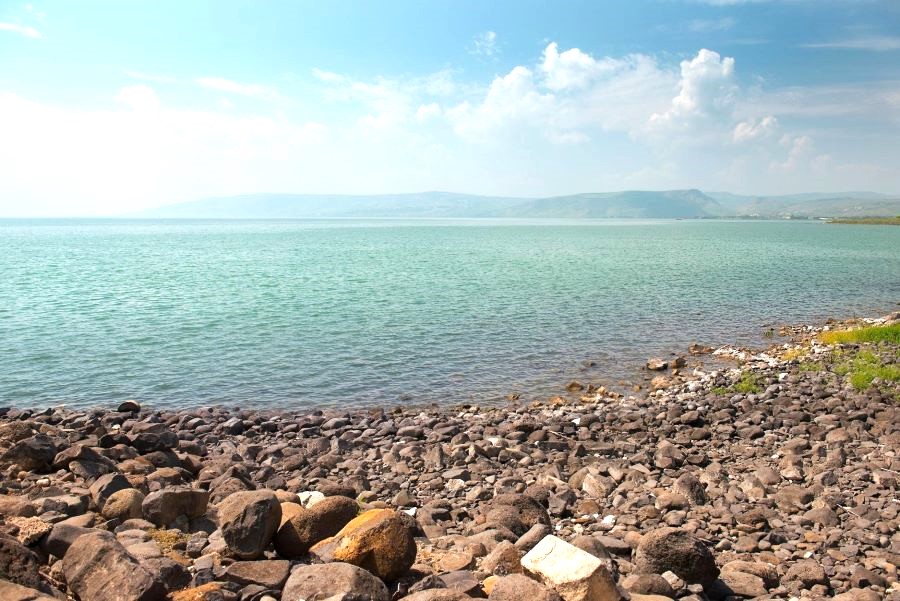
- Ashford Kimani explores the Sea of Galilee as a landscape where geography and biblical history converge.
- Its shores provide the setting for some of Christianity’s most enduring accounts of Jesus’ ministry and disciples.
- Beyond its religious significance, the freshwater lake has sustained fishing, settlement and livelihoods for centuries.
The Sea of Galilee is one of the most remarkable geographical and biblical landmarks in the world. Although it is called a “sea,” it is actually a freshwater lake. Situated in northern Israel, within the Jordan Rift Valley, the lake has played an extraordinary role in the history, economy and religious traditions of the region. For Christians in particular, the Sea of Galilee is inseparable from the earthly ministry of Jesus Christ. Its waters, fishing villages and surrounding hills form the setting for some of the most memorable accounts in the New Testament.
The lake is approximately 21 kilometres long and 13 kilometres wide at its broadest point. It lies more than 200 metres below sea level, making it one of the lowest freshwater lakes on Earth. The Jordan River enters the lake from the north and continues southwards after passing through it. The surrounding landscape consists of hills, valleys and fertile areas, creating a striking contrast between the blue waters and the dry terrain of the region.
The lake has been known by several names throughout history. In the New Testament it is sometimes called the Sea of Galilee, the Sea of Tiberias and the Lake of Gennesaret. The name “Sea of Galilee” is particularly familiar to Christians because the Gospel writers repeatedly refer to the lake in describing Jesus’ ministry.
A landscape central to Jesus’ ministry
Fishing was central to the economic and social life of communities around the lake during the time of Jesus. Fishermen worked from boats, casting nets into the waters and bringing their catches to shore. It was in this environment that Jesus called some of His earliest disciples. Simon Peter and his brother Andrew were fishermen, as were James and John, the sons of Zebedee. Their decision to leave their nets and follow Jesus became one of the foundational stories of Christianity.
The Sea of Galilee also provides the setting for several of Jesus’ miracles. One of the best-known accounts describes Jesus calming a violent storm while He and His disciples were crossing the lake. The disciples became terrified as waves battered their boat, but Jesus rebuked the wind and the sea, and calm followed. The story has become a powerful Christian metaphor for faith in the midst of life’s storms.
Another famous account describes Jesus walking on the water. His disciples were crossing the lake when they saw Him approaching them on the water. Peter attempted to walk towards Jesus but became frightened by the wind and began to sink. The episode is frequently interpreted as a lesson about faith, courage and dependence upon God.
The shores of the Sea of Galilee were also the stage for Jesus’ teaching ministry. Capernaum, an important fishing settlement on the northern shore, became closely associated with His ministry. The Gospels describe Jesus teaching in synagogues, healing the sick and interacting with ordinary people in and around the town.
Other locations around the lake have strong biblical associations. Bethsaida is traditionally connected with several of Jesus’ disciples, while Magdala was associated with Mary Magdalene. Tabgha is traditionally linked to the multiplication of the loaves and fishes. The Mount of Beatitudes, overlooking the lake, is traditionally associated with the Sermon on the Mount.
Where geography helps explain the biblical setting
The physical environment of Galilee is important in understanding the biblical narratives. Sudden and powerful storms can develop on the lake because of the surrounding topography and atmospheric conditions. The hills surrounding the water can contribute to strong winds descending rapidly onto the lake. Thus, the biblical references to sudden storms were not merely literary inventions; they reflected a genuine feature of the local environment.
Beyond its biblical significance, the Sea of Galilee has remained important to the people of the region. Its freshwater has historically supported agriculture, fishing and human settlement. Today, it remains an important water resource and a major tourist and pilgrimage destination. Visitors come not only to admire its natural beauty but also to connect the modern landscape with ancient historical and religious traditions.
For Christians, however, the Sea of Galilee represents more than a geographical location. It can be viewed as a landscape of transformation. Fishermen became disciples. Ordinary villages became centres of a movement that would influence world history. Storms became illustrations of faith, and a lake associated with fishing became a central setting for the teachings and miracles of Jesus.
There is also a deeper human lesson in the stories associated with the lake. The disciples were not extraordinary people chosen because they possessed wealth, political influence or academic credentials. Many were working people who earned their living from the water. Yet they were invited to participate in something far greater than their ordinary occupations. Their story reminds readers that significant change can begin with ordinary people responding to an extraordinary calling.
A landscape where nature, history and faith converge
The Sea of Galilee therefore stands at the intersection of nature, history and faith. Its waters have sustained communities, witnessed centuries of human activity and provided the setting for some of Christianity’s most enduring narratives. Whether approached as a geographical wonder, an archaeological landscape, a historical site or a sacred place, the Sea of Galilee continues to command attention.
READ ALSO: KUPPET disputes government’s Sh18bn capitation claim as schools face funding gaps
Its greatest significance may ultimately lie in the stories attached to it. For millions of Christians around the world, the lake evokes images of Jesus teaching from boats, calling fishermen, feeding multitudes and calming storms. The Sea of Galilee is consequently not simply a body of water. It is a place where landscape and faith have become permanently intertwined—a quiet lake whose story has travelled far beyond its shores.
By Ashford Kimani
Ashford is a teacher of English and Literature who writes on education and social affairs.
Get more stories from our website: Education News
To write to us or offer feedback, you can reach us at: editor@educationnews.co.ke
You can also follow our social media pages on Twitter: Education News KE and Facebook: Education News Newspaper for timely updates.
>>> Click here to stay up-to-date with trending regional stories