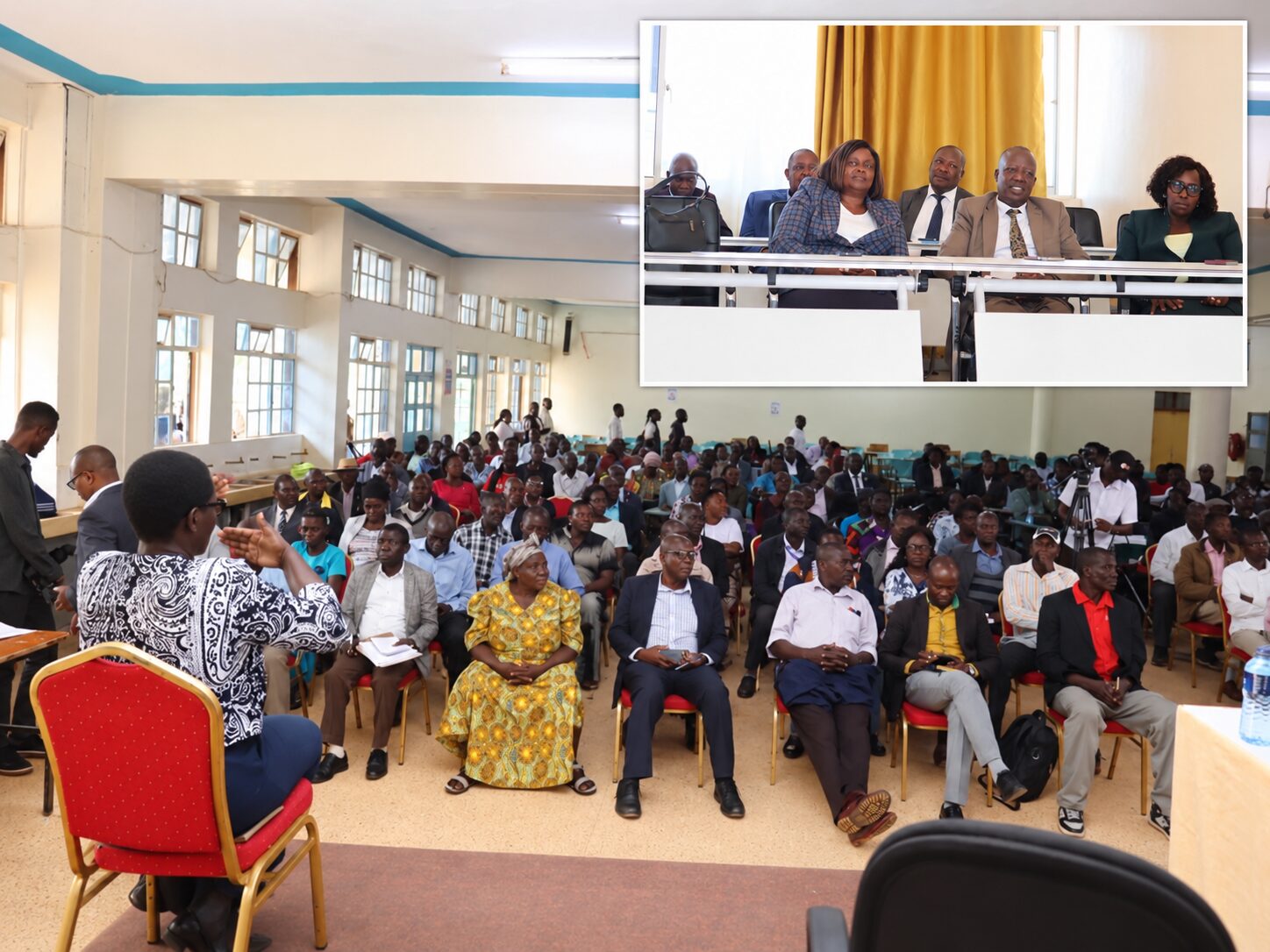
Speaking during the commissioning of the project, Rotary Club of Nairobi Thika Road President Ruth Munyi said access to clean and reliable water remains a fundamental requirement in supporting quality education.
“Water is a critical element in learning as it improves the lives of learners, and we are here to bridge the gap,” said Munyi.
She noted that many schools across the country continue to experience acute water shortages, particularly during dry seasons, a challenge that negatively affects hygiene, health and academic performance.
Munyi emphasised that partnerships between development organisations and learning institutions are key to addressing infrastructure gaps that hinder effective learning.
She added that the Rotary Club remains committed to supporting community-driven initiatives, particularly in education, water access and health.
“We believe that when we invest in water and sanitation in schools, we are directly investing in the future of our children and the country,” she said.
School leadership said the intervention comes at a crucial time when the institution has been struggling with an unreliable water supply due to a faulty system that previously led to significant water losses.
The school’s Chief Principal, Alice Saoyo, said the institution had experienced persistent water challenges that disrupted learning and daily operations.
“Before the tank was repaired, the school faced serious water challenges, and a lot of water was going to waste due to leaks,” said Saoyo.
She explained that the rehabilitation of the borehole and installation of an improved water pumping system have now stabilised the supply, ensuring that students have consistent access to water throughout the day.
According to Saoyo, the availability of reliable water has not only improved sanitation but also supported the school’s food production programmes.
She noted that the school has increasingly embraced irrigation farming as a way of supplementing food supplies for students.
“The availability of reliable water has enabled us to grow crops such as cabbages, tomatoes, kales and coriander within the school. We are now self-sufficient and the school is able to meet part of its food needs through farming,” she said.
Teachers and students have also welcomed the development, saying it has reduced the time previously spent fetching water and improved cleanliness in dormitories, kitchens and sanitation facilities.
Education stakeholders in Isinya have in recent years raised concerns over water scarcity in schools, noting that unreliable supply often affects attendance, health and concentration among learners.
They now hope that similar partnerships will be expanded to other institutions facing water challenges in the region.
The project is part of broader efforts by development partners and community organisations to improve learning environments through infrastructure support, particularly in arid and semi-arid regions where access to basic services remains a major challenge.
READ ALSO: Igembe North learners and residents get relief as MP drills borehole in school
As learners settle into improved conditions, school leaders say they are optimistic that the consistent water supply will contribute to better hygiene, improved academic performance and enhanced agricultural productivity within the institution.
By Kimutai Langat
You can also follow our social media pages on Twitter: Education News KE and Facebook: Education News Newspaper for timely updates.
>>> Click here to stay up-to-date with trending regional stories
>>> Click here to read more informed opinions on the country’s education landscape