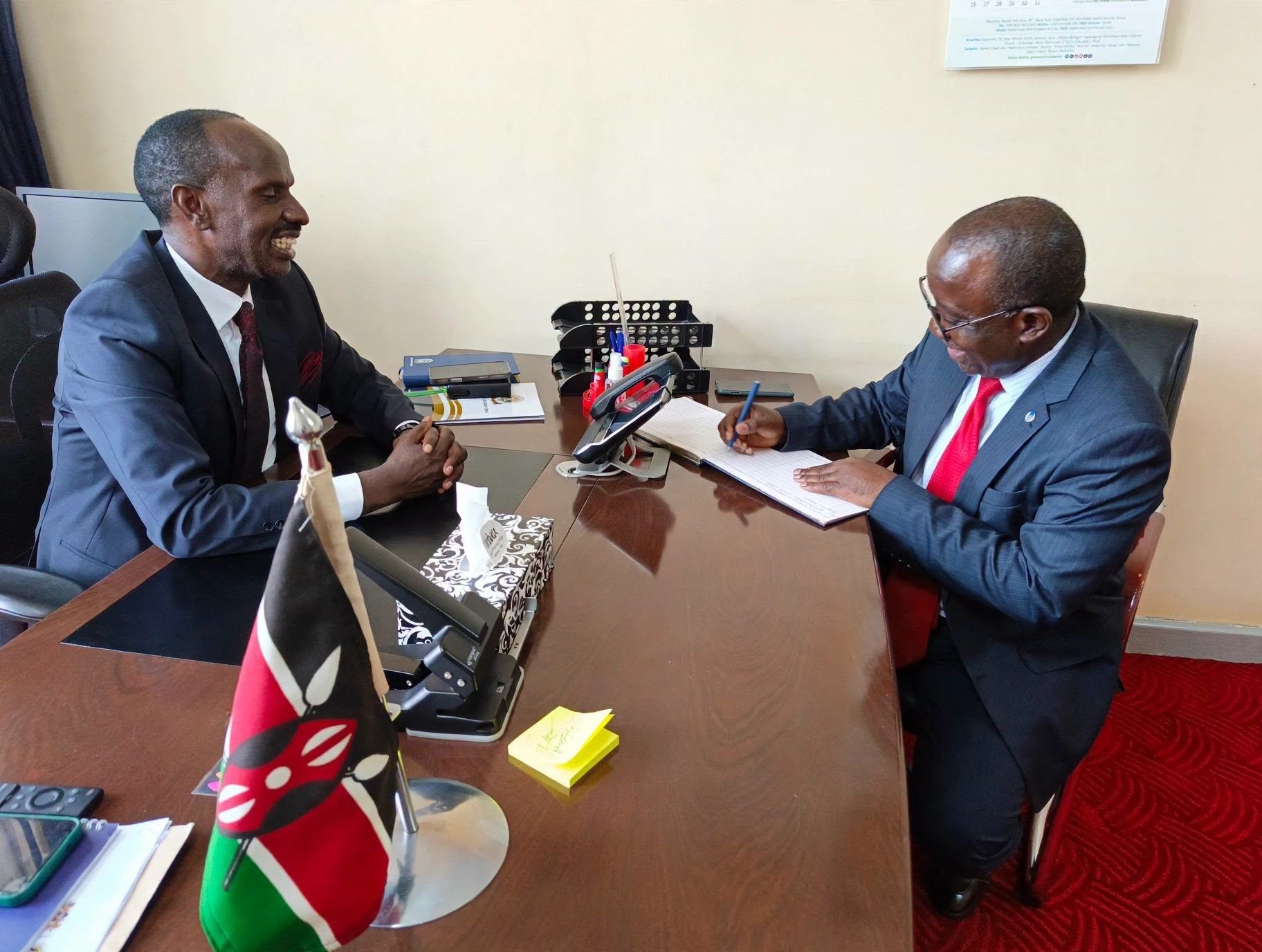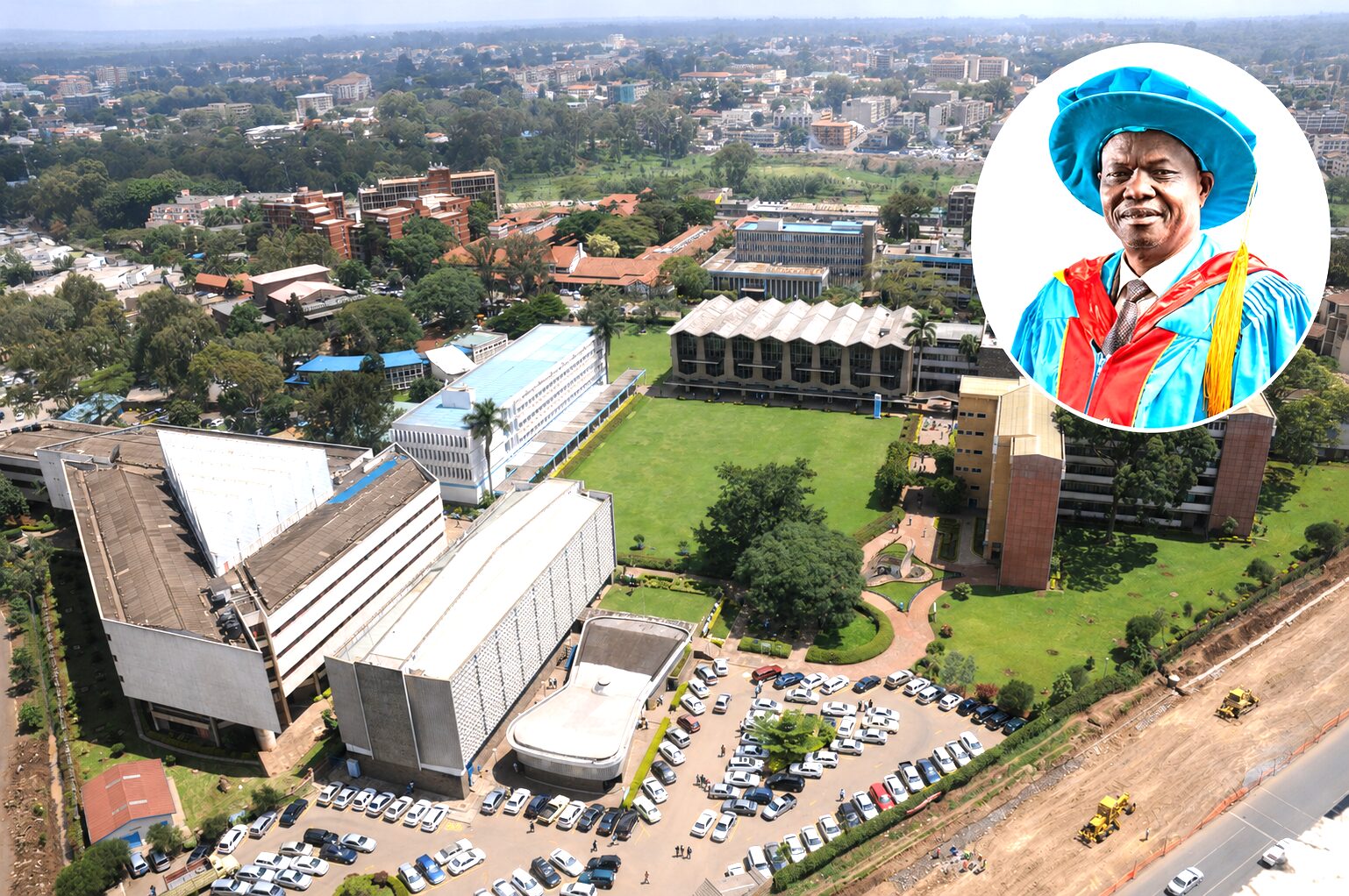
The appointment of Prof. Ayub Gitau as the 9th Vice-Chancellor of the University of Nairobi has ushered in a moment of cautious optimism within Kenya’s higher education sector. For an institution that has spent recent years entangled in leadership uncertainty, governance disputes, financial strain and public scrutiny, the naming of a substantive Vice-Chancellor feels larger than a routine administrative announcement. It represents the possibility of institutional renewal.
The University of Nairobi is not just Kenya’s oldest university. It is the intellectual symbol of the nation’s academic history. For decades, it has produced presidents, ministers, judges, professors, diplomats, scientists, teachers, engineers, journalists and influential public figures who have shaped Kenya and the wider African region. Its name carries prestige, and its graduates occupy strategic positions across society. Its influence on national conversations remains unmatched among public universities.

That is why leadership at the institution attracts national attention. Whenever there is instability at the University of Nairobi, the ripple effects spread across the entire education sector. The university is often viewed as the benchmark against which the health of public higher education in Kenya is measured.
Prof. Gitau takes over at a particularly delicate time. The institution has experienced prolonged leadership wrangles that have damaged its public image and weakened internal confidence. Court cases, political interference, council disagreements, acting appointments and administrative tensions became recurring headlines. At some point, governance battles appeared to overshadow the university’s core mission of teaching, research, innovation and community service.
Many stakeholders, therefore, see the appointment of a substantive Vice-Chancellor as an opportunity to restore stability and direction. Universities thrive when leadership structures are predictable and focused. Academic institutions cannot effectively pursue excellence while trapped in endless boardroom conflicts. Stability allows long-term planning, institutional confidence, staff morale and strategic growth.
One advantage Prof. Gitau brings to the office is familiarity with the institution. Having served within the university system for many years, he understands its internal culture, strengths, weaknesses, traditions and operational realities. He is not entering as an outsider attempting to study the institution from a distance. He already knows where the cracks exist and where the opportunities lie.

His academic background in engineering and technology-oriented disciplines may also influence his leadership approach. Universities today operate in a rapidly changing global environment driven by digital transformation, artificial intelligence, research commercialisation, and international competition. The old model, where universities merely offered classroom instruction, is disappearing. Modern universities must become innovation centres capable of generating research solutions, technological advancement, entrepreneurship and global collaborations.
For the University of Nairobi to maintain relevance, it must aggressively adapt to this changing landscape. Students entering universities today belong to a generation shaped by technology, globalisation, and changing labour markets. Employers increasingly demand practical skills, creativity, adaptability, digital competence and problem-solving ability. Universities that fail to evolve risk producing graduates disconnected from modern realities.
Financial sustainability remains another major challenge awaiting the new Vice-Chancellor. Kenya’s public universities are under significant economic pressure. Reduced government funding, delayed capitation, rising wage bills, infrastructural demands and operational costs have stretched institutions to their limits. The University of Nairobi has repeatedly faced concerns related to debt, delayed payments, staffing constraints and financial management difficulties.
Prof. Gitau will therefore need to think beyond traditional funding structures. Universities can no longer rely solely on government support. The future demands diversification of revenue streams through partnerships, consultancy services, innovation commercialisation, alumni networks, international grants and strategic collaborations with industry. Institutions that innovate financially are more likely to survive within the changing higher education environment.
Research output will also remain a key measure of his administration’s success. Great universities are not defined merely by the number of students they admit, but by the quality of ideas they generate. Research is what gives universities global influence. It shapes policy, drives innovation, solves societal problems and strengthens academic reputation. The University of Nairobi still possesses enormous intellectual capacity, but maximising that potential requires deliberate investment in research infrastructure, academic support and international visibility.
At the same time, student welfare cannot be ignored. Universities today are grappling with increasing mental health concerns, economic hardships among learners, unemployment fears and social pressures affecting students. Leadership must therefore go beyond administration and embrace a more human-centred approach. Students need institutions that not only educate them academically but also support them emotionally, socially and professionally.
Another important task before the new administration will be restoring public confidence in governance systems. Public universities in Kenya have increasingly faced criticism over politicisation, favouritism, power struggles and external interference. Academic institutions perform best when merit, transparency, professionalism and institutional autonomy guide leadership decisions. Rebuilding trust among staff, students, alumni and stakeholders will require consistency and integrity from the new leadership.
Despite the numerous challenges, the University of Nairobi still possesses immense strengths. Its reputation remains powerful. Its alumni network is influential. Its academic tradition is respected. Its strategic location and historical legacy continue to position it as a continental academic giant. What the institution now requires is visionary leadership capable of harnessing these strengths while addressing long-standing structural weaknesses.

Prof. Ayub Gitau now carries the responsibility of steering the university through one of the most demanding periods in its history. Expectations will be high. Criticism will be constant. Pressure will come from every direction — government, students, staff unions, alumni, councils and the public. Leadership at such an institution is never easy.
Yet moments of crisis often create opportunities for transformation. The University of Nairobi now stands at a crossroads between decline and renewal. The decisions made under this new administration could determine whether the institution regains its full stature as East Africa’s premier university or continues struggling under the weight of unresolved problems.
READ ALSO: UoN appoints Eng. Prof. Ayub Njoroge Gitau as 9th Vice-Chancellor in major leadership transition
For now, Kenya’s education sector watches with hope, caution and curiosity. The appointment of Prof. Ayub Gitau may very well mark the beginning of a new chapter not only for the University of Nairobi, but also for the future direction of public university leadership in Kenya.
Profile of Prof. Ayub Gitau: Academic Credentials, Leadership Positions and Career Achievements
| Category | Details |
|---|---|
| Full Name | Prof. Ayub Njoroge Gitau |
| Current Position | 9th Vice-Chancellor, University of Nairobi (appointed May 2026) |
| Previous Position | Acting Deputy Vice-Chancellor, Academic Affairs, University of Nairobi (since August 2024) |
| Other Leadership Positions Held | Dean, Faculty of Engineering, University of Nairobi (2019–2024); Chairman, Department of Environmental and Biosystems Engineering (2011–2017); Acting Dean, School of Engineering (2017); Council Member, Institution of Engineers of Kenya (2019–2021); Trustee, Environment Institute of Kenya (2021–2026) |
| Academic Career Progression | Lecturer (2002–2008); Senior Lecturer (2008–2014); Associate Professor (2015–2023); Professor (2023–present) |
| PhD Qualification | PhD in Agricultural Engineering, University of Nairobi (awarded 2005) — specialization in Soil Mechanical Behaviour, Tillage Modeling and Tool Design |
| Master’s Degree | MSc in Agricultural Engineering, University of Nairobi (awarded 1996) — specialization in Power, Machinery and Mechanization Engineering |
| Bachelor’s Degree | Bachelor of Science in Agricultural Engineering, Egerton University |
| Professional Registration | Registered Consulting Engineer with the Engineers Board of Kenya (EBK) |
| Areas of Specialization | Agricultural engineering, mechanization, renewable energy systems, irrigation technologies, climate adaptation, sustainable infrastructure development and engineering education |
| Professional Memberships | Fellow/member of Institution of Engineers of Kenya (IEK), Engineers Board of Kenya (EBK), International Council on Systems Engineering (INCOSE) and American Society of Agricultural and Biological Engineers (ASABE) |
| Research & Publications | Published extensively in peer-reviewed journals; supervised numerous postgraduate students; over 40 publications and more than 300 citations recorded on ResearchGate |
| Key Academic Contributions | Contributed to curriculum development, professional accreditation processes, engineering education reforms, mentorship programmes and World Engineering Day initiatives at UoN |
| Management & Leadership Training | Trained in corporate governance, strategic planning, institutional management systems, gender mainstreaming and leadership; undertook mechanization and leadership training in Israel in 2006 |
| Notable Achievement | Became only the second professor from the Faculty of Engineering to be appointed Vice-Chancellor of the University of Nairobi after Prof. Francis Gichaga |
Previous Vice-Chancellors of University of Nairobi
| Vice-Chancellor | Period in Office |
|---|---|
| Prof. Arthur Thomas Porter (Principal, University College Nairobi/University of East Africa) | 1964 – 1970 |
| Prof. Josephat Karanja | 1971 – 1978 |
| Prof. Joseph Maina Mungai | 1978 – 1985 |
| Prof. Philip Mbithi | 1985 – 1991 |
| Prof. Francis Gichaga | 1991 – 2002 |
| Prof. Crispus Kiamba | 2002 – 2005 |
| Prof. George Magoha | 2005 – 2015 |
| Prof. Peter Mbithi | 2015 – 2020 |
| Prof. Stephen Kiama | 2020 – 2024 |
| Prof. Margaret Jesang Hutchinson (Acting Vice-Chancellor) | 2024 – 2026 |
| Prof. Ayub Gitau | 2026 – Present |
By Ashford Kimani
Ashford, an alumnus of UoN, teaches English and Literature in Gatundu North Sub-county.
You can also follow our social media pages on Twitter: Education News KE and Facebook: Education News Newspaper for timely updates.
>>> Click here to stay up-to-date with trending regional stories
>>> Click here to read more informed opinions on the country’s education landscape