Trainees graduating from Technical and Vocational Education and Training (TVET) institutions will no longer wear traditional academic gowns during graduation ceremonies, following a new directive by the government aimed at reinforcing technical identity and professionalism in skills-based education.
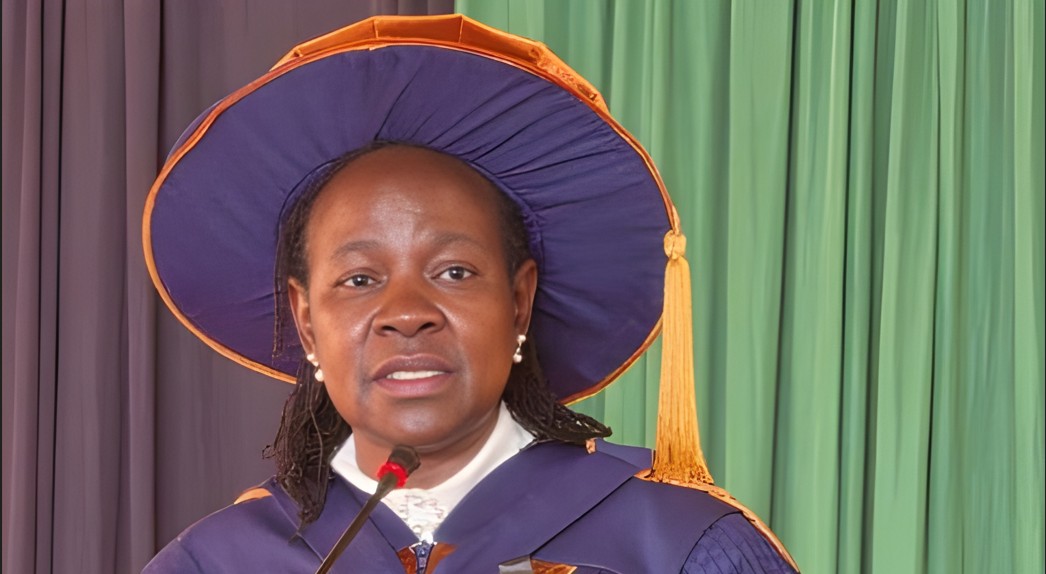
Speaking during the 6th graduation ceremony of Nyeri National Polytechnic, Principal Secretary (PS) in the State Department for TVET, Dr Esther Muoria, explained that the long-standing use of uniform gowns has failed to reflect the practical nature and diversity of technical disciplines offered in TVET institutions across the country.
“Finally, I want to announce that in TVET we have Technical departments, TVET is not academic. So, starting with the next graduation, we are not going to graduate our students in gowns. For those who are now graduating in gowns, you are forgiven; this is the last time, no more gowns,” she declared.
ALSO READ:
Matili TTI set for upgrade to National Polytechnic in major education boost
Instead of conventional gowns, students will now graduate in attire that reflects their specific technical fields. “Going forward, we are not going to be graduating our graduates in gowns like we have been doing. Gowns are academic, and we are technical, so graduands in the different technical departments will henceforth graduate in their respective work attire; Mechanics will wear overalls, chefs will wear the chef’s uniform,” Dr Muoria said.
She added that the current uniform graduation dress code makes it difficult to distinguish different areas of training. “We want to communicate to the world that we are doing the right thing. We are not only doing the right thing, but we also want to communicate by lining up for graduation in the correct attire. As it is right now, nobody can tell what speciality we are graduating from because they are all dressed the same,” she noted.
The PS emphasized that institutions will be encouraged to adopt discipline-specific attire aligned with industry standards to strengthen the identity of technical training. She also reaffirmed the government’s broader commitment to expanding the TVET sector through improved infrastructure, modern equipment, and increased training capacity.
The PS also urged institutions to pursue financial sustainability by developing alternative income streams, noting that government resources are limited and must be shared across multiple sectors. “I have always said that resources will never be enough. The ones that are available at the National Treasury belong to all of us, Health, Education, you mention it. So as institutions, we can come up with more resources to even augment what the government can do,” she said.
ALSO READ:
Ruto announces KSh23 billion early capitation release to schools ahead of second term
She encouraged TVET institutions to adopt cost-saving measures such as solar energy systems and rainwater harvesting to reduce operational expenses. Additionally, she challenged institutions to fully utilise their internal technical capacity, especially in construction-related departments, instead of outsourcing work.
“We have already directed that the buildings that are coming up in our institutions be done by the staff and the students in the Civil and Building departments. There is no reason why we should bring other people from outside to come and build our space, yet we are the builders. We should be the consumers of our own knowledge and training even before it goes out there,” she said.
“In the process of doing that, when we don’t bring a contractor from outside to come and do our buildings, then we do the savings. It is not a question of looking for alternatives; it is a question of taking the requisite space as should be the case,” she added.
Dr Muoria highlighted that student enrolment in TVET institutions has risen sharply from 350,000 in 2022 to 850,000 currently, creating the need for more trainers. She said the government plans to recruit 1,000 new TVET trainers this year to meet the growing demand.
By Masaki Enock
You can also follow our social media pages on Twitter: Education News KE and Facebook: Education News Newspaper for timely updates.
>>> Click here to stay up-to-date with trending regional stories
>>> Click here to read more informed opinions on the country’s education landscape