- The writer argues that Kenya’s university hostel overcrowding has breached constitutional standards for adequate housing and education under Article 43.
- Courts, notably in Mitu-Bell Welfare Society vs Kenya Airports Authority, have affirmed that progressive realisation has not excused indefinite inaction on housing rights.
- The write-up has assigned concurrent responsibility to university management, the Dean of Students, the Ministry of Education and the National Treasury for remedying the crisis.
The crisis of university student housing and living conditions in Kenya stands as one of the most pressing yet chronically neglected threats to the realisation of quality higher education. Public universities are quietly failing a generation of students, not in the lecture hall but in the hostel room. Severe overcrowding, crumbling infrastructure, erratic water and power supply and compromised security have become the normal condition of campus life for thousands of learners, many of them far from home and living on modest means.
This is not simply an administrative inconvenience. Article 43 of the Constitution of Kenya guarantees every person the right to accessible and adequate housing, reasonable sanitation and education, and that guarantee does not pause at the university gate.
Read together with Article 21, which obliges the State and every State organ — including public university councils — to observe, respect, protect, promote and fulfil rights in the Bill of Rights, the housing crisis becomes a matter of constitutional accountability rather than institutional discretion. Article 21 also singles out vulnerable groups for particular attention, and university students who travel far from home and depend on limited means fall squarely within that category. What follows is an account of how bad the problem has become, what the law demands of universities and government, and what must change.
The scale of the crisis
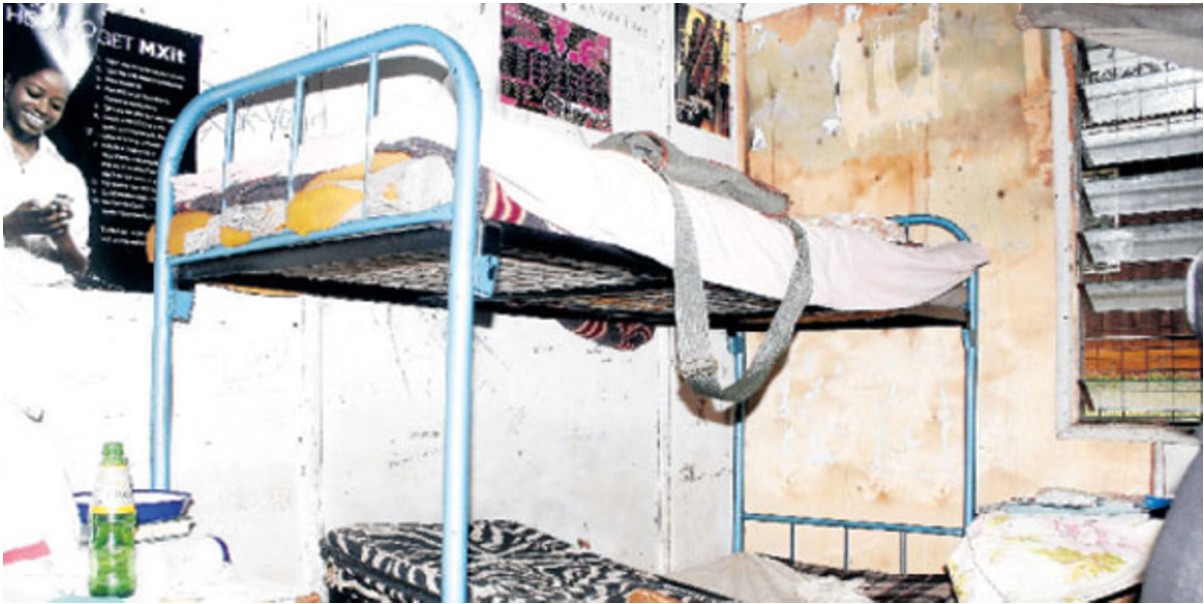
The roots of today’s crowding lie in a mismatch that has built up for years: university enrolment has expanded rapidly while residential infrastructure has not kept pace. Institutions built to house a few thousand students now enrol tens of thousands. At the University of Nairobi, available beds have for years covered only a fraction of the student population, pushing most learners into private hostels of uneven quality clustered around campus. Kenyatta University, Moi University and Egerton University show similar patterns, as do newer institutions still building out their residential capacity.
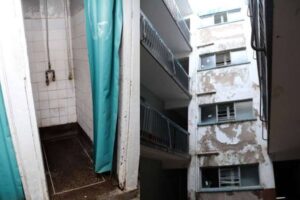
Rooms designed for two or four occupants routinely hold six, eight or more students. Sanitary facilities built for far smaller numbers are overwhelmed, while maintenance budgets — squeezed by wider institutional debt — leave leaking roofs, blocked toilets and hazardous electrical wiring unresolved. Students describe frequent water shortages, power outages and poor lighting that undermine both study and personal safety, a risk that falls hardest on female students. Off-campus private accommodation, meanwhile, is often expensive relative to what students can afford and may lack proper approvals, security or basic amenities. Taken together, a significant share of Kenya’s university students are living below the threshold of adequate housing that the Constitution contemplates.
ALSO READ:
Kenyan students risk losing out on US study dream over proposed $100,000 work permit fee
What the Constitution requires
The legal starting point is Article 43(1)(b), which guarantees the right to accessible and adequate housing and reasonable sanitation, alongside Article 43(1)(f), which guarantees the right to education. Article 21(1) places a fundamental duty on the State and its organs to protect and fulfil these rights, while Article 21(2) specifically requires legislative, policy and other measures — including the setting of standards — to progressively realise the rights under Article 43. Article 20(5) governs how courts should treat socio-economic rights where resources are limited, requiring the State to show that available resources were allocated equitably and that no less restrictive means existed.
The Supreme Court’s decision in Mitu-Bell Welfare Society v Kenya Airports Authority and others is instructive here. Although the case concerned informal settlements rather than campuses, the Court’s holding that progressive realisation does not license indefinite inaction, and that the State must demonstrate concrete steps toward fulfilling housing rights, applies with equal force to institutional housing tied to the State’s duty to provide higher education.
The rules that set the standard
Beyond the Constitution, statutory and regulatory obligations give the right to adequate housing practical shape. The Universities Act establishes the governance structures of public universities and assigns responsibility for student welfare to designated officers, with university statutes typically giving the Dean of Students an express mandate over housing, counselling and medical facilities.
Older subsidiary legislation remains surprisingly precise on the physical standards expected. The Universities (Establishment of Universities) (Standardisation, Accreditation and Supervision) Rules of 1989 define a residential university as one boarding ten or more students, and require accommodation to be adequately lit and ventilated. The rules prohibit open rooms from housing more than four students and set minimum floor areas — eight square metres for a single room, seven square metres for a double room or cubicle, and six square metres for a room shared by three or four students. They also prescribe specific ratios of toilets, urinals, wash-hand basins, baths or showers and drinking water points relative to the male and female student population, and require buildings to comply with the Building Code and the Public Health Act. Even if some of these figures now need updating, the underlying principle is unambiguous: any institution that houses students, or accepts students who require accommodation, must meet basic standards of health, safety and dignity.
ALSO READ:
High Court declares Ambira High School’s KSh33,000 readmission levy unconstitutional
Where the dispute lies
University administrations typically point to chronic underfunding, large pending bills and the sheer pace of enrolment growth to explain the shortfall, arguing that hostel development competes for scarce capital against academic infrastructure and staff costs, and that private hostels and public-private partnerships are a necessary supplement. Students, parents and education stakeholders counter that the right to education cannot be meaningfully exercised when the conditions of residence actively harm health, concentration and safety — and that fees already include components meant to fund welfare services.
The constitutional text, and the jurisprudence built around it, tends to favour the second view. Resource constraints must be demonstrated through evidence of equitable allocation, not simply asserted, and minimum core obligations around sanitation, safety and habitability cannot be indefinitely deferred regardless of budget pressure.
Who is responsible
Reading the Constitution, the Universities Act and the applicable standards together produces a clear allocation of duty. Public universities and the national government share responsibility for ensuring that student accommodation — whether run directly or merely regulated — meets the threshold of accessible and adequate housing. Where universities operate hostels, they must keep them in a condition that does not endanger health or safety, and that allows reasonable privacy and study. Where capacity falls short, the State must plan, finance and implement progressive expansion of bed capacity, or regulate private providers so students are not left exposed to an unregulated market.
Mitu-Bell’s insistence that progressive realisation demands tangible steps, together with earlier High Court rulings against evictions without alternatives, establishes that institutional actors cannot simply point to a shortage and disengage. Day-to-day responsibility sits with the Dean of Students and the University Management Board, while the Cabinet Secretary for university education and the National Treasury carry the broader policy and financing burden.
Why this matters for the law
This framing settles an important question: student housing is not an optional administrative service that universities may provide or withdraw at will — it is bound up with the right to education and the right to housing, and therefore subject to constitutional accountability. The distinction that matters is between full, immediate delivery of ideal facilities, which the Constitution treats as progressive, and the maintenance of minimum standards of sanitation, safety and habitability, which cannot be sacrificed at any stage.
Extending Kenya’s existing housing-rights jurisprudence — built largely around informal settlements and forced evictions — into university hostels affirms that institutions created by statute to deliver public education cannot disclaim responsibility for the residential conditions of the students they admit. It reinforces that the Bill of Rights binds all State organs, university councils included, and strengthens the link between the right to education and the material conditions that make it meaningful, rather than treating classroom instruction as sufficient on its own. In practice, this should shape how public-private hostel contracts are drafted, how capital budgets are allocated, what university statutes require and how the Commission for University Education carries out its inspections.
ALSO READ:
ODPP closes inquiry into KUPPET treasurer Mwethi Njenga, orders DCI to close probe
What must happen now?
Students and parents should understand that they hold enforceable rights to housing conditions that meet basic health and safety standards, and that persistent failures can ground petitions under Article 22 of the Constitution. University heads and councils, for their part, need to treat student housing as a core governance responsibility rather than a peripheral service — auditing existing hostels against space and sanitation standards, documenting maintenance needs, prioritising remedial works even within tight budgets, and engaging transparently with students on occupancy levels and how welfare fees are spent.
National government, through the Ministry of Education and the National Treasury, must show concrete progressive steps, whether through direct capital grants, public-private partnerships under the Affordable Housing Programme, or regulatory frameworks that hold private hostels serving students to building and public health standards. Local authorities responsible for building approvals and public health inspections around campuses carry a concurrent duty, while civil society organisations and advocates can advance accountability by documenting conditions, gathering student testimony and, where necessary, pursuing public interest litigation seeking structural orders with time-bound improvement plans.
Three legal principles anchor this analysis. First, the rights to adequate housing and to education under Article 43 are interdependent, obliging the State and its institutions to take reasonable measures to realise them. Second, progressive realisation does not excuse a failure to maintain minimum core standards of sanitation, safety and habitability in facilities under institutional control. Third, university governance structures, including the Dean of Students and the University Management Board, carry specific, justiciable duties in respect of student welfare.
Kenya’s university leaders and government officials should stop treating the hostel crisis as an intractable logistical headache and start treating it as what it is: a constitutional obligation demanding measurable action. The dignity of the next generation of Kenyan professionals depends on living conditions that let them study in safety and in health.
By Omwansa Onduko
3rd-year law Student at Kabarak University
You can also follow our social media pages on Twitter: Education News KE and Facebook: Education News Newspaper for timely updates.
>>> Click here to stay up-to-date with trending regional stories
>>> Click here to read more informed opinions on the country’s education landscape
>>> Click here to stay ahead with the latest national news.