



- Hillary Muhalya examines how some of Kenya’s wealthy businesspeople and families are investing private resources in education.
- Their interventions range from scholarships and classrooms to technical training, university support and modern STEM infrastructure.
- Beyond donation figures, the initiatives reveal how philanthropy can create educational pathways for disadvantaged learners across generations.
Kenya’s education system is largely sustained by public investment, but government is not the only source of support reaching classrooms, laboratories, universities and disadvantaged learners.
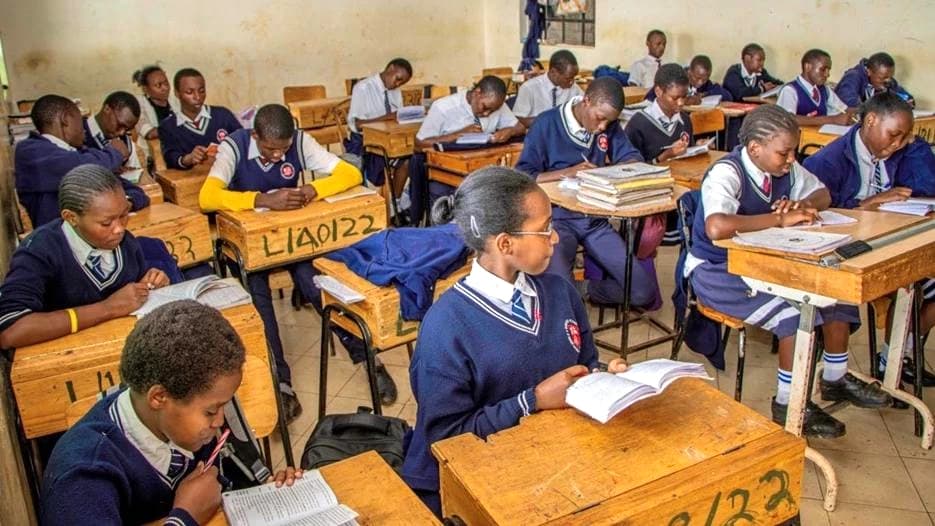
Over several decades, some of the country’s wealthiest businesspeople, families and corporate foundations have channelled significant resources into education. Their interventions range from secondary-school scholarships and construction of classrooms to university sponsorships, STEM laboratories, innovation centres, technical training and international scholarships.
The scale of this private investment is difficult to place in a definitive monetary league table because philanthropists report their contributions differently. Some disclose cumulative beneficiary numbers, others disclose individual projects, while some family foundations have operated for decades without publishing a consolidated lifetime value of their education giving.
What can be established more clearly is the breadth of the interventions and the educational journeys they have helped create.
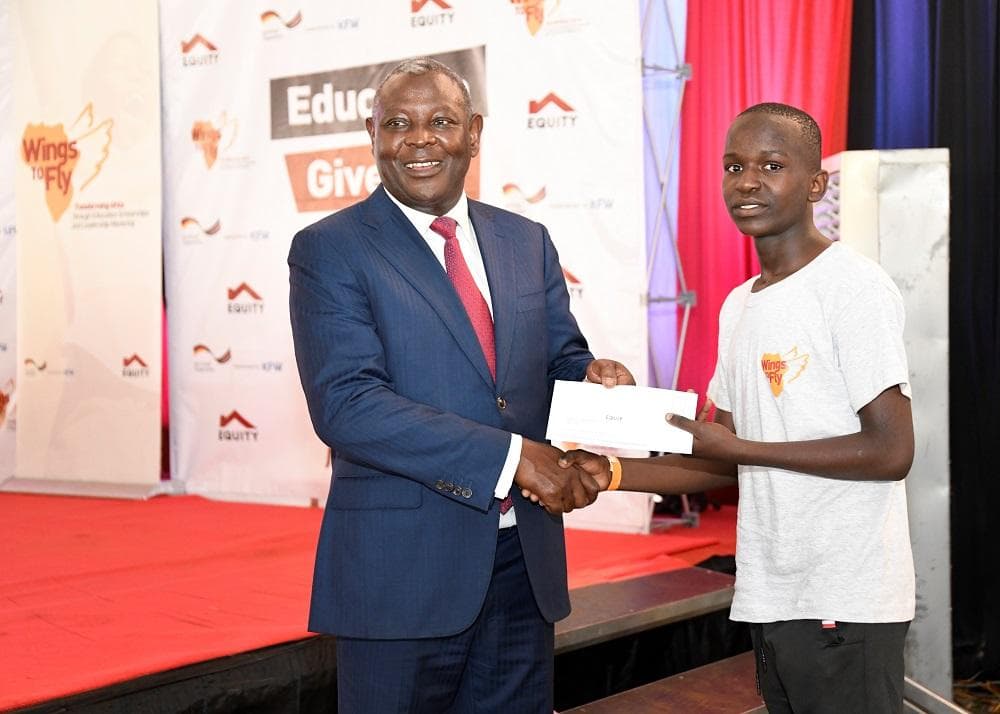
At the centre of one of Kenya’s largest documented scholarship networks is James Mwangi through Equity Group Foundation.
Equity has developed one of Kenya’s most extensive private education-support systems through Wings to Fly, the Elimu Scholarship Programme and the Equity Leaders Programme. According to Equity, the programmes have reached 60,009 secondary-school scholars, 35,353 university scholars, 1,236 scholars who have attended global universities and 4,039 TVET beneficiaries. The foundation reports a secondary-school completion rate of 97 per cent.
The model is significant because it extends beyond school fees. Beneficiaries receive educational support alongside mentorship, leadership development and career guidance. For students who do not proceed to university, the TVET pathway provides another route into technical and professional skills.
The international component has also become substantial. In the 2024/25 cycle, 128 Equity Leaders Programme scholars obtained admissions and scholarships to universities outside Africa, with the scholarships valued at approximately KSh2.79 billion over four years.
Behind the large numbers are individual educational transformations. A student from a financially disadvantaged family who might otherwise have abandoned education can move from secondary school to university, technical training or an overseas institution.
The Equity experience therefore represents a transition from conventional bursaries towards a structured educational pipeline.
A different but equally long-running model has been built by Manu Chandaria through the Chandaria Foundation.
The foundation has supported education through scholarships and institutional development. Its partnership with the Kenya Community Development Foundation (KCDF) had disbursed KSh46.57 million and supported more than 549 students, according to KCDF’s published figures.
The impact becomes clearer through the experiences of individual beneficiaries.
Esther Njeri, who came from a financially constrained background, received scholarship support that enabled her to continue her education and eventually pursue actuarial science at Kenyatta University.
Jillo Galgalo Waqo from Moyale scored 420 marks in KCPE, joined Starehe Boys Centre, later attained an A-minus in KCSE and proceeded to study veterinary medicine at the University of Nairobi.
Another beneficiary, Delvine Lopez, a visually impaired student from Turkana, received Chandaria-backed assistance that helped her continue her secondary education despite financial challenges. She has expressed ambitions of becoming a nurse and pursuing aviation training.
Such cases demonstrate that the value of a scholarship is not simply the money transferred to a school. For a vulnerable learner, it can determine whether academic potential develops into a professional qualification or is interrupted by poverty.
Investing in learners and institutions
Suresh Shah and the I&M Foundation provide another model, combining direct student support with institutional investment.
The foundation reports spending about KSh239.09 million on St Ann Suresh Raja Girls’ High School, including land, construction and equipping. Its education portfolio also includes KSh62.78 million in Strathmore University scholarships, KSh56.16 million through the I&M-Palmhouse scholarship fund, KSh12.07 million through the Amara Trust Education Fund and KSh6.25 million for Moringa School’s software-development scholarship programme, among other interventions.
This approach addresses two dimensions of educational inequality simultaneously: helping individual learners access education while investing in the physical and technological infrastructure required for quality learning.
The Rattansi family, through the Rattansi Educational Trust, represents one of the country’s oldest organised traditions of private education support. Established in 1956, the trust has supported students pursuing higher education in Kenya over generations.
Its contribution is particularly notable for its continuity. Instead of being built around one high-profile donation, the trust has maintained an education-support mechanism over decades, helping students overcome financial barriers to tertiary education.
Peter Munga also occupies an important place in Kenya’s education-philanthropy story. His involvement in scholarship and education initiatives has been closely linked to the development of the broader Equity model and efforts to identify academically capable learners from disadvantaged backgrounds.
His contribution illustrates the potential of private wealth to support talent identification and long-term educational progression, rather than simply providing one-off assistance.
The Merali family, through the Zarina and Naushad Merali Foundation, has concentrated heavily on institutional development as well as scholarships.
Among its more recent commitments is KSh80 million towards Strathmore University’s Kevin O’Byrne STEM Complex, an investment aimed at strengthening science, technology, engineering and mathematics education through laboratories, research and innovation facilities. Strathmore confirms that the commitment is part of the development of the complex.
The family’s earlier support for Magura Secondary School demonstrates the same philosophy at secondary level. The Zarina and Naushad Merali Foundation fully funded the construction and equipping of the school, while land was provided by Kipkebe Tea Factory.
The Merali approach illustrates an important distinction in education philanthropy. A scholarship may change one learner’s life; a school or laboratory can influence the educational opportunities available to thousands of learners over many years.
At the community level, the Manji Foundation has taken a more grassroots approach.
Its education interventions have included classrooms, sanitation, water, learning materials, uniforms, meals and other forms of support designed to improve the learning environment.
This matters because educational exclusion is not always caused by school fees. Children can also struggle to attend and learn where schools lack adequate classrooms, sanitation, water, learning materials or food.
Beyond the size of the donation
Other prominent Kenyan business families have also participated in education philanthropy, although their cumulative contributions are not always publicly quantified.
The Bhimji Depar Shah and Vimal Shah family and Bidco Africa have supported education and community programmes. Narendra Raval and Devki Group have been associated with scholarships and community-development initiatives, while S.K. Macharia and Royal Media Services have supported education and youth programmes.
The Keroche family, led by Tabitha Karanja, has participated in scholarship and community initiatives, while the philanthropic interests associated with the late Chris Kirubi included youth development, entrepreneurship and education-related programmes.
The Ndegwa, Bedi and Baloobhai Patel families, among other established business families, have also supported education and community-development initiatives at different levels.
The Kenyatta and Moi families have longstanding associations with educational institutions, scholarships and community initiatives through various family-linked interests.
These contributions vary considerably in scale and structure. Some are formal foundations with professional scholarship programmes. Others operate through corporate social responsibility budgets or family initiatives. Still others concentrate on a particular school, county or community.
Taken together, however, they reveal a broadening conception of education philanthropy in Kenya.
The first generation of private education giving often focused on bursaries — helping a student meet school fees.
The newer model increasingly addresses the entire educational ecosystem.
A learner may receive a scholarship to remain in school. A school may receive new classrooms and sanitation facilities. A university may acquire a modern laboratory. A young person may receive technical training instead of dropping out after secondary school. Another student may receive mentorship and international university placement.
The result is a shift from simply financing education to creating educational pathways.
The strongest documented examples also show why the success of philanthropy should not be judged solely by the amount announced.
For Equity, the critical outcome is the progression of tens of thousands of scholars through secondary education, university, TVET and, for some, global universities.
For Chandaria, the individual stories show learners moving from financial vulnerability to professional and university education.
For I&M, the investment in St Ann Suresh Raja Girls’ High School demonstrates how private capital can create a lasting institution while scholarship programmes support individual students.
For the Merali family, the investment in STEM infrastructure points towards another dimension of the future: giving Kenyan students access to facilities for science, engineering, research and innovation.
For the Rattansi Educational Trust, the key achievement is continuity — maintaining education support across generations.
And for grassroots foundations such as Manji, the intervention reaches the everyday conditions that determine whether children can attend school and learn effectively.
These models also reveal a significant gap in the public conversation about Kenya’s wealthy.
Much attention is often paid to the size of private fortunes, business acquisitions, property holdings and corporate expansion. Less attention is given to the portion of private wealth that is converted into educational opportunity.
Yet education philanthropy has consequences that extend beyond the original recipient.
A child who receives a scholarship may become a teacher who educates hundreds of other children. An engineer trained through private support may develop technologies or infrastructure. A doctor may serve a community. An entrepreneur may employ others. A university laboratory may train several generations of professionals.
The impact can therefore multiply.
That does not mean private philanthropy can substitute for government responsibility. The State remains responsible for financing and providing public education, deploying teachers, developing curriculum, maintaining standards and ensuring equitable access.
Private philanthropy works best as a complement, filling particular gaps that public resources may not immediately address.
The most useful lesson from Kenya’s wealthiest education philanthropists is consequently not simply how much money they possess or how much they have donated.
It is the trajectory created by the intervention.
A scholarship can keep a child in school. A school can transform a community. A university scholarship can produce a professional. A laboratory can create researchers. A STEM complex can nurture innovators. A TVET opportunity can turn a school leaver into a skilled technician or entrepreneur.
That is the real story behind Kenya’s private education philanthropy: wealth is being converted, in different ways and at different scales, into classrooms, qualifications, skills, institutions and opportunities for future generations.
The enduring measure will ultimately be found not in the size of the donor’s fortune, but in what happens to the learners who receive the opportunity — and in what those learners eventually give back to Kenya.
By Hillary Muhalya
Get more stories from our website: Education News
To write to us or offer feedback, you can reach us at: editor@educationnews.co.ke
You can also follow our social media pages on Twitter: Education News KE and Facebook: Education News Newspaper for timely updates.
>> Click here to stay up-to-date with trending regional stories


Reader Discussion (0)
Sign in to comment