I have always approached literature as a meeting place between the visible and the invisible.
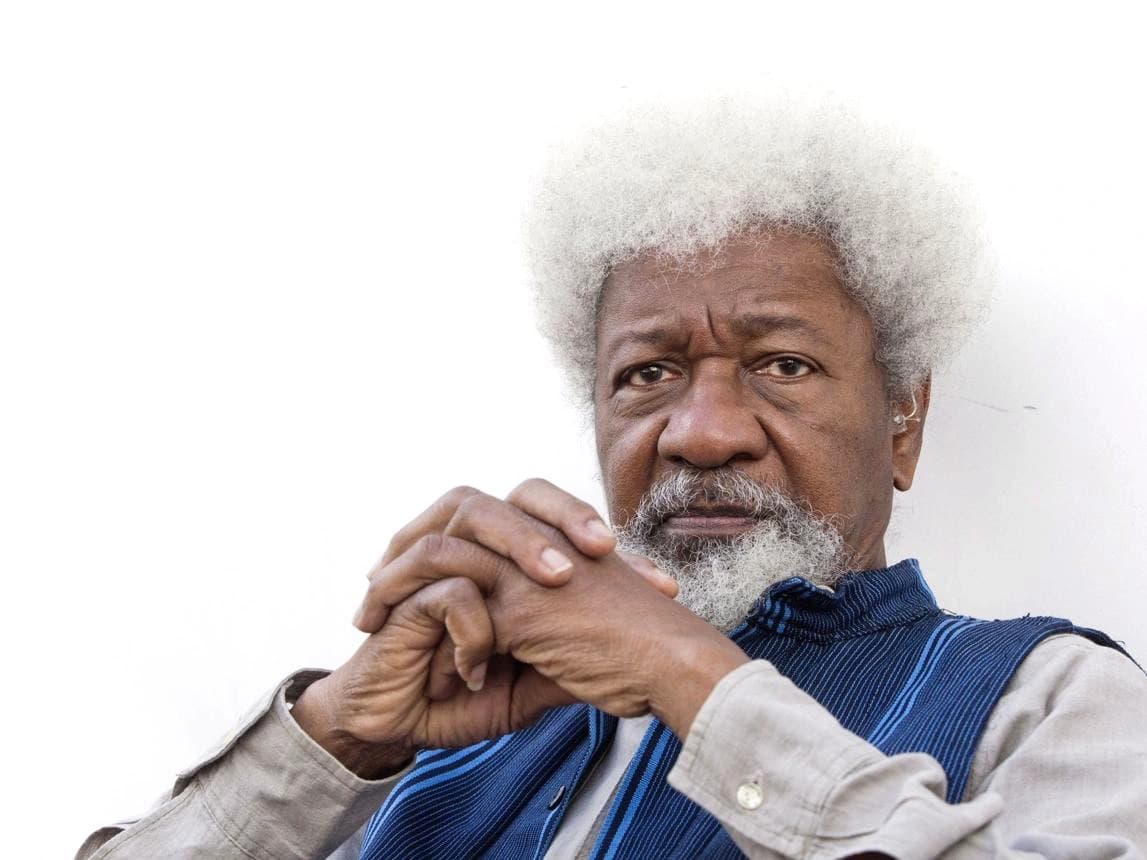
When I first read Wole Soyinka's The Lion and the Jewel and The Road, I was struck by how easily he makes the ordinary man converse with spirits. In his world, the ancestors speak, the gods intervene, the road itself is a living being that swallows souls, and the village can hear the whispers of angels and deities. Soyinka, Africa's first Nobel Laureate in Literature, taught us that African imagination is not limited to what the eye can see. He gave legitimacy to our metaphysical world.
Today, I read about him on social media dismissing artificial intelligence. And I paused.
Here is a man who spent his entire literary life telling us that man can speak to angels, that a driver can negotiate with Ogun, that a praise singer can summon the dead, but cannot imagine that the same man can create a machine that learns, remembers and speaks back. How is it that the mystic becomes a sceptic when the miracle changes its garment?
The literary giants who shaped my thinking
This contradiction has forced me to reflect on the company of literary giants I have been privileged to encounter in thought and in life.
I have walked with literary elders in a very personal way. I met Prof. Austin Bukenya at Taranganya High School, where his clarity made literature feel like a homestead conversation. I met the late Chinua Achebe at Migori Teachers' Training College, one-on-one, and he taught us that the African story must be told with dignity even as the world changes. I met Ngugi wa Thiong'o at Kisii University with the late Right Honourable Raila Odinga as they were hosted by the then Kisii University Vice Chancellor, Prof. John Akama, to launch the reading culture programme in vernacular. That day, Ngugi challenged us one-on-one to decolonise not just the mind but also the tools we use. I have never met Wole Soyinka in person, but only through his literary works like *The Lion and the Jewel* and *The Road*, until today when I met him again on social media through his comments on AI.
And that distance matters. Bukenya, Achebe and Ngugi never feared new tools. Achebe embraced the English language to tell an Igbo story. Ngugi embraced Gikuyu to reclaim it, but he never rejected the printing press. Bukenya embraced drama, film and folklore together. They understood that a tool does not kill culture; misuse does.
Artificial intelligence and African imagination
Soyinka's generation fought for the right of the African metaphysical world to be respected by the West. The West said, "You cannot talk to ancestors; that is primitive." Soyinka answered, "We do, and it is wisdom." Now the West and the world say, "Machines can learn." And Soyinka seems to answer, "That is not intelligence." Is this not the same dismissal he fought against?
Artificial intelligence is, in many ways, the modern version of Soyinka's talking spirits. What is AI if not man breathing knowledge into dust and making the dust respond? What is ChatGPT if not a contemporary Ifa divination system that has read millions of books and can answer your question in seconds? Our grandmothers spoke to spirits through a gourd. Our children today speak to intelligence through a phone. The vessel has changed; the wonder remains.
To fail to appreciate AI is to fail to see that African literature has always been about augmentation. The griot augmented memory. The drum augmented voice across hills. The proverb augmented wisdom. AI is simply the newest drum.
I worry that when our great elders dismiss AI, they push the young African writer into a Red Ocean of nostalgia. We start fighting to write like 1965 instead of creating a Blue Ocean where *The Lion and the Jewel* meets robotics, where *The Road* is not just the road to Lagos but the information superhighway where souls can still get lost if they have no moral compass.
Literature must embrace both tradition and technology
Soyinka does not need to code. But as a scholar who taught us to speak to angels, he should be the first to recognise when man has taught silicon to speak as well. Angels are invisible intelligences that guide. What is AI if not an invisible intelligence we have created to guide?
I still revere Soyinka. *The Lion and the Jewel* taught me how modernity and tradition can wrestle in one village square. *The Road* taught me that every journey has spiritual checkpoints. I will continue to teach those lessons from Taranganya to Migori TTC to Kisii.
But reverence does not mean agreement.
If literature is to live, it must speak to the angel and to the algorithm. It must sit with the ancestors and with the machine. The child born at Kiong'anyo Hills in Nyaribari Chache Constituency of Kisii County today will herd goats while asking AI on a phone how to treat their disease. That child lives in both Soyinka's world and the new world.
Let the Nobel Laureate who taught us that man can converse with angels also allow that man can now converse with his own creation.
Reader Discussion (0)
Sign in to comment