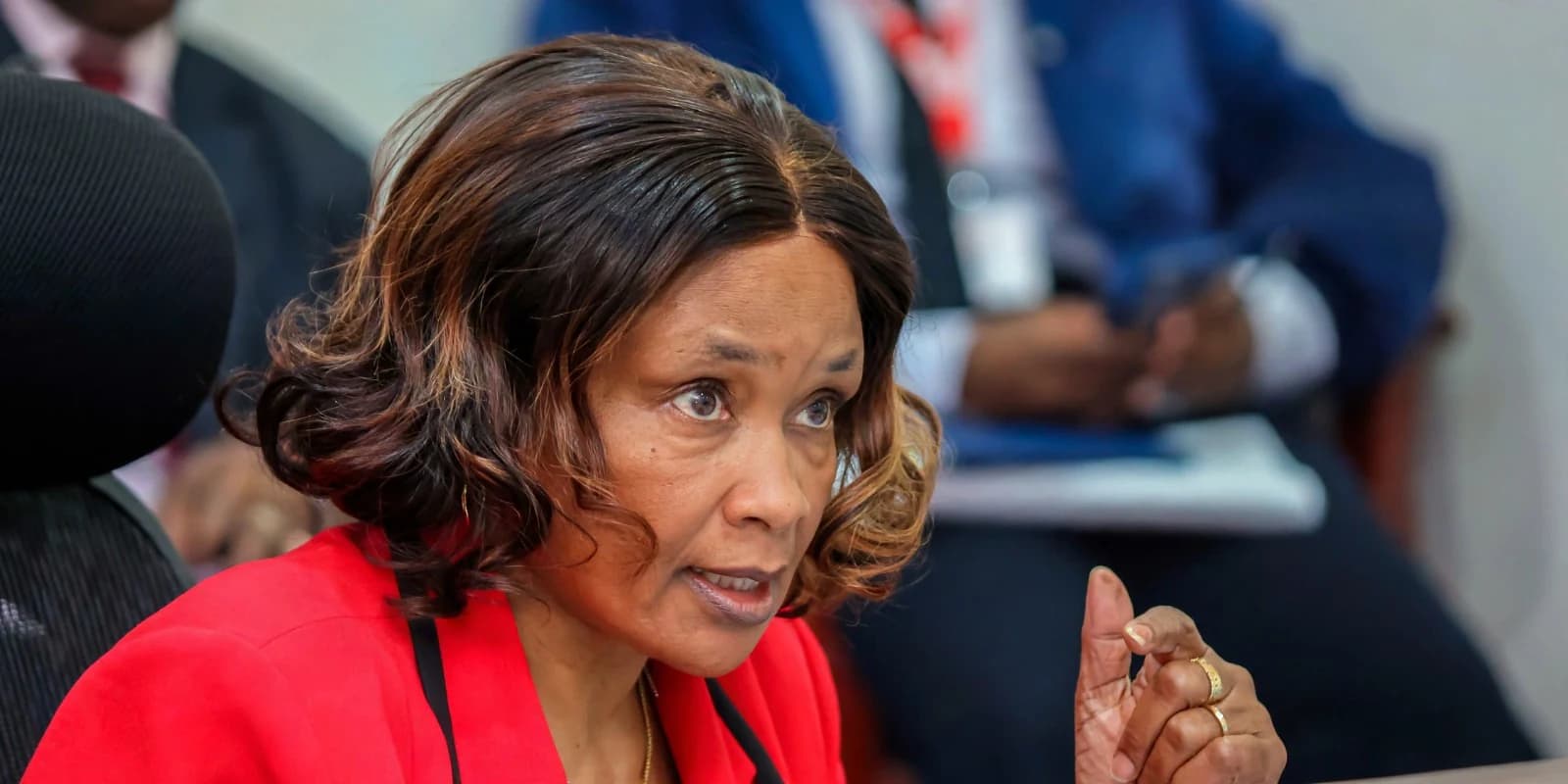
As teachers celebrate World Teachers' Week, attention is once again turning to the people who work quietly behind the scenes to support, coordinate and connect teachers with the Teachers Service Commission (TSC) at the grassroots level: the Curriculum Support Officers (CSOs).
Indeed, it is the CSOs who have been at the heart of coordinating many of the activities marking this year's World Teachers' Day celebrations, ensuring that programmes ranging from the Teachers' Run to tree-planting activities and other engagements are organised and implemented at the grassroots. Their presence in the field has made it possible for activities designed to celebrate teachers to reach schools, teachers and communities across the country.
For TSC, CSOs are more than just administrative officers. They form an important link between the Commission's headquarters, county and sub-county offices and teachers serving in schools across the country. Their presence on the ground gives TSC an operational reach that would be difficult to maintain without them.
TSC's foot soldiers in the field
CSOs have increasingly become the Commission's "foot soldiers" in the field, undertaking a wide range of duties that directly affect teachers and schools. They support curriculum implementation, collect and verify information from schools, monitor teaching and learning activities and help facilitate various teacher-management processes.
Their contribution during the World Teachers' Day activities provides a practical illustration of this field presence. From mobilising teachers and coordinating events to ensuring that activities such as the Teachers' Run and tree planting are implemented, CSOs have once again demonstrated that their role goes beyond paperwork and office-based administration.
Their work also provides TSC with valuable information from the ground. Before decisions are made at higher levels, there is often a need for accurate information about what is happening in schools, and CSOs are among the officers who help bridge that information gap.
Why losing them would hurt TSC's reach
The importance of CSOs becomes even more apparent when one considers the geographical spread of Kenya's education system. Thousands of schools are located far from county and sub-county headquarters. Without officers regularly interacting with schools and teachers, the Commission would have to depend heavily on fewer officers at higher administrative levels.
Losing a significant number of CSOs would therefore create a major operational gap. County and sub-county offices would potentially have to absorb responsibilities currently handled at the field level, which could increase workloads, slow down responses to teachers' concerns and reduce the frequency with which TSC officers interact directly with schools.
The situation also raises questions about curriculum support. Teachers need more than administrative management; they need professional guidance, monitoring and support as they implement the curriculum, and CSOs occupy an important position in providing that link between policy and what actually happens in classrooms.
A reminder of where policy meets reality
The coordination of World Teachers' Week activities is therefore a timely reminder of what happens when policy meets the reality on the ground. A national programme may be designed at the top, but its success ultimately depends on people who can mobilise, coordinate and implement it at the grassroots. That is where CSOs come in.
For TSC, therefore, the question is not simply whether CSOs are another cadre of employees. It is whether the Commission can maintain the same level of field presence, coordination and operational efficiency without them.
The continued development of a career structure for CSOs is itself an indication of the importance attached to the cadre. Rather than disappearing from the education-management structure, CSOs have increasingly been integrated into functions associated with teacher management, curriculum support and data management — even as concerns persist over their working conditions, underscoring the need for TSC to address the cadre's welfare if it hopes to retain their vital role in the field.


Reader Discussion (0)
Sign in to comment