A speed camera caught them, and its flash brought them back to reality.
“Guys,” the driver said, startling those seated at the back, “the cameras have captured me overspeeding. Let's do this. Since there is a traffic officer three blocks away, I will slow down and circle this block three times at a very low speed, say 30km/h. Then we can proceed.”
The others wondered what they would have done without him. What a masterpiece of an idea!
So they did exactly that, and with each round, they ensured their faces could be seen and captured by the road camera. Convinced they were off the hook, the driver continued at a much slower pace before being flagged down by the traffic officer.
The driver appeared confident, convinced that his clever plan had worked.
Then came the bombshell from the police officer.
“I'm arresting the four of you for travelling without wearing seat belts. The road camera captured you four times as you drove through this particular block!”
And that is how they ended up getting arrested. What a twist, isn't it?
Life is one long road along which we must travel to reach our destination. But along this road are emergencies, police stops like the one above, traffic jams and so much more.
This got me thinking about the many road networks being developed in my country at the moment. But what happens before we can have these roads?
The government sends engineers to survey the land and develop the proposed project. It is visualised before it is realised. They conduct feasibility studies to establish the impact the roads will have on the surrounding areas. They anticipate possible challenges and determine the best ways to implement the projects.
Then comes compensation, where necessary, for people who had legitimately invested in properties before the road project was conceived. Compensation must be paid, after which the demolition of structures along the road's path may follow.
Finally, the concrete, steel, machinery and manpower arrive, and construction begins in earnest. This is where the tyre literally meets the road!
Next come the road signs and traffic lights.
Once the road is complete, it is handed over, officially commissioned and sometimes named.
After all this is done and the road is in use, another very important person comes into the picture: the traffic police officer.
In all seasons, whether dry or rainy, the officer is there directing traffic, responding to emergencies and ensuring that traffic laws are followed.
Such an important player's role cannot be underestimated.
Strong foundations shape our character
This realisation got me thinking.
The surveying, clearing of road corridors, construction and commissioning all happen before vehicles begin using the road. These activities establish the foundation.
A foundation is not only the cornerstone but also the most pivotal part of any organisation, construction, building, project or even belief system.
If the foundation is weak, nothing holds firmly. Therefore, it goes without saying that we should invest heavily in building strong foundations.
Sometimes, it pains me to see how disrespectful children and young people can be, not only towards strangers but also towards senior citizens and their own parents!
I'm not saying we should always agree, but even in disagreement, we must maintain decorum and respect.
A spoilt child can grow into an irresponsible adult, affecting marriages, relationships and even the moral fabric of a country. That's how serious the consequences can be!
Foundations begin with simple things such as etiquette.
Greeting people and treating them with respect. Speaking kind words. Saying thank you when someone does us a favour. Apologising when we are wrong. Treating others as we would like them to treat us. Recognising and respecting legitimate authority.
Good manners maketh a person!
I once had an experience at a restaurant. There was a man sitting next to me who was chewing his food loudly, talking on the phone while eating and occasionally spewing food from his mouth.
I could not stomach it, so I moved to another seat.
I have witnessed many similar scenarios while aboard the Standard Gauge Railway (SGR) train. Such behaviour demonstrates a lack of etiquette.
Have you seen some of the TikTok live sessions? Some would make you shudder!
It therefore means we must re-examine the foundations of character, especially among our children and youth.
It is good to allow them to find their feet, develop independence and stand on their own. However, it is equally important to offer the necessary guidance so that they understand their responsibilities, the choices they make and the resulting consequences.
How strong are your convictions, beliefs and foundations?
Rules are the road signs of life
That is where road signs and traffic lights come in.
Just as they provide safety, caution and order on our roads, so do the rules that govern our lives.
School rules, the Constitution, house rules and other regulations all serve a purpose.
Rules do not make life boring; they give it meaning and direction.
Human nature is such that we tend to avoid pain at all costs and seek enjoyment all the time. But we know this is not the reality of life.
We need constant reminders to keep our excesses and indulgences in check.
A reminder that there is tomorrow to live for. A reminder that discipline, patience and effort can bring rewards.
Hence, the sipangwingwi and YOLO narratives, when used to justify reckless living, hold no water.
Nature itself operates according to certain laws that must be respected. If nature cannot escape its governing principles without consequences, how much less can we human beings?
Sadly, some consequences of our actions stay with us forever.
I'm not saying that we should be perfect or condemn those who make genuine mistakes. Far from it!
I'm suggesting that we take personal responsibility, learn from our mistakes and recognise that we must account for the choices we make.
The definition of adulthood is responsibility.
How responsible are you for yourself?
Take charge of your life's journey
Then comes the traffic officer, immaculately dressed in uniform.
Come rain or sunshine, the officer is there to guide traffic, respond to emergencies and ensure safe travel, security and compliance with the law.
This is the same role we must play in our own lives.
Every day, we must clear destructive thoughts that might blind us to our visions and dreams, respond to emergencies and ensure that our actions remain guided by sound principles.
And we should smile in the process!
Friends, life is a long journey with smooth stretches, sharp bends and bumpy roads ahead.
There will be moments of joy, unexpected obstacles and situations that demand difficult decisions.
Our foundations represent the values on which we build our lives. The road signs and traffic lights represent the rules and principles that guide us.
And the person responsible for controlling the traffic?
That person is you — the traffic police officer of your own life!
Check your foundations and ensure that everything necessary for a smooth journey is in place.
You are in charge.
Take charge!
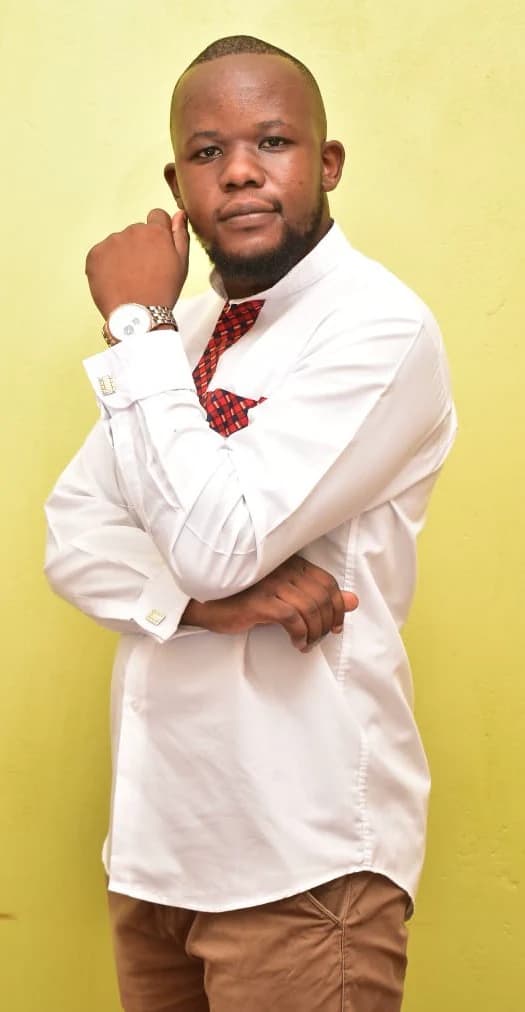
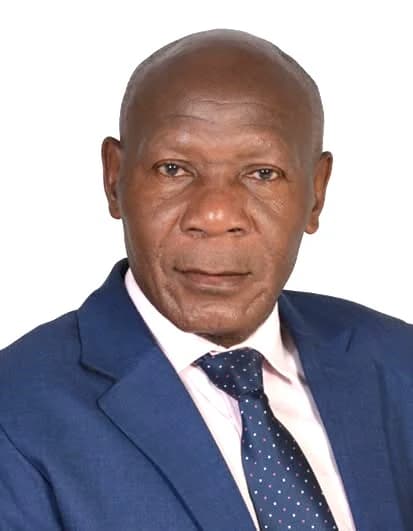
Mike Ochieng’ “Gorba” is a team builder, speaker and coach. He can be reached on 0714 904 165.
Reader Discussion (0)
Sign in to comment