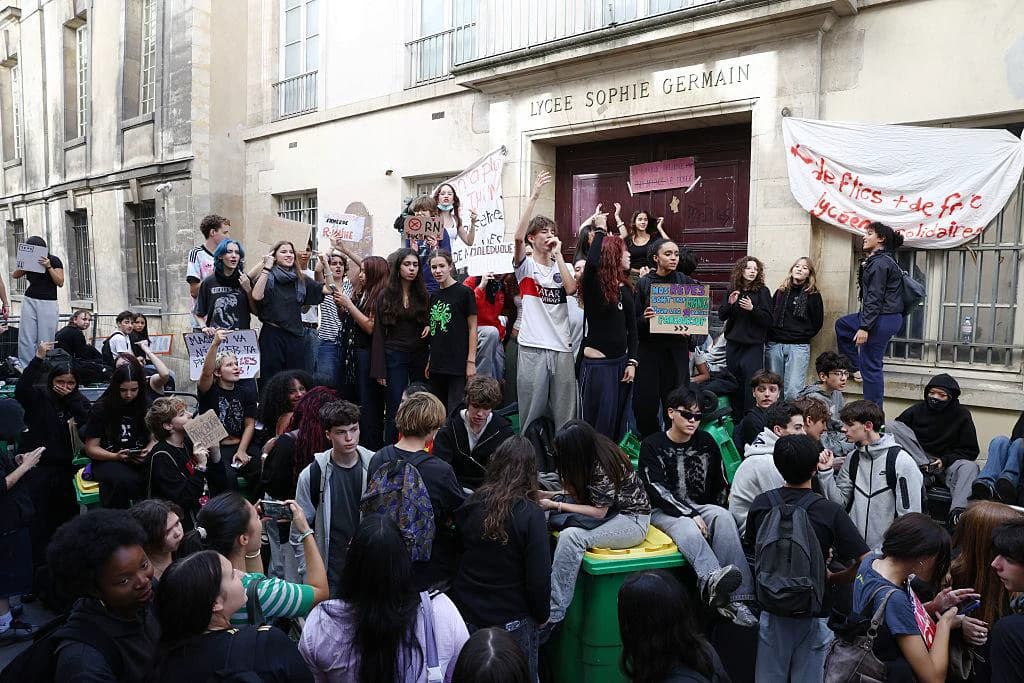
What began in the Paris suburbs in September as student anger over teacher shortages and poor learning conditions has rapidly developed into a national movement, forcing education to the centre of France's political debate.
The Union Syndicale Lycéenne (USL) said 1,800 of France's roughly 3,700 high schools had been blockaded, disrupted by protests or closed on Tuesday. The disruption has affected schools from Paris to Marseille, Nantes, Lyon and Strasbourg, with some local authorities attempting to move lessons online.
The protests have attracted students, teachers and parents who say France's public education system is struggling with teacher shortages, overcrowded classrooms, deteriorating buildings, inadequate resources and demanding school schedules.
Students have complained of attending lessons without permanent teachers and of being placed in overcrowded classrooms. Some schools have reportedly suffered from water leaks, poor sanitation and other maintenance problems.
The government has acknowledged some of the concerns.
Prime Minister Sébastien Lecornu has ordered ministers to examine demands including replacing absent teachers, reviewing the length of the school day and repairing ageing school buildings. Ministers have been asked to produce proposals by the end of October.
But the government's response has so far failed to end the mobilisation.
A student-led movement
The protests do not have a single leader comparable to the head of a conventional national strike.
They are primarily student-led, with high-school student unions and associations coordinating blockades and demonstrations. Student representatives have demanded greater education funding and improvements in conditions affecting their daily learning.
The Union Syndicale Lycéenne (USL) has been among the key student organisations involved in coordinating the mobilisation and reporting the number of schools affected.
Teacher unions, parents' organisations and wider labour unions have subsequently joined or supported the movement, giving the student campaign a broader national reach.
The involvement of parents is particularly significant.
In Toulouse, parents reportedly linked arms at the front of a march, while parents and teachers have joined demonstrations in other cities. Their participation has transformed the dispute from a youth protest into a broader argument about the quality and future of public education.
6,100 arrests
The protests have also generated an increasingly serious confrontation with police.
France's Interior Ministry says 6,100 people have been arrested since the protests began, most of them minors. The Justice Ministry said more than 1,800 people were facing prosecution, including 1,483 minors.
At least 715 police officers and 215 teenagers have been injured, according to government figures.
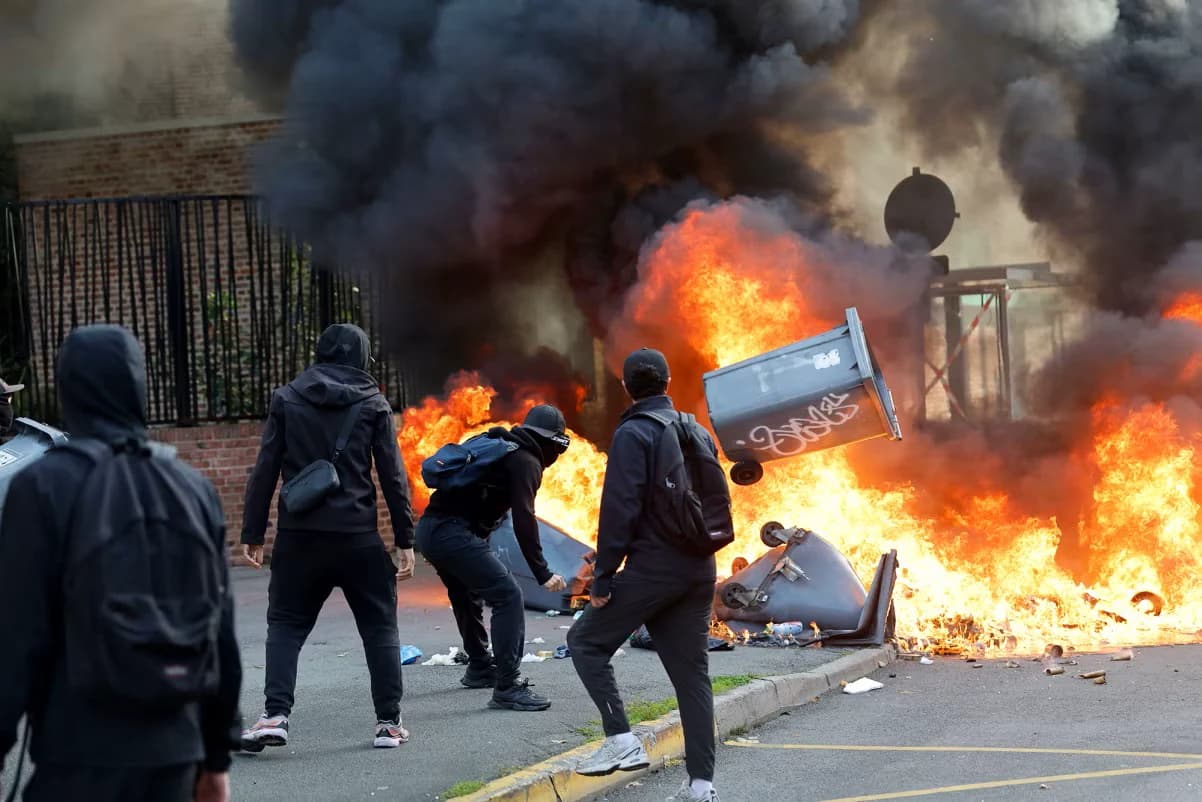
While many demonstrations have remained peaceful, some have been accompanied by fires, damaged property and clashes with police. Officers have used tear gas and other crowd-control measures in several cities.
The police response has itself become a source of controversy, with critics questioning whether force used against young protesters has been proportionate.
The situation intensified after a 15-year-old lost his hand and part of his lower arm during clashes in Lens after picking up a police grenade. Authorities have continued to investigate the circumstances.
Why parents are joining
For parents, the protests are about much more than student politics.
They concern whether children are entering classrooms with enough teachers, adequate learning materials, safe buildings and sufficient support to succeed.
That has given the movement a powerful family dimension.
Parents are effectively arguing that education failures eventually become family failures: a missing teacher affects a child's learning; an overcrowded classroom limits individual attention; deteriorating facilities affect safety and concentration; and inadequate resources can widen inequalities between children.
The French demonstrations therefore offer a wider lesson for education systems around the world.
When students complain about school conditions, the issue can initially appear to be a matter for education officials. When parents and teachers join them, however, the problem becomes a question of public accountability.
Six months before presidential election
The timing has made the protests even more politically sensitive.
France will hold the first round of its presidential election on April 18, 2027, followed by a second round on May 2. President Emmanuel Macron cannot seek a third consecutive term.
The education protests have therefore erupted as political parties begin positioning themselves for the contest to replace him.
The government is also operating under severe fiscal pressure, making demands for additional education spending politically difficult.
That tension lies at the heart of the dispute.
Protesters want more teachers, better-maintained schools and greater investment in education. The government must respond while simultaneously facing pressure to control public spending and France's growing debt burden.
Political parties have also entered the argument, with government figures accusing the left-wing La France Insoumise movement of exploiting or encouraging the protests. The party and other supporters of the students reject the characterisation that the movement is simply politically manufactured.
The student movement, meanwhile, insists that its grievances are rooted in what happens inside schools every day.
A warning beyond France
The French protests carry an important message for countries such as Kenya.
Education reforms can be measured through budgets, curriculum changes, recruitment programmes and infrastructure projects, but parents and learners ultimately judge them through the experience inside the classroom.
Is there a teacher?
Is the classroom overcrowded?
Are textbooks and learning materials available?
Are school buildings safe?
Do children receive enough individual attention?
And, most importantly, are they actually learning?
Those questions can eventually become political questions.
France is now experiencing that transformation in real time.
A movement that began with students complaining about teacher shortages has brought parents into the streets, disrupted thousands of learning institutions, triggered thousands of arrests and forced the government to put education at the centre of a national political conversation.
With a presidential election approaching, the stakes are even higher.
The French protests show that when parents conclude that the education system is failing their children, the issue can move rapidly from the classroom to the streets — and ultimately to the ballot box.
For the government, the challenge is no longer simply restoring order around schools.
It is restoring confidence that the public education system can deliver the future that parents believe their children deserve.
Students, teachers and parents demonstrate in France as nationwide protests over teacher shortages, overcrowded classrooms and deteriorating school conditions intensify.



Reader Discussion (0)
Sign in to comment