

The recently concluded School-Based Assessments (SBAs) have raised serious questions about the alignment between government-supplied textbooks and the assessments set by the Kenya National Examinations Council (KNEC). This calls for a critical examination of the quality of learning resources, curriculum interpretation and investment priorities under Competency-Based Education (CBE).
In my previous article on textbooks, I argued that in the 21st century, textbooks should be treated as one of several tools for curriculum delivery rather than the principal source of knowledge. Although textbooks remain important, modern learners need access to diverse resources, including digital platforms, educational videos, interactive simulations and appropriately guided artificial intelligence tools.
The government spends substantial amounts of money procuring textbooks for learners. While I appreciate this investment, I believe it is time to reconsider whether our spending priorities adequately reflect the needs of 21st-century learners. I propose that the government consider allocating 50 per cent of the relevant learning-resource budget to textbooks and the remaining 50 per cent to strengthening ICT infrastructure and access to digital learning resources.
The recently concluded SBAs exposed a worrying concern. Some assessment papers were reportedly shared online before their official administration, compromising assessment integrity. However, despite the reported early access to some papers, learners did not universally achieve perfect scores.
This raises an important question: if learners had access to the assessment papers and the recommended textbooks, why were they still unable to answer every question correctly?
Early access does not guarantee understanding. Nevertheless, the situation invites us to examine whether the learning materials available to learners adequately prepare them to apply the knowledge and competencies expected in assessments.
As a teacher of Mathematics and Integrated Science, I was particularly concerned by aspects of the Grade 7 Integrated Science SBA. Some questions appeared difficult for learners to relate to the content and activities in the textbooks they had been using.
For example, learners were asked to identify the factor affecting plant growth that had been changed when three identical bean seedlings were planted simultaneously in different locations.
Another question described two learners undertaking the same physical activity. One drank adequate water while the other drank very little. The second learner subsequently passed a small amount of dark-coloured urine and felt thirsty. Learners were asked to explain the kidney's role in maintaining the body's water balance.
A further question required learners to suggest a practical way of making two magnets repel each other more strongly and explain their answer.
These questions are not necessarily unfair or excessively difficult. They test scientific reasoning, application and problem-solving, which are central to CBE. The concern is whether learners' textbooks and classroom experiences adequately develop the understanding needed to answer such questions.
Where is the disconnect?
Curriculum designs specify the learning outcomes, content and learning experiences teachers should facilitate. Textbooks should translate these requirements into clear explanations, illustrations, practical activities and exercises.
What happens when a curriculum design contains more than 200 pages while an approved textbook has only about 120 pages? Page numbers alone cannot establish that a textbook is inadequate because the two documents serve different purposes. However, the difference warrants scrutiny if essential content, activities or learning outcomes have been omitted.
How did publishers interpret the curriculum designs? Were the textbooks evaluated against all the prescribed learning outcomes? Do they provide sufficient practical activities and exercises to prepare learners for competency-based assessments?
KICD should explain transparently the criteria used to evaluate and approve textbooks, including curriculum coverage, subject accuracy, practical activities and assessment readiness.
I am also concerned about whether all publishers awarded government textbook tenders have the necessary experience and subject expertise to produce quality materials across different levels of education. New publishers should have an opportunity to compete, but all must meet rigorous and consistent quality standards. The public deserves confidence that approved textbooks genuinely support curriculum implementation.
KNEC must maintain standards
KICD and KNEC have different but complementary responsibilities. KICD oversees curriculum development and the evaluation of curriculum support materials, while KNEC develops and administers assessments within its mandate.
The answer is not to lower assessment standards to match potentially inadequate textbooks. Instead, learning resources, teacher preparation and classroom practice must be strengthened to meet the intended curriculum standards.
KNEC should provide teachers with regular guidance on assessing competencies, particularly application, interpretation, practical reasoning and problem-solving. Completing notes and memorising definitions are not sufficient evidence that learners have mastered a competency.
### Why we must invest in ICT
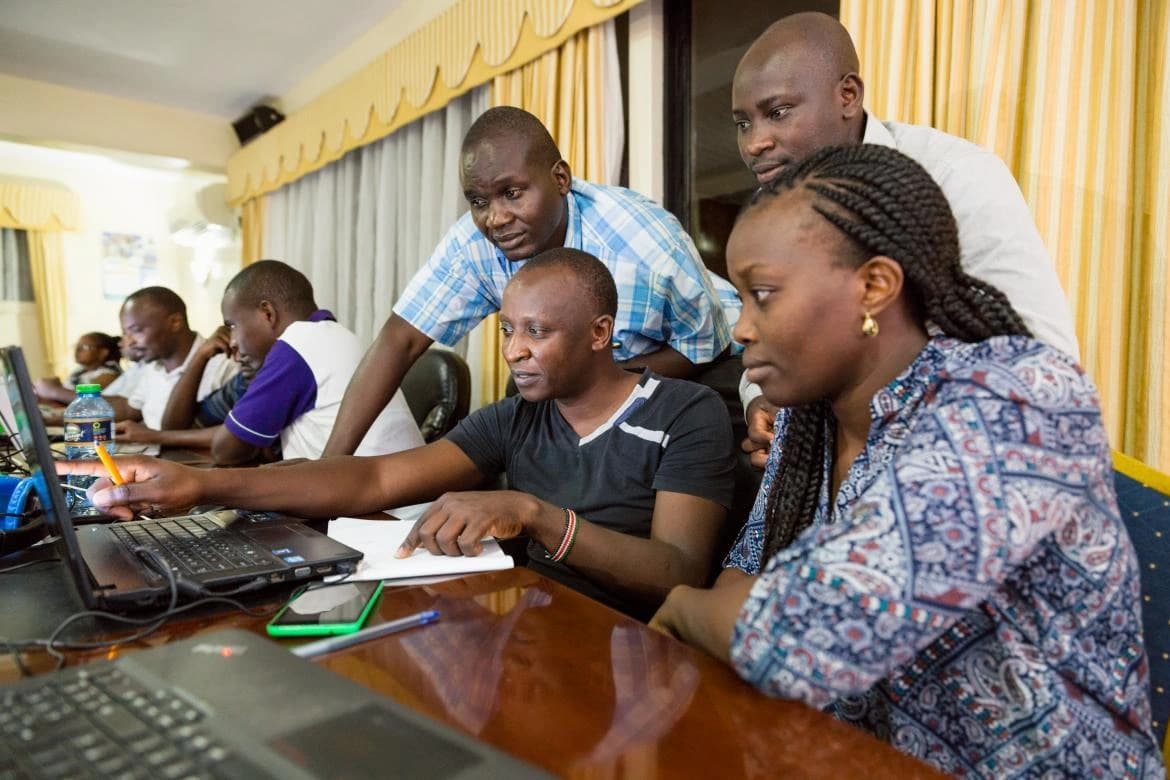
Digital literacy is one of the competencies emphasised in CBE. Yet learners cannot develop it effectively when schools lack adequate computers, reliable internet access, electricity and appropriate digital learning resources.
In my teaching experience, I have seen learners complete homework with the assistance of artificial intelligence. This demonstrates that learners are already interacting with emerging technologies. Schools should guide them to use these tools responsibly, verify information and develop independent thinking rather than depend on AI for answers.
Investment in ICT would expand access to curriculum-aligned digital textbooks, educational videos, virtual experiments and interactive revision exercises. Digital resources can supplement printed textbooks and be updated more easily as learning needs evolve.
This requires more than purchasing computers. The government must also invest in connectivity, teacher training, technical support and offline digital resources for schools with limited internet access. Printed textbooks should remain available, but they should form part of a balanced learning-resource strategy.
Let us refocus on the mission of CBE
CBE seeks to nurture every learner's potential and produce engaged, empowered and ethical citizens. Achieving this requires alignment between curriculum designs, textbooks, teaching practices, assessments and available resources.
The government should review its learning-resource investment priorities. KICD should provide greater transparency on textbook evaluation and curriculum coverage, while KNEC should ensure assessment expectations remain aligned with approved curriculum designs.
We must stop measuring success by the number of textbooks distributed and start asking whether those textbooks enable learners to achieve the intended learning outcomes.
CBE is about discovering talents, developing abilities and deploying ethical learners into society. If we are serious about nurturing every learner's potential, we must provide quality learning resources, competent teachers, meaningful learning experiences and fair assessments that reflect what learners are expected to know and do.
Ateto is CBE Champion and Mathematics and Chemistry Facilitator


Reader Discussion (0)
Sign in to comment