- The African Union will build its first continental campus outside Addis Ababa in Nairobi’s Upper Kabete.
- Five AU institutions, including AU‑IBAR and AUDA‑NEPAD, will be housed under one integrated complex to boost efficiency and collaboration.
- The project is seen as a vote of confidence in Kenya’s leadership, positioning Nairobi as a continental hub for diplomacy, research and innovation.
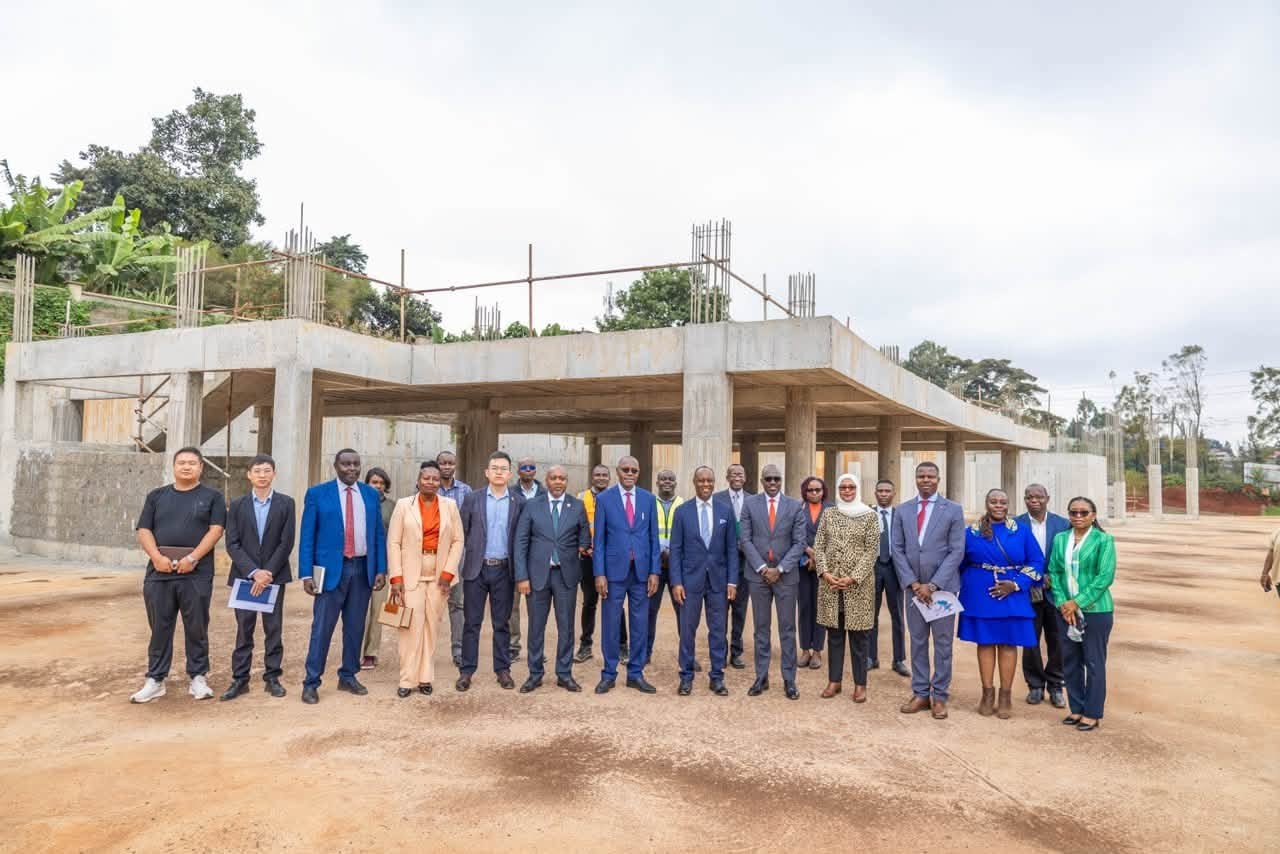
Kenya has recorded a major diplomatic breakthrough after the African Union (AU) announced plans to build its first continental campus outside its headquarters in Addis Ababa, Ethiopia, with the facility set to rise in Nairobi’s Upper Kabete area.
The project moved closer to reality after Principal Secretary for Livestock Development Jonathan Mueke joined Dr Huyam Ahmed Salih, Director of the African Union–InterAfrican Bureau for Animal Resources (AU-IBAR), on an inspection of the proposed construction site, underscoring the strong working relationship between the Government of Kenya and the African Union in delivering the project.
Once complete, the campus will bring together five African Union institutions currently scattered across different locations in Nairobi into a single integrated complex. These are AU-IBAR, the Pan African University Institute for Basic Sciences, Technology and Innovation, the AU Institute for Remittances, the Eastern Africa Regional Office of the African Union Development Agency (AUDA-NEPAD), and the African Union Transition Mission in Somalia (AUSSOM).
Officials say consolidating the institutions under one roof will improve coordination, enhance operational efficiency, cut administrative costs and create a unified environment for policy development, research and innovation, while strengthening collaboration on continental priorities such as agricultural transformation, food security, peacebuilding, scientific research and regional integration.
ALSO READ:
Ruto defends plan to fully fund university, TVET education for all students
The campus is being viewed as a strong endorsement of Kenya’s standing in Africa’s political, economic and development agenda. Addis Ababa has for decades remained the undisputed seat of the African Union, hosting the AU Commission headquarters and the bloc’s highest decision-making meetings, making the decision to establish a major campus outside Ethiopia a notable shift in the Union’s institutional growth.
The move is a step toward decentralising continental institutions, allowing the African Union to expand its footprint beyond Addis Ababa and bring its programmes closer to member states and regional stakeholders.
Government officials have described the investment as a strategic national achievement that aligns with Kenya’s long-term ambition of becoming the continent’s preferred destination for international institutions, conferences and policy dialogue. Beyond diplomacy, the project is expected to create employment during both construction and operation, while boosting demand for accommodation, transport, hospitality, professional services and conference facilities.
The campus is also expected to draw hundreds of African researchers, scientists, policy experts, diplomats and development practitioners to Nairobi, strengthening knowledge exchange and fostering innovative solutions to some of the continent’s most pressing challenges.
Among the institutions set to occupy the new campus, AU-IBAR stands out as one of the African Union’s oldest specialised technical offices. It was established in 1951 as the InterAfrican Bureau of Epizootic Diseases, initially created to combat devastating livestock diseases such as rinderpest, before its mandate expanded over the decades to cover the sustainable development and management of Africa’s animal resources.
ALSO READ:
UoN, India explore revival of Indian studies chair and introduction of Hindi classes
Today, AU-IBAR provides continental leadership in livestock development, fisheries, aquaculture, wildlife conservation and apiculture, while supporting member states in controlling transboundary animal diseases, strengthening veterinary systems, improving food security and promoting regional trade in animal products. It also works with governments, Regional Economic Communities, research institutions and development partners to harmonise policies, build institutional capacity and enhance resilience against emerging animal health threats.
Its role has grown increasingly important as Africa grapples with challenges such as climate change, food insecurity, zoonotic diseases and rising demand for sustainable agricultural production, with the bureau continuing to play a central role in ensuring animal resources contribute to economic growth, poverty reduction, nutrition and environmental sustainability across the continent.
Officials say the establishment of the African Union’s first campus outside Addis Ababa is more than an infrastructure project, describing it as a vote of confidence in Kenya’s leadership, institutional capacity and enduring commitment to Africa’s integration and development, one that is expected to shape the country’s diplomatic legacy for decades while positioning Nairobi at the heart of the continent’s future.
By Hillary Muhalya
You can also follow our social media pages on Twitter: Education News KE and Facebook: Education News Newspaper for timely updates.
>>> Click here to stay up-to-date with trending regional stories
>>> Click here to read more informed opinions on the country’s education landscape
>>> Click here to stay ahead with the latest national news.