- Moi University has assured students that learning, examinations and essential services will continue uninterrupted.
- The institution says it is engaging creditors and government agencies to resolve its financial challenges.
- The unfolding crisis has renewed debate on the long-term sustainability of Kenya’s public universities.
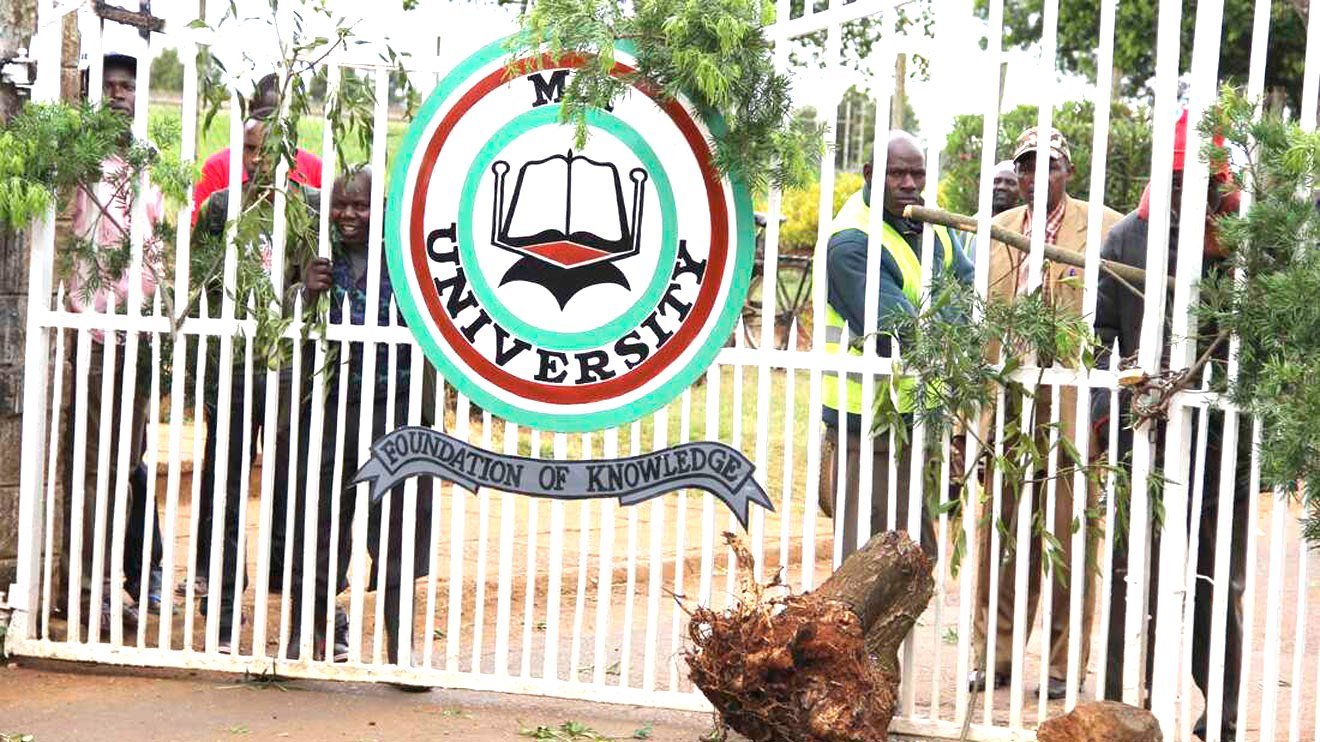
Moi University has sought to reassure students, parents, staff and the public that teaching, examinations and all essential academic services will continue uninterrupted despite reports that some of its assets could be auctioned to recover outstanding debts.
The assurance comes at a critical moment for one of Kenya’s oldest public universities, whose financial challenges mirror the wider crisis facing the country’s higher education sector.
In a statement issued by the university management, the institution acknowledged its financial difficulties but emphasised that it remains operational and committed to delivering quality education while pursuing long-term solutions to restore financial stability.
Management assured students that lectures, examinations, registration, graduation preparations and administrative services will proceed as scheduled, urging learners to remain focused on their studies and avoid speculation that could create unnecessary anxiety.
The statement followed reports that auctioneers had moved to recover outstanding debts from the institution, raising fears that university operations could be disrupted.
Although the reports generated concern among students, parents and employees, the university said it is actively engaging creditors, government agencies and other stakeholders to resolve the matter through lawful and structured processes.
The institution stressed that protecting students’ academic progress remains its highest priority, noting that every decision being made is aimed at ensuring learners complete their programmes without unnecessary interruptions.
A crisis years in the making
Moi University’s financial troubles have developed over several years. The institution has struggled with mounting debts, delayed salary payments, unpaid statutory deductions, supplier arrears and rising operational costs.
Like many public universities in Kenya, the university has also experienced declining student enrolment following reforms in university admissions, increased competition from private institutions and changing demographic trends.
Universities have also faced rising utility bills, infrastructure maintenance costs, technological investments and staff emoluments, placing pressure on already constrained budgets.
Reduced government funding and delays in the release of exchequer allocations have further complicated the financial position of many public institutions, forcing universities to rely more heavily on internally generated revenue, which has steadily declined in recent years.
Earlier this year, university officials told the National Assembly Education Committee that the institution was technically insolvent and required comprehensive restructuring to restore financial sustainability.
The proposed recovery strategy includes expenditure rationalisation, organisational restructuring, improved financial governance, enhanced revenue collection, better utilisation of university assets and stronger accountability mechanisms.
While the financial crisis has generated uncertainty, the university insists that students should not expect disruptions to their education.
Management says lectures, examinations and other academic programmes will continue according to the approved academic calendar as efforts to stabilise the institution continue.
For staff, however, the situation remains challenging. Delayed salaries, uncertainty over future restructuring and concerns about possible workforce rationalisation have affected employee morale.
Labour unions have consistently called for dialogue between management and workers, emphasising that any restructuring process should protect employees’ rights while ensuring the university remains financially viable.
Students have also expressed concerns about the long-term impact of the financial difficulties on learning resources, research funding, infrastructure development and student welfare services.
Why public universities are under pressure
Education experts argue that Moi University’s challenges reflect deeper structural problems affecting Kenya’s public university sector.
For many years, universities expanded rapidly in response to growing demand for higher education. New campuses were established, staff numbers increased and infrastructure projects multiplied. However, funding levels did not always keep pace with this expansion.
The introduction of the new university funding model has also brought significant adjustments, with institutions adapting to changing financing arrangements while managing historical debts and operational obligations.
Experts say universities must increasingly diversify their income through research grants, innovation, consultancy services, commercialisation of research, industry partnerships, alumni support and prudent investment in income-generating projects rather than relying predominantly on government funding and tuition fees.
They also advocate stronger financial management systems, regular audits, strategic planning and improved governance to prevent institutions from sliding into recurring financial crises.
Established in 1984, Moi University occupies a significant place in Kenya’s higher education landscape. Over four decades, it has produced thousands of professionals in medicine, engineering, education, agriculture, law, business, information technology, public administration and many other fields.
Its graduates occupy leadership positions across government, academia, private industry and international organisations, while its researchers have contributed significantly to scientific innovation, public policy and national development.
Because of this legacy, many education stakeholders believe preserving the institution’s stability is not merely a university matter but a national priority.
The road ahead
Education stakeholders say the current crisis presents an opportunity for reforms that could strengthen not only Moi University but also the wider public university sector.
They argue that financial recovery will require collaboration among the university, government, Parliament, employees, students, alumni, development partners and creditors.
Transparency, prudent financial management, sustainable funding models and long-term strategic planning will be essential if institutions are to regain financial stability while maintaining academic excellence.
For now, Moi University maintains that learning will continue uninterrupted as management works to resolve its financial obligations.
The institution has pledged to keep students and staff informed of any developments while reaffirming its commitment to protecting academic programmes and preserving its legacy.
READ ALSO: Mioro Senior School gets long-awaited bus as MP Mugo pledges three more for Mathioya Constituency
The unfolding events have once again reignited national debate on the future of public university financing, highlighting the urgent need for reforms that will enable institutions of higher learning to remain financially sustainable while continuing to provide accessible, affordable and quality education.
By Hillary Muhalya
You can also follow our social media pages on Twitter: Education News KE and Facebook: Education News Newspaper for timely updates.
>>> Click here to stay up-to-date with trending regional stories
>>> Click here to read more informed opinions on the country’s education landscape