- Each public Junior School will separately receive a basic allocation of Sh38,216.97 for the term.
- Schools must acknowledge the funds within two weeks, with non-compliant institutions facing suspension from the programme.
- The Ministry has also prohibited Junior Schools from charging additional levies or fees for lunch programmes.
The Ministry of Education (MoE) has released Free Day Junior School Education (FDJSE) funds for the third term of 2026, allocating Sh1,501.64 per learner to public Junior Schools across the country.
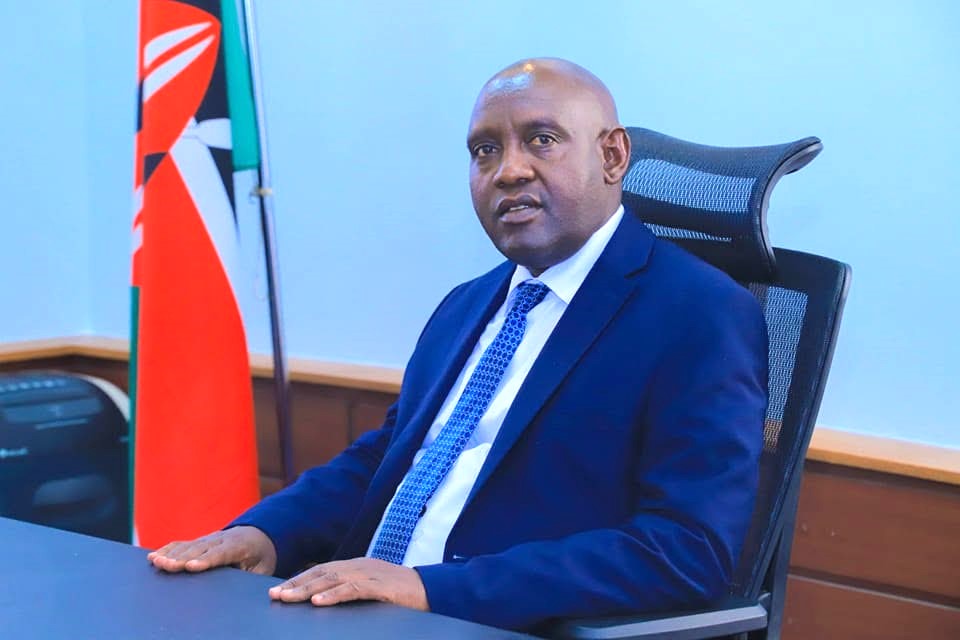
Each school will also receive a basic allocation of Sh38,216.97, according to a circular dated August 19, 2026, signed by Principal Secretary for Basic Education John L. Ololtuaa.
“The Ministry of Education has released Free Day Junior School Education (FDJSE) funds for Junior Schools (JS’s) for Term 3, 2026 at 1,501.64 per learner,” the circular states.
“Further each school will receive an allocation of 38,216.97 as a basic allocation,” it adds.
The Ministry said the learner numbers used to calculate the disbursement were obtained from submissions by heads of institutions during a verification exercise and confirmed by Sub-County Directors of Education.
How schools will spend the funds
The Sh38,216.97 basic allocation comprises Sh37,520 for operations and Sh696.97 for tuition.
Under operations, the largest amount — Sh26,520 — has been allocated to personal emoluments, while Sh4,500 will finance internet connectivity and ICT integration.
Another Sh3,620 has been allocated for rental boxes and postage, telephone charges, Board of Management meetings and BOM capacity building, while electricity, water and conservancy will receive Sh2,880.
The Sh696.97 tuition component will cater for teachers’ guides and reference materials.
At the learner level, Sh999 will be disbursed to schools for operations, including Sh640 for repairs, maintenance and improvement of physical facilities, Sh140 for co-curricular activities, Sh96 for local transport and travel, Sh78 for administrative costs and Sh45 for medical and insurance expenses.
A further Sh502.64 per learner will be sent directly to schools for tuition-related expenditure. This includes Sh200 for stationery and writing materials, Sh144 for materials for practicals under CBC, Sh81 for laboratory materials and Sh77.64 for assessment.
An additional Sh244 per learner is provided through centralised procurement — Sh224 for textbooks and supplementary readers through the Kenya Institute of Curriculum Development and Sh20 for SMASSE capacity building.
The Ministry stressed that schools have no discretion to redirect the allocations to unrelated expenditure.
“All schools are expected to utilize the resources as per the above vote heads,” the circular states.
Schools face suspension over acknowledgement
Heads of institutions have also been placed under strict accountability requirements after receiving the money.
They must issue official school receipts to the Principal Secretary for both tuition and operations accounts, with copies submitted to the respective Sub-County and County Directors of Education.
Learners must also sign class-based school lists containing their admission numbers, full names as recorded in the admission register and the amounts awarded. The lists must be attached to payment vouchers, while each learner must receive an official school receipt for the allocation.
The Ministry has given schools two weeks after receiving the money to complete the acknowledgement process.
“This acknowledgement must be accomplished within two weeks of receipt of funds,” the Ministry directed.
It warned: “Schools whose acknowledgement is NOT received at the headquarters in the stipulated time will be suspended from the programme.”
The Ministry will also institute recovery measures where a school is found to have fewer learners than the enrolment figure used to calculate its allocation.
KEMIS becomes basis for future funding
The circular also signals a significant change in how future capitation allocations will be determined.
Schools have been directed to complete their data on the Kenya Education Management Information System (KEMIS), with the platform set to become the basis for subsequent disbursements from next term.
“Schools are further advised to complete their data on the Kenya Education Management Information System (KEMIS) as all disbursements will be based on the system as from next term,” the circular states.
The directive means accurate learner enrolment records will become increasingly important in determining how much individual institutions receive.
Separate accounts mandatory
The Ministry has further directed all schools to maintain three separate accounts — tuition, operations and infrastructure accounts.
Payments from tuition accounts must strictly be made by cheque, and the funds can only be used to procure teaching and learning materials. Schools are prohibited from transferring tuition funds between vote heads.
Government subsidies other than tuition funds will be deposited into the operations account, while money allocated for repairs, maintenance and improvement of physical facilities must be transferred into the infrastructure account.
Each account must have a separate cash book, while schools must publicly display the amounts received on their notice boards.
No additional levies or lunch charges
The circular also contains firm restrictions on financial obligations imposed on parents and learners.
Boards of Management have been instructed to ensure prudent utilisation of school funds and comply with existing public finance and procurement laws.
Junior Schools cannot enter financial contracts such as hire-purchase arrangements or bank loans without express written approval from the Cabinet Secretary.
Every head of institution will also personally carry responsibility for how the money is applied and utilised.
“Every head of institution shall be responsible for application and utilization of funds as the accounting officer of the school,” the Ministry states.
Most significantly for parents, the circular expressly prohibits Junior Schools from imposing additional charges.
“Junior schools are NOT allowed to charge any other fee/levies,” the circular states.
It further directs that “Junior schools are NOT allowed to charge for lunch programme.”
The restrictions could provide relief to parents who might otherwise face additional school charges beyond government-funded programmes.
All communication to the Ministry concerning capitation must indicate the school’s UIC/NEMIS code.
READ ALSO: Kenya cracks global top 20 in English proficiency, outpaces East African rivals
Ololtuaa directed County Directors of Education to circulate the instructions to Sub-County Directors of Education and heads of all public Junior Schools within their jurisdictions. The circular was copied to the Education Cabinet Secretary, Teachers Service Commission Secretary/CEO, Director of Schools’ Audit Services and all Regional Directors of Education.
By Joseph Mambili
You can also follow our social media pages on Twitter: Education News KE and Facebook: Education News Newspaper for timely updates.
>>> Click here to stay up-to-date with trending regional stories
>>> Click here to read more informed opinions on the country’s education landscape
>>> Click here to stay ahead with the latest national news.