- Kenya scored 593 points in the 2025 EF index, placing it in the high-proficiency category.
- The country ranked considerably above Uganda and Tanzania, strengthening its position among Africa’s leading performers.
- The achievement also raises questions about converting strong language skills into employment, innovation and economic opportunity.
Kenya has secured a place among the world’s strongest English-speaking countries, emerging 19th globally in the 2025 EF English Proficiency Index and finishing well ahead of several of its East African neighbours.
With a score of 593 points, Kenya was classified in the High Proficiency category in the latest assessment covering 123 countries and regions. The performance places Kenya among Africa’s leading performers and gives fresh recognition to the country’s long-standing investment in English-language education and its extensive use of the language in public and private life.
The ranking puts Kenya substantially ahead of Tanzania, which occupied 77th position with 479 points. Uganda ranked 53rd with 518 points, while Ethiopia was placed 65th with 499 points.
The gap between Kenya and Tanzania is particularly striking. Despite the two countries sharing a border, a regional economic bloc, cultural connections and extensive commercial and tourism links, Kenya recorded a score 114 points higher than Tanzania.
The figures have placed Kenya’s language capabilities under renewed international attention, particularly at a time when communication skills are becoming increasingly important in education, employment, technology, trade and international business.
Language and economic opportunity
English has long occupied a strategic position in Kenya’s national life. It is an official language and remains deeply embedded in the country’s education system, government operations, legal institutions, corporate sector, media and professional communication.
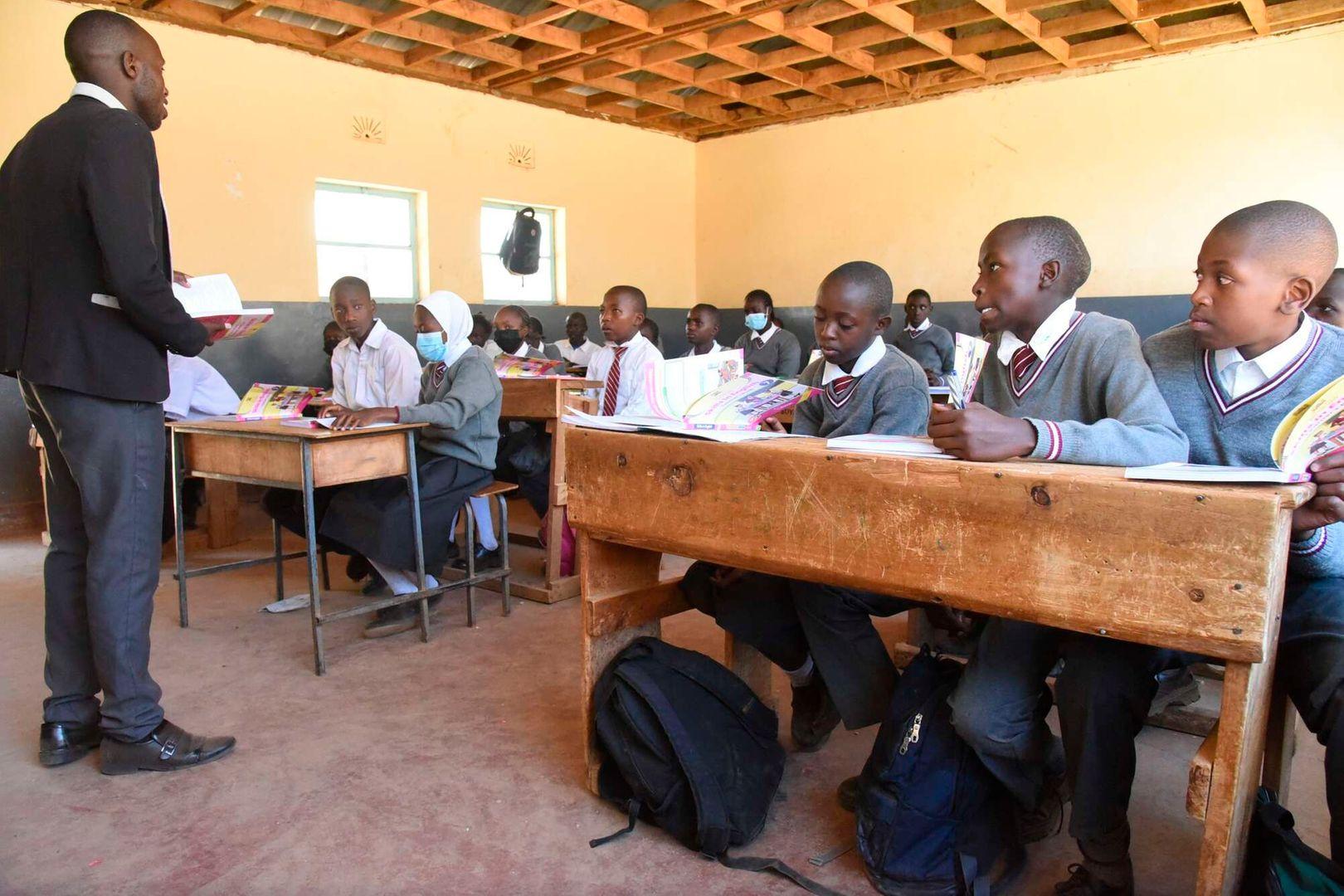
For millions of Kenyan learners, English is not simply another subject in the classroom. It is a major language through which knowledge is acquired, examinations are administered, academic research is undertaken and professional opportunities are pursued.
That long-standing exposure may help explain Kenya’s strong showing in an international assessment that seeks to measure adult English proficiency.
The result also highlights the connection between language and economic opportunity.
In an increasingly interconnected world, the ability to communicate effectively in English can influence access to higher education, international scholarships, employment opportunities, professional networks and global markets.
For Kenyan graduates seeking opportunities in multinational corporations, international organisations, technology companies, tourism, aviation, finance and other globally connected sectors, strong English communication can be a significant advantage.
Kenya’s position is particularly important for Nairobi, which has developed into one of Africa’s major centres for multinational corporations, international organisations, technology enterprises and regional business operations.
A workforce able to communicate confidently with international partners can enhance the country’s attractiveness as a destination for investment and professional services.
Kenya leads regional comparison
The ranking also provides an interesting contrast within the East African Community.
Kenya and Tanzania maintain close economic and social relations, with thousands of people crossing the border each year for business, tourism, education and employment. Both countries also rely heavily on international tourism and maintain extensive engagement with foreign investors and development partners.
Yet the EF assessment shows a substantial difference in measured adult English proficiency.
Uganda, another close regional partner, performed better than Tanzania but still remained below Kenya, recording 518 points and ranking 53rd globally. Ethiopia, while not an EAC member, also scored below Kenya at 499 points and occupied 65th position.
Kenya’s performance consequently gives the country a notable linguistic advantage within its immediate regional neighbourhood.
But the ranking should not be interpreted as a declaration that Kenya has the best education system among the countries surveyed.
That would go beyond what the index measures.
The EF English Proficiency Index is based on English-language test results from adults who participated in EF assessments. The 2025 edition draws on results from about 2.2 million test takers across 123 countries and regions. It therefore provides an indication of English proficiency among the tested population rather than a comprehensive assessment of national education quality.
A country’s education system cannot be judged solely by English scores.
Quality education encompasses teacher preparedness, curriculum implementation, infrastructure, learning materials, equity, learner welfare, assessment systems, digital access, technical skills, creativity, critical thinking and the ability of learners to apply knowledge to real-life challenges.
The Kenyan result should therefore be celebrated without being overstated.
Turning proficiency into opportunity
It is also important to recognise Kenya’s multilingual character. English exists alongside Kiswahili and numerous indigenous languages that remain central to the country’s cultural identity and everyday communication.
The objective of education should not be to diminish this linguistic diversity. Instead, learners should be equipped to become confident multilingual communicators capable of using different languages appropriately across different environments.
The growing emphasis on Competency-Based Education (CBE) makes this issue even more significant.
English proficiency should not be reduced to the ability to memorise vocabulary, grammar rules or examination answers. The deeper objective should be to enable learners to communicate ideas, analyse information, conduct research, collaborate with others, solve problems and express themselves confidently.
A learner who can speak and write English fluently but cannot think critically or apply knowledge effectively will still face limitations in the modern economy.
Likewise, communication skills become far more valuable when combined with digital literacy, scientific knowledge, technical expertise, creativity, entrepreneurship and problem-solving.
Kenya’s high ranking therefore presents an opportunity to rethink how language skills can support the country’s broader development agenda.
Rather than treating English proficiency simply as an examination achievement, policymakers and educators can view it as an economic and social resource.
Strong communication skills can support young people entering a competitive labour market, help entrepreneurs engage international customers, enable researchers to access global scholarship and allow professionals to participate more effectively in international networks.
The result could also strengthen Kenya’s ambitions to position itself as a regional education and knowledge hub.
Universities, colleges, technical institutions and professional training centres operate within an increasingly global environment. Students are expected to access international research, digital learning platforms and professional resources, many of which are predominantly available in English.
The ability to navigate that environment confidently can expand opportunities for Kenyan learners.
But there is another challenge: access.
High national proficiency figures can conceal significant differences between regions, communities, socioeconomic groups and generations. Indeed, EF’s Kenya data show substantial regional variation, from a score of 600 in Coast to 524 in North Eastern.
Urban populations with greater access to quality schools, technology, libraries and international exposure may experience very different language-learning opportunities from learners in underserved communities.
For the ranking to translate into a genuinely national advantage, Kenya must continue investing in equitable access to quality education.
This means supporting teachers, improving learning environments, expanding digital access, strengthening literacy programmes and ensuring that children from disadvantaged communities are not left behind.
The country must also guard against complacency.
Ranking 19th globally is an achievement, but maintaining and improving that position requires continuous investment. Language skills can decline when education systems fail to adapt to changing economic and technological demands.
The next frontier is therefore not simply speaking English better.
It is using English — alongside Kiswahili and Kenya’s other languages — as a vehicle for knowledge, innovation, research, creativity and economic participation.
Kenya’s 593-point score offers a useful reminder of the role that language has played in the country’s educational and economic development. It also demonstrates how a skill cultivated in classrooms can eventually influence international competitiveness.
For parents, teachers and policymakers, the message is equally important.
Language education should go beyond preparing learners for examinations. It should prepare them to communicate in universities, workplaces, businesses, laboratories, digital platforms and international spaces.
For learners, English proficiency can become an asset when combined with practical competence and the ability to think independently.
And for Kenya as a country, the latest ranking provides a moment to celebrate — but also a reason to raise the bar.
Kenya has entered the global top 20 for adult English proficiency. It has outperformed Tanzania, Uganda and Ethiopia in the latest index and established itself among Africa’s strongest performers.
The real measure of success, however, will be whether that linguistic advantage can be converted into better learning outcomes, greater employability, stronger innovation, expanded international opportunities and inclusive economic growth.
READ ALSO: Over 2,000 converge on Kerio Valley as sport drives peace among nine counties
The ranking has opened the door. Kenya’s education system, workforce and young people now have the responsibility of turning proficiency into opportunity.
By Hillary Muhalya
You can also follow our social media pages on Twitter: Education News KE and Facebook: Education News Newspaper for timely updates.
>>> Click here to stay up-to-date with trending regional stories
>>> Click here to read more informed opinions on the country’s education landscape
>>> Click here to stay ahead with the latest national news.
Caption: