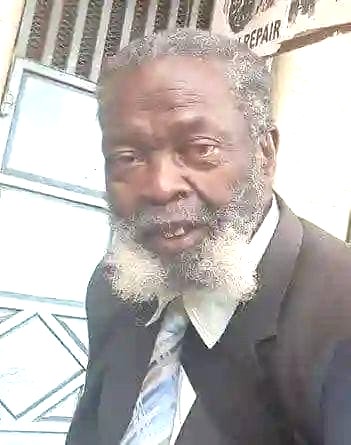
- More than a decade later, Enock Okong’o remembers an encounter with renowned scholar Prof. Ouma Muga.
- What began as routine coverage of a school event became an unforgettable lesson in knowledge and life.
- His reflections on environment, Luo heritage and education left lessons the journalist still carries today.
It is more than ten years since he died, but the words I drank from his knowledge that day still ring in my mind as if it were yesterday. He now rests in peace with the ancestors in Homa Bay County, yet his voice continues to shape those of us who were fortunate to sit under his teaching.
I had gone to Kengeso Secondary School, courtesy of the Principal, for my routine news coverage. It was meant to be another Prize and Education Day assignment — speeches, prize-giving, photographs and a story for the next edition. But it became the story that turned my news coverage into a classroom.
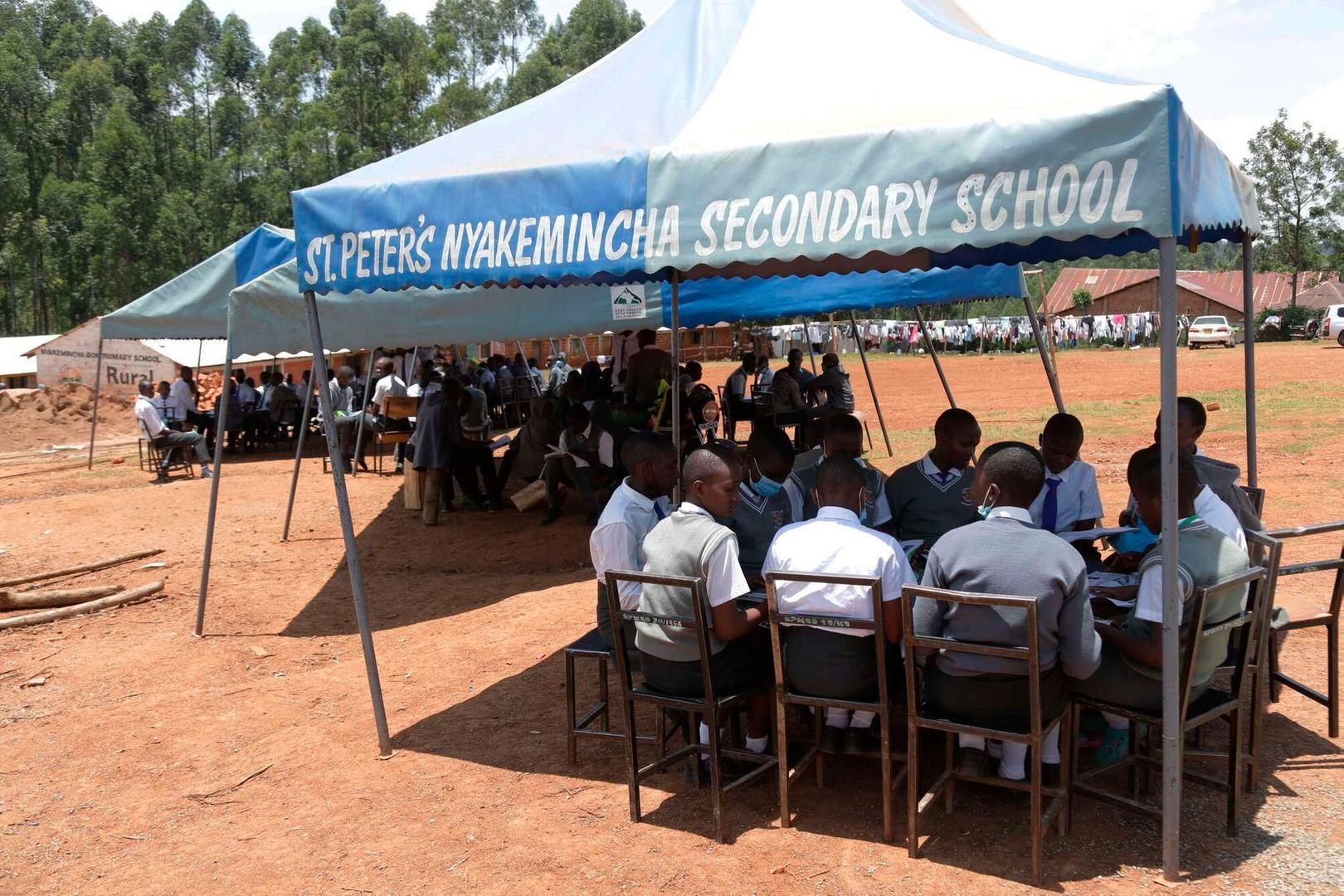
The compound was alive with colour and anticipation. Parents, teachers, students and community leaders had gathered to celebrate academic excellence. Yet when Prof. Ouma Muga took the podium, the atmosphere shifted.
He leaned forward on the podium like a methodical priest in prayerful, sacred animation. His presence commanded attention not through volume, but through the weight of thought. He was a man whose scholarship was matched only by his philosophical disposition towards life.
From the ozone layer to responsibility
Speaking with rare eloquence, Prof. Muga moved seamlessly between science, history and human values. He began with the ozone layer, a subject he treated not just as an environmental concern, but as a metaphor for stewardship.
“The ozone layer,” he told the audience, “is not simply a shield of gas 20 kilometres above us. It is a covenant between humanity and nature. When we degrade it through careless emissions, we are not only damaging the atmosphere. We are breaking a trust with future generations.”
He explained in measured, scholarly terms how chlorofluorocarbons and other pollutants thin the stratospheric ozone, allowing harmful ultraviolet radiation to reach the Earth. He linked this to health, agriculture and the moral responsibility of the present generation. For him, science was never divorced from ethics. To understand the ozone was to understand our duty to protect life.
From the skies above, Prof. Muga then drew us to the ground beneath our feet, to the story of who we are. With the calm authority of a historian and the warmth of an elder, he spoke on the genealogy of the Luo community.
He traced the Luo journey from the cradle of the Nile, through migrations across Sudan and Uganda, to the shores of Lake Victoria. He spoke of names, clans, the significance of dala and kwer, and how memory is kept not only in books but in songs, proverbs and the naming of children.
“The Luo,” he said, “are a people of movement and of thought. Our genealogy is not just a list of ancestors. It is a philosophy. It teaches us that we come from somewhere, that we belong to each other, and that we are responsible to those who will come after us.”
In that moment, the students at Kengeso were not just hearing about history. They were being invited into it. Prof. Muga made the past feel immediate, and the future feel like something they must shape.
Education beyond certificates
What struck me most was his philosophical approach to education. To him, prizes and grades were important, but they were instruments, not ends. The purpose of education, he argued, is to produce citizens who can think critically, act responsibly and live meaningfully.
“A school is not a factory for certificates,” he said. “It is a forge for character. If you leave here with good grades but without wisdom, then we have failed you.”
His words settled over the gathering like rain after a long dry spell. Teachers nodded. Parents whispered in agreement. Students sat straighter.
As the day ended and prizes were handed out, it was clear that Prof. Ouma Muga had given Kengeso Secondary School more than a speech. He had given a framework for thinking about the environment, heritage and life itself.
More than a decade later, I still carry those lessons. What began as news coverage became tutelage. To meet him was to be reminded that scholarship without philosophy is incomplete, and that philosophy without service to community is empty.
READ ALSO: Can Kenya retain FEASSSA 2026 handball crown without Kimilili Boys?
On that Prize and Education Day, Kengeso was fortunate to host a man who embodied both. And though he now rests with the ancestors in Homa Bay, his wisdom walks with us still.
By Enock Okong’o
You can also follow our social media pages on Twitter: Education News KE and Facebook: Education News Newspaper for timely updates.
>>> Click here to stay up-to-date with trending regional stories
>>> Click here to read more informed opinions on the country’s education landscape