- Ashford Kimani reflects on Harambee Starlets’ 2-0 defeat to Algeria, arguing that the loss exposed tactical and structural gaps in Kenya’s women’s football.
- He says stronger preparation, better game management and sustained investment are essential if the Starlets are to compete consistently at the highest level.
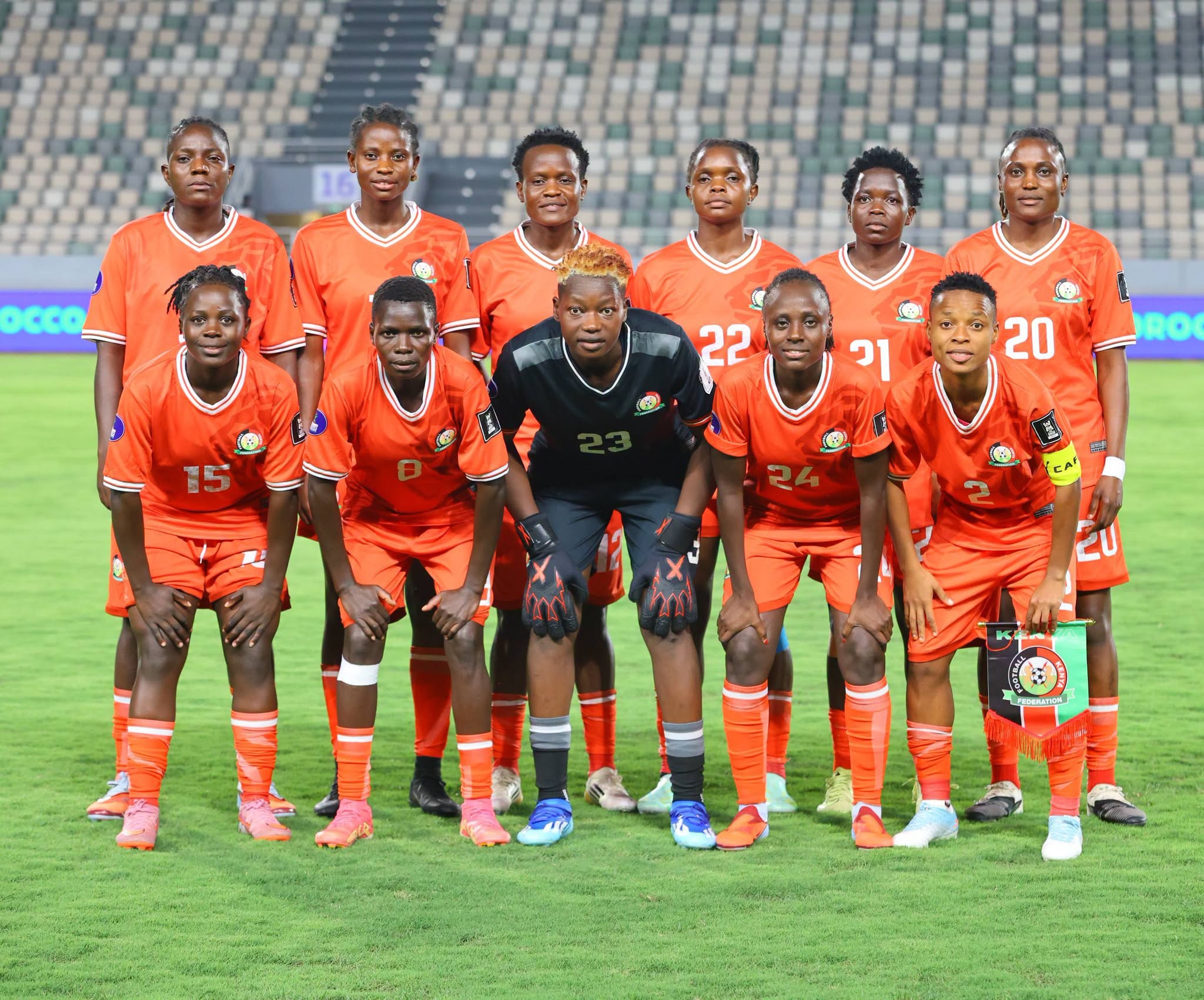
Kenya’s Harambee Starlets exited the TotalEnergies CAF Women’s Africa Cup of Nations after a 2-0 defeat to Algeria, a result that ended their campaign while confirming Algeria’s place in the quarter-finals. The scoreline was disappointing, but the match offered lessons that go beyond one evening of football. It exposed the difference between a team that converts preparation into control and one that must chase the game after costly moments.
Algeria’s victory was built in the opening half-hour. Captain Marine Dafeur gave her side the lead in the 14th minute with a superb long-range free kick that beat Kenyan goalkeeper Lilian Awuor. Nine minutes later, Algeria doubled their advantage after Lynda Bendris pressed aggressively inside Kenya’s penalty area, forced an error and found the net. Two goals in nine minutes transformed the contest and left Kenya with a difficult task.
Yet Kenya’s defeat should not be interpreted simply as a lack of effort. The Harambee Starlets responded positively. Martha Emedot came close with a long-range effort in the first half, while captain Mwanalima Jereko narrowly missed the target late in the match. Kenya also enjoyed more possession after the break and showed determination to return to the contest. However, possession without penetration rarely changes the outcome of a match. Algeria’s disciplined defence restricted Kenya’s clear opportunities and protected the advantage with maturity.
Slow start proved costly
The first lesson for Kenya is the importance of concentration during the opening stages. International football is often decided by brief periods in which teams lose shape, fail to communicate or make poor decisions under pressure. Algeria began with confidence and purpose. Kenya, on the other hand, found itself two goals behind before the match had properly settled.
At elite level, a slow start can become a decisive disadvantage. The Starlets must therefore develop the ability to enter matches with greater tactical alertness. The opening 15 minutes should not be treated as a period for “settling into the game.” They should be approached as a period in which every player understands her defensive responsibility, anticipates danger and avoids unnecessary errors.
The second lesson concerns playing out from the back. Algeria’s second goal came from relentless pressing on the Kenyan goalkeeper. Modern football demands composure from goalkeepers and defenders, but composure must be supported by clear passing options, communication and rehearsed patterns of play. A goalkeeper should not be left isolated when opponents press aggressively.
Kenya must improve its ability to respond to a high press. Defenders should create useful passing angles, midfielders should offer themselves between lines, and players must know when to play short and when to clear danger. Building from the back is not merely about courage; it is about structure, movement and collective understanding.
Sharper finishing and purposeful possession
Third, Kenya must become more clinical in front of goal. The Starlets created promising moments, but their best efforts went narrowly wide. At major tournaments, teams may receive only two or three genuine scoring opportunities. Those chances must be treated as potential turning points.
This calls for more specialised attacking preparation. Strikers and attacking midfielders need regular training in finishing under pressure, making intelligent runs, attacking crosses and remaining composed inside the penalty area. Kenya cannot depend only on long-range efforts or moments of individual inspiration. The team must create repeatable attacking patterns that produce high-quality chances.
The fourth lesson is that possession must have purpose. Kenya enjoyed more of the ball in the second half, but Algeria remained organised and largely comfortable. Possession becomes valuable only when it moves opponents out of position, creates numerical advantages or opens routes towards goal.
The Starlets must improve the speed and direction of their passing. Too much safe possession can allow a disciplined opponent to remain compact. Kenya needs players who can receive the ball under pressure, turn quickly, break lines and make decisive forward passes. The objective should not merely be to keep the ball but to use it to create danger.
Fifth, the match demonstrated the importance of defensive organisation. Algeria did not need to dominate every phase after taking the lead. Their disciplined defensive structure limited Kenya’s clear-cut opportunities and allowed them to manage the match effectively.
Kenya must build a similar capacity to control matches. Defensive discipline is not only the responsibility of defenders. It begins with the forwards, continues through the midfield and depends on the entire team moving as a coordinated unit. Players must understand when to press, when to retreat and how to protect dangerous spaces.
Investing in the future of women’s football
The broader lesson concerns the development of women’s football in Kenya. A national team cannot consistently compete with Africa’s strongest sides if preparation begins only when a major tournament approaches. Success requires a functioning football ecosystem: strong school competitions, organised youth leagues, competitive domestic clubs, qualified coaches, sports science support and regular international matches.
Kenya has considerable football talent. The challenge is converting that talent into a sustainable national system. Young girls must have clear pathways from school football to academies, clubs and the national team. Coaches must be supported to develop technical ability, tactical intelligence and physical conditioning. Domestic competitions must be competitive enough to prepare players for the speed and intensity of continental football.
The Harambee Starlets should therefore view this exit not as the end of a journey but as evidence of the work still required. The defeat was painful, but it also provided a clear diagnostic report. Kenya must start matches with greater concentration, resist aggressive pressing, convert chances, use possession more purposefully and strengthen its defensive organisation.
Algeria’s victory was not built on luck. It came through an early set-piece goal, aggressive pressing, tactical discipline and effective game management. Kenya must study those qualities—not to imitate Algeria blindly, but to build a stronger football identity of its own.
The Starlets leave the tournament without a place in the quarter-finals, but they should not leave without direction. If the lessons from this defeat are translated into better preparation, stronger domestic structures and sustained investment, the loss may become an important stage in Kenya’s football development.
READ ALSO: KNEC to pay contracted 2025 national examination officials from August 6
The challenge now is to ensure that the next Harambee Starlets campaign is not defined by promising responses after going behind, but by confident performances from the first whistle to the last.
By Ashford Kimani
Ashford Kimani is a teacher of English and Literature who writes on education and social affairs.
You can also follow our social media pages on Twitter: Education News KE and Facebook: Education News Newspaper for timely updates.
>>> Click here to stay up-to-date with trending regional stories
>>> Click here to read more informed opinions on the country’s education landscape
>>> Click here to stay ahead with the latest national news.