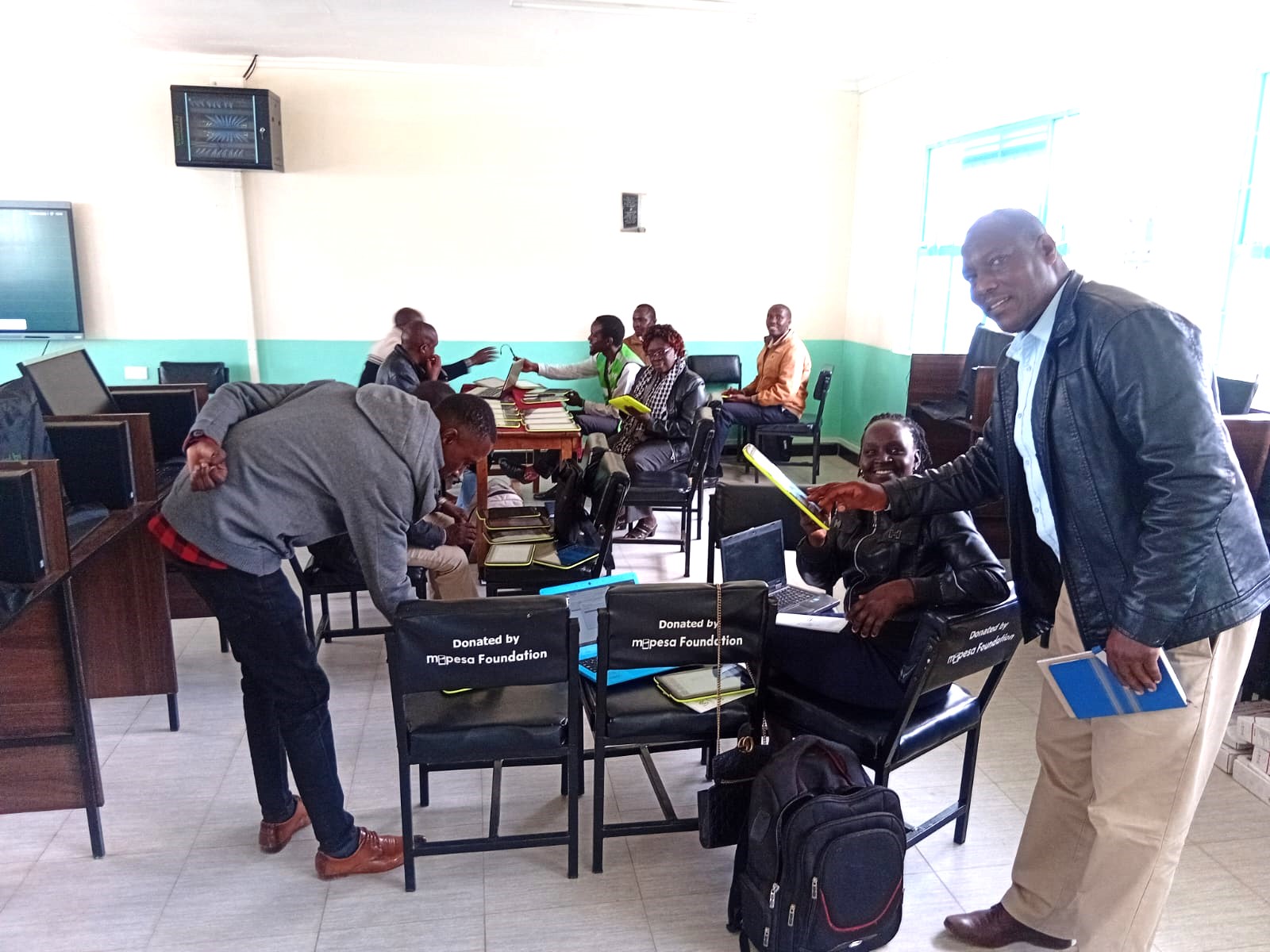
- More than 400 girls participated in a STEM Bootcamp under the Last Mile Connectivity Project at Siyoi Comprehensive School.
- The initiative is equipping learners with digital skills, mentorship and Competency-Based Education competencies.
- Education officials urged girls to pursue STEM careers and take advantage of emerging opportunities in technology and innovation.
More than 400 girls from Siyoi Primary School, Kipkorinya Primary School, Chewoyet Primary School and Kaibos Primary School gathered at Siyoi Comprehensive School on July 16, 2026, for a STEM Bootcamp that demonstrated how digital technology, mentorship and the Last Mile Connectivity (LMC) Project are transforming education and unlocking opportunities for learners in West Pokot County.
The one-day bootcamp, held under the theme, “CBE Pathways: STEM, Social Sciences, Arts and Sports,” brought together learners, education officials, ICT teachers, mentors and school leaders to nurture confidence, ignite curiosity and inspire girls to pursue careers in science, technology, engineering, mathematics (STEM), social sciences, arts and sports.
The programme forms part of the Last Mile Connectivity Project, a flagship initiative implemented by Finn Church Aid (FCA) in partnership with UNICEF to improve access to inclusive, equitable and digitally enabled education in West Pokot, Marsabit, Samburu and Tana River counties.
Bridging the digital divide
The initiative responds to challenges identified in the Landscape Report on Digital Education in Kenya (2020), including limited internet connectivity, inadequate infrastructure, insufficient teacher capacity in digital pedagogy and low integration of ICT in curriculum delivery.
Through the project, connected schools are being transformed into digital learning hubs equipped with digital devices, localised educational content and innovative teaching approaches aligned with the Competency-Based Education (CBE) curriculum.
In West Pokot County, the project targets 75 public schools spread across Pokot West, Kipkomo and Pokot Central sub-counties. It has also trained 158 education stakeholders, including heads of institutions, ICT teachers, Boards of Management members, parents and education officials, on ICT integration and child online safety.
The mentorship programme was led by West Pokot Sub-county Quality Assurance Officer Philemon Rop and Quality Assurance and Standards Officer Damaris Boit, with ICT teachers from schools across Siyoi Zone.
Addressing the learners, Rop described Competency-Based Education as a transformative curriculum that recognises every learner’s talents, interests and abilities while promoting creativity, innovation, collaboration and critical thinking.

He challenged the girls to embrace every CBE pathway confidently, particularly STEM, noting that the future global economy will increasingly depend on scientific research, innovation and technology.
Rop also urged the learners to reject stereotypes that discourage girls from pursuing careers in engineering, medicine, architecture, aviation, software development, artificial intelligence, robotics, environmental science and research.
Mentorship and digital skills
Damaris Boit emphasised that mentorship remains one of the most powerful tools for transforming the lives of young girls.
She encouraged learners to seek guidance from teachers, parents and professionals while developing confidence, leadership skills and positive peer relationships.
ICT teachers introduced participants to emerging technologies and demonstrated how digital skills can be applied in research, innovation, entrepreneurship and problem-solving.
The learners were encouraged to develop competencies in coding, digital communication, online collaboration, computer applications and computational thinking, skills that are increasingly becoming essential in the modern economy.
The programme also addressed leadership development, financial literacy, entrepreneurship, emotional well-being and gender equity.

Learners were encouraged to remain focused on their education, avoid negative influences such as early pregnancies, child marriage, drug abuse and school dropout, and become ambassadors of positive change within their communities.
Organisers said the Last Mile Connectivity Project continues to demonstrate that meaningful digital transformation goes beyond providing internet connectivity and devices by empowering teachers, strengthening communities and equipping learners with future-ready competencies.
READ ALSO: Egerton University to honour Prof Catherine Kitetu with candle-lighting ceremony
For the more than 400 girls who attended the bootcamp, the programme marked the beginning of a journey towards becoming future innovators, scientists, engineers, entrepreneurs and transformational leaders.
By Hillary Muhalya
You can also follow our social media pages on Twitter: Education News KE and Facebook: Education News Newspaper for timely updates.
>>> Click here to stay up-to-date with trending regional stories
>>> Click here to read more informed opinions on the country’s education landscape
>>> Click here to stay ahead with the latest national news.