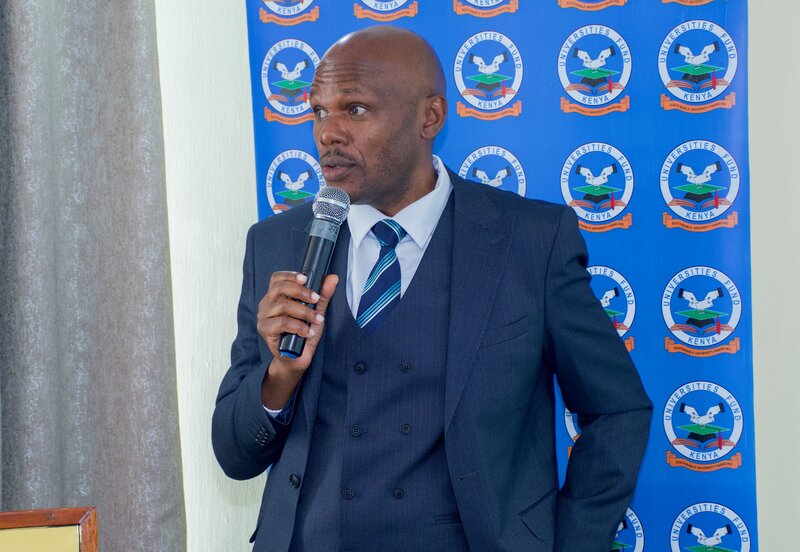
- Universities Fund warns of crisis as Persistent budget deficits have left public universities facing a KSh28 billion shortfall, threatening salaries, scholarships, and operations.
- The student‑centred model required KSh29 billion but got KSh18 billion, while the DUC model needed KSh40 billion but received KSh23 billion, creating massive gaps.
- Edwin Wanyonyi told MPs the shortfall undermines quality, accessibility, and continuity of higher education across Kenya.
Public universities in Kenya face a looming financial crisis, with the Universities Fund cautioning that persistent budget deficits could cripple their ability to meet core obligations such as paying staff salaries and sustaining scholarships.
Appearing before the National Assembly Committee on Education, Universities Fund acting CEO Edwin Wanyonyi revealed that the fund is grappling with a KSh28 billion shortfall that has undermined its capacity to finance universities in line with assessed resource needs. He warned that the deficit is eroding the sustainability of higher education and jeopardising the quality, accessibility, and continuity of learning.
ALSO READ:
Ruto defends plan to fully fund university, TVET education for all students
Wanyonyi explained that under the student‑centred funding model, the fund required Sh29 billion for the 2025/26 financial year but received only Sh18 billion, leaving a gap of Sh11 billion. Similarly, under the Differentiated Unit Cost (DUC) capitation model, the fund needed Sh40 billion but was allocated Sh23 billion, creating a Sh17 billion deficit. Combined, the two models produced a total funding gap of Sh28 billion.
“The funding gap has implications for the financial sustainability of public universities. Since scholarship funds are remitted directly to universities to support tuition costs, any shortfall in scholarship financing may constrain university cash flows and contribute to the accumulation of institutional pending obligations related to their recurrent operational expenditures,” Wanyonyi told the committee.
He further noted that the deficit has weakened the fund’s ability to support universities at the required levels, leaving institutions struggling to balance tuition financing with operational costs. The situation, he said, risks pushing universities into default on their core obligations if annual budget deficits persist.
By Masaki Enock
You can also follow our social media pages on Twitter: Education News KE and Facebook: Education News Newspaper for timely updates.
>>> Click here to stay up-to-date with trending regional stories
>>> Click here to read more informed opinions on the country’s education landscape
>>> Click here to stay ahead with the latest national news.