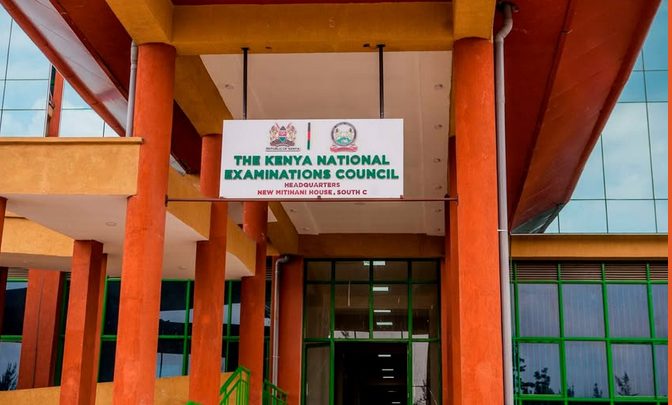
- KNEC has released the 2025 KCSE and KJSEA examination feedback reports, question papers and marking schemes to help schools prepare for the 2026 national examinations.
- KNEC has published the reports in multiple volumes covering languages, sciences, humanities and technical and creative arts, alongside two years of KCSE question papers.
- The release has coincided with TSC’s ongoing process of identifying examination personnel through the CP2 deployment system ahead of the 2026 examination cycle.
The Kenya National Examinations Council (KNEC) has released a new collection of official examination reports, question papers and marking schemes from the 2025 KCSE and KJSEA assessments, giving teachers and learners a detailed reference point as schools prepare for the 2026 national examinations.
The release provides schools with an opportunity to move beyond simply reviewing examination scores and instead use official candidate-performance feedback to identify areas where learners struggled and adjust teaching strategies accordingly. The 2025 KCSE Examination Feedback Reports have been published in four volumes covering Languages; Mathematics and Sciences; Humanities; and Technical and Creative Arts. The reports analyse candidates’ performance across different subjects and are designed to help teachers understand areas of strength and weakness emerging from the examinations.
For Junior Secondary, KNEC has released the 2025 KJSEA Examination Feedback Reports in three volumes covering Languages; Sciences and Pre-technical Mathematics; and Humanities, Creative Arts and Sports. The KJSEA materials cover subjects including English, Kiswahili, Kenya Sign Language, Mathematics, Integrated Science, Agriculture, Pre-Technical Studies, Social Studies, CRE, IRE, HRE and Creative Arts and Sports. The release is particularly significant as schools continue adapting to assessment under the Competency-Based Education (CBE) system, where examination and assessment feedback can be used to identify learning gaps and strengthen classroom instruction.
ALSO READ:
TSC warns schools against fake claims on fees for teacher recruitment and promotions
In addition to the feedback reports, KNEC has released the 2025 KCSE examination question papers and marking schemes across Languages, Mathematics and Sciences, Humanities, and Technical and Creative Arts. The council has also made available the 2024 KCSE question papers and marking schemes, giving teachers and candidates access to two years of official examination material for revision and assessment preparation. At the primary and Junior Secondary levels, KNEC has also released KPSEA and KJSEA assessment materials, including the 2025 and 2024 KPSEA assessment papers and answers to objective questions, alongside the 2025 KJSEA assessment papers and marking schemes.
For learners, the materials provide an opportunity to become familiar with the structure, scope and demands of national assessments. For teachers, however, the feedback reports may prove even more valuable because they provide evidence on how candidates performed rather than simply supplying questions and answers. Schools can use the reports to identify recurring weaknesses, review instructional approaches and provide targeted support to learners before national assessments.
The KNEC publication comes at a critical point in the school calendar, with preparations for the 2026 national examinations and assessments already underway. The Teachers Service Commission (TSC) has begun the process of identifying teachers who may serve as Centre Managers, Supervisors and Invigilators during the examination period, with Curriculum Support Officers engaging heads of institutions to collect information on suitable teachers for entry into KNEC’s CP2 online deployment system. Sub-County Directors of Education are expected to ensure the required information is entered by the end of September, setting the stage for the deployment of examination personnel. This means the latest KNEC release serves two purposes: providing schools with historical assessment evidence while preparations for the next examination cycle move into a more advanced phase.
ALSO READ: KUCCPS reopens KMTC, Utalii College applications for September 2026 intake
The publication of examination feedback reports alone will not improve learning outcomes. Their value will depend on whether schools use the evidence to identify specific learning gaps and respond through classroom interventions, learner support and improved assessment practices. Teachers can compare the performance trends highlighted in the reports with the work of learners in their own schools and determine whether similar weaknesses exist. The question papers and marking schemes can also be used for revision, internal assessment and teacher preparation, provided they are used to strengthen understanding rather than encourage rote learning.
The publications are available at varying prices, generally ranging between KSh950 and KSh1,550 depending on the publication and volume, and can be purchased through the KNEC Bookshop in Nairobi.
By Kithinji Njeru and Hillary Muhalya
Get more stories from our website: Education News
To write to us or offer feedback, you can reach us at: editor@educationnews.co.ke
You can also follow our social media pages on Twitter: Education News KE and Facebook: Education News Newspaper for timely updates.
>> Click here to stay up-to-date with trending regional stories