- DP Kithure Kindiki has announced a coordinated government preparedness plan ahead of El Niño rains expected between October and January, guided by the National Disaster Risk Management Act, 2026.
- The government has mobilised ministries, agencies and county governments to unclog drainage systems, reinforce roads and bridges, and pre-position emergency supplies ahead of the rains.
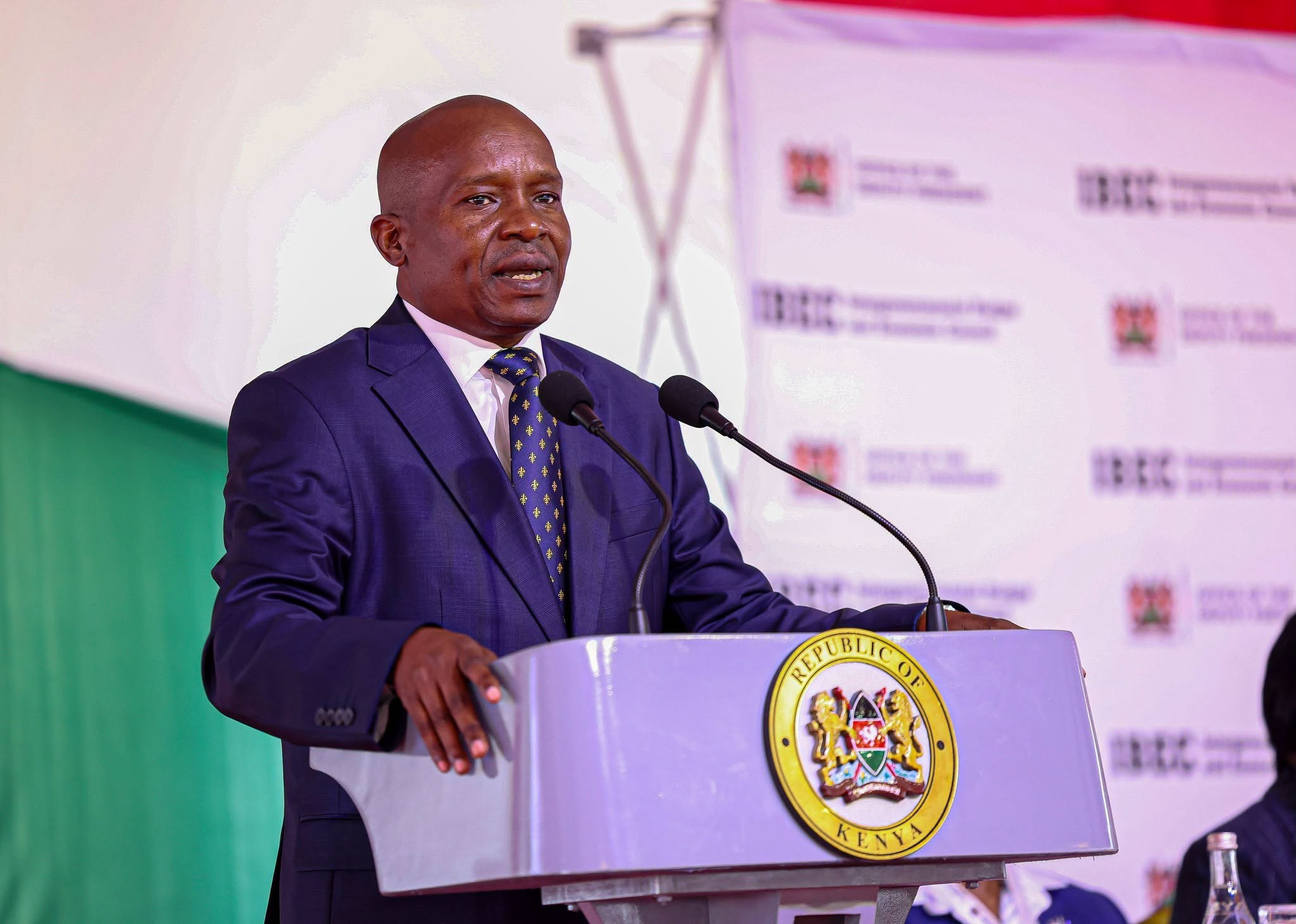
Deputy President Prof. Kithure Kindiki has issued an early warning to the nation about impending El Niño rains projected to begin in October this year and extend until January next year, alongside details of a coordinated government preparedness plan.
Speaking after chairing the Ad Hoc Cabinet Committee on El Niño Preparedness and Response at his Karen residence, Kindiki said the government is aware that depressed rains in cereal-growing regions will lead to lower harvests in the coming weeks before the enhanced rains follow. He assured Kenyans there is no cause for panic, saying all ministries, departments, agencies and county governments have been mobilised to ensure the country is not caught unawares.
The measures being put in place include unclogging drainage systems in major towns, reinforcing roads and bridges prone to floods, pre-positioning emergency equipment, medical supplies and relief food, identifying safe evacuation centres in landslide- and flood-prone areas, and advising farmers on what crops to plant to maximise the October to December season. The response will be guided by the National Disaster Risk Management Act, 2026, which came into effect recently.
For the education sector, the early warning gives the Ministry of Education, county governments and school managers time to plan ahead, protect school property, adjust the school calendar where necessary and safeguard the safety of children, given that heavy rains have historically disrupted learning, destroyed classrooms and cut off schools during past rainy seasons.
ALSO READ:
Governor Natembeya hands over Mitoto Vocational Centre for visually impaired learners
The proactive approach has drawn comparisons to the legacy of Joseph Gordon Odero-Jowi, a Kenyan economist and diplomat born in 1929 in present-day Homa Bay County, who trained in Calcutta, India, and became one of the first generation of African economists with international exposure. After independence, he became the first Member of Parliament for Ndhiwa Constituency and, following the 1969 assassination of Tom Mboya, was appointed Minister for Economic Planning and Development by President Jomo Kenyatta.
Odero-Jowi later served as Kenya’s Permanent Representative to the United Nations in New York and as Kenya’s representative to the UN Security Council, and in 1971 was elected the first Chairman of the UN Committee on Natural Resources. His most historic achievement came in 1972 during the UN Conference on the Human Environment in Stockholm, where, alongside Foreign Minister Dr. Njoroge Mungai, he led Kenya’s campaign to host the newly created United Nations Environment Programme (UNEP), competing against bids from cities including Geneva, London, New York, Vienna, Madrid, New Delhi, Mexico City and Kampala.
On October 24, 1972, in the Second Committee of the General Assembly, Odero-Jowi argued that no UN agency had its headquarters in the Third World and that this was unjust, announcing that Kenya was ready to contribute $400,000 and highlighting Nairobi’s climate, international airport, telecommunications and the nearly complete Kenyatta Conference Centre.
How Form Four candidates can assess their preparedness for KCSE Exams
Through sustained lobbying, he secured the support of 32 African countries, the Group of 77 developing nations, Brazil and China, and on December 15, 1972, the General Assembly voted to locate UNEP in Nairobi, making it the first UN headquarters in the Global South. Former US Ambassador John McDonald described him as a tall, imposing diplomat whose long robes flowed as he strode through the halls of the UN. Despite the achievement, Odero-Jowi was largely forgotten at home and died in 2015 at the age of 86, a year after Njoroge Mungai, who died in 2014 aged 88.
Observers have drawn a link between the two moments: where Odero-Jowi’s efforts anchored environmental governance in a country where environmental challenges are directly felt, Kindiki’s announcement reflects an effort to turn environmental information into early action to protect learners, teachers and school infrastructure ahead of the coming rains.
By Enock Okong’o
Get more stories from our website: Education News
To write to us or offer feedback, you can reach us at: editor@educationnews.co.ke
You can also follow our social media pages on Twitter: Education News KE and Facebook: Education News Newspaper for timely updates.
>>> Click here to stay up-to-date with trending regional stories