- Kenya records strong primary completion, but learner retention declines sharply further up the education system.
- Upper secondary completion stands at 46.4 per cent, exposing a major challenge as Senior School takes shape.
- TVET graduation figures raise further concerns about whether trainees entering technical education successfully complete their programmes.
Kenya has made remarkable progress in getting children into school and ensuring that most of them complete primary education. But as learners climb the education ladder, the pipeline becomes increasingly narrow, with the most serious leakage emerging at upper secondary and Technical and Vocational Education and Training (TVET).
The latest comparable estimates present a stark picture. About 97.6 per cent of learners complete primary education, while approximately 85.1 per cent complete lower secondary education. At upper secondary level, however, the completion rate falls dramatically to only 46.4 per cent. The figures reveal a system that succeeds at bringing children into education but struggles to carry a substantial proportion of them through the final stages.
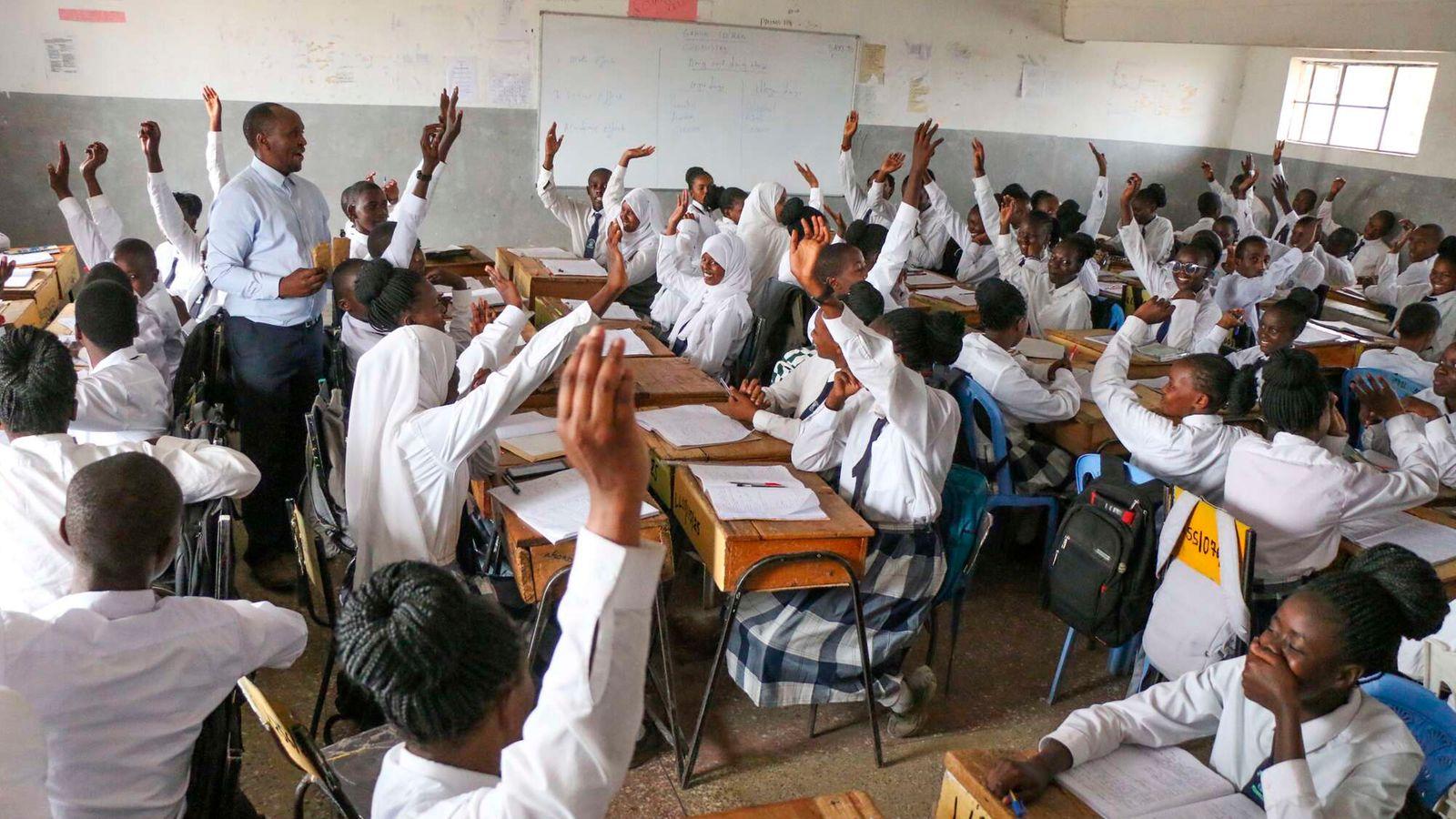
This is particularly significant as Kenya implements the new Senior School structure under Competency-Based Education (CBE). Grades 10, 11 and 12 are expected to prepare learners for university, TVET, other tertiary institutions, employment and entrepreneurship. Yet upper-secondary completion is emerging as the weakest link in the mainstream school pipeline.
The implication is profound. If only about 46 out of every 100 learners complete upper secondary education, the number eventually reaching university, TVET and other post-secondary institutions will inevitably be much smaller than the number that originally entered primary school.
The problem therefore cannot be viewed simply as a question of school dropout. It is a national education-flow challenge.
A healthy education system should allow learners to move progressively from one level to another, with minimal losses at every transition. Kenya’s experience increasingly resembles a leaking pipeline: almost the entire cohort survives primary education, fewer make it through lower secondary, and less than half complete upper secondary.
Senior School faces a major retention test
The leakage at upper secondary is particularly worrying because Senior School is designed to be a critical bridge between basic education and the next stage of a learner’s life. The three pathways — Arts and Sports Science, Social Sciences, and Science, Technology, Engineering and Mathematics — are intended to give learners opportunities to pursue areas aligned with their abilities, interests and career aspirations.
For that promise to become reality, however, learners must first remain in school.
A Senior School system with excellent pathways but significant learner attrition would struggle to deliver the human-capital transformation envisioned under CBE. The priority must therefore be not only to place learners in Grade 10 but also to ensure that they reach Grade 12.
The challenge becomes even more pronounced when learners move into TVET.
Kenya is increasingly presenting TVET as a major pathway for young people seeking practical and technical skills. The sector has expanded considerably, with hundreds of thousands of trainees enrolled across national polytechnics, technical training institutes and vocational training centres.
Yet the TVET Authority’s 2024 Annual Returns Report recorded an average graduation rate of about 26 per cent among the institutions covered by its returns. This figure should be treated carefully because a graduation rate is not necessarily identical to a cohort completion rate. Nevertheless, it raises a serious question about how effectively the sector is retaining trainees and moving them to successful graduation.
TVET becomes the second pressure point
The TVET challenge is therefore the second major leak at the upper end of Kenya’s education pipeline.
The consequences extend beyond education statistics. Kenya needs a large pool of skilled technicians, artisans, technologists and other professionals to support manufacturing, construction, agriculture, energy, transport, ICT, health and other sectors of the economy. When learners fail to complete Senior School or trainees fail to graduate from TVET, the country loses potential human capital.
There is also a major economic dimension. The government invests heavily in teachers, classrooms, laboratories, workshops, equipment, capitation and other education infrastructure. Families also spend considerable resources keeping children and young people in education. When learners leave before completion, much of that investment fails to produce its intended full benefit.
Low completion can also deepen inequality. Learners from poor households and marginalised communities are often more vulnerable to circumstances that interrupt education. Poverty, teenage pregnancy, early marriage, family responsibilities, transport challenges, school-related expenses and inadequate learning facilities can all contribute to premature exit.
This means that the education-flow problem cannot be solved by simply increasing enrolment. Kenya must strengthen retention.
At Senior School, this requires adequate teachers, classrooms, laboratories, workshops, learning materials, feeding programmes, career guidance and effective learner-support systems. Learners should also receive early interventions when they show signs of disengagement or financial and social difficulties.
TVET requires an equally strong response. Modern equipment, qualified trainers, industry partnerships, relevant courses, practical exposure, affordable training and stronger student-support systems can help ensure that young people who enter technical training actually complete their programmes.
From access to successful completion
There is also a need to strengthen the transition mechanisms between education levels. A learner who does not qualify for university should not interpret that outcome as the end of the education journey. TVET and other tertiary pathways must be presented as credible routes to skills, employment, enterprise and further education.
The ultimate measure of Kenya’s education reforms should therefore change.
The country should not celebrate access alone. It should ask how many learners enter, remain, complete, transition and eventually become economically productive.
The figures tell a powerful story. Primary education is approaching universal completion. Lower secondary retains a substantial majority. But upper secondary completion falls below half, while TVET’s reported graduation rate presents another major concern.
That makes upper secondary and TVET the critical pressure points in Kenya’s education flow.
If Kenya can seal these leaks, the benefits will extend far beyond the education sector. More learners will acquire qualifications, more young people will develop employable skills, and the country will build a stronger foundation for economic growth.
READ ALSO: CBET curriculum synopsis: From what learners know to what they can actually do across education levels
The real education revolution, therefore, is not simply about putting more children into classrooms.
It is about ensuring that they do not disappear from the pipeline before reaching the skills and qualifications that can transform their lives and Kenya’s economy.
By Hillary Muhalya
You can also follow our social media pages on Twitter: Education News KE and Facebook: Education News Newspaper for timely updates.
>>> Click here to stay up-to-date with trending regional stories
>>> Click here to read more informed opinions on the country’s education landscape
>>> Click here to stay ahead with the latest national news.