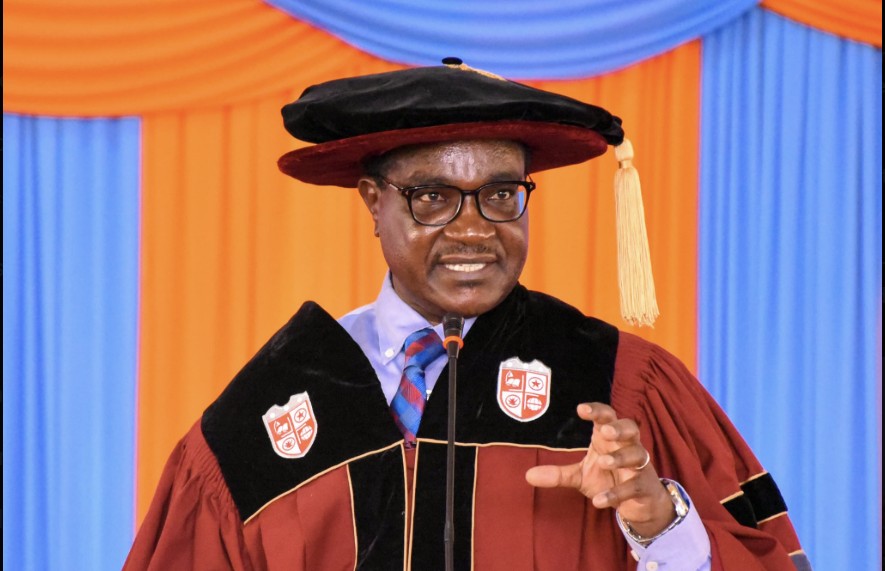
- Hillary Muhalya argues that Kenya must identify where Junior School teacher shortages actually exist.
- He says experienced P1 teachers should be upgraded where necessary instead of being used as permanent substitutes.
- The country should audit qualifications, certify competence and align teacher deployment with subjects and learner needs.
Kenya’s Competency-Based Education is confronting a teacher-supply problem that could quietly become a learner-quality crisis: the country changed the structure of education faster than it built the workforce required to deliver it.
The consequences are increasingly visible in private schools, where some experienced Primary Teacher Education (P1) teachers are being deployed to teach Junior School learners as institutions struggle to recruit and retain appropriately prepared teachers.
There is nothing inherently wrong with an experienced P1 teacher moving into Junior School. A teacher who undertakes the necessary upgrading, acquires appropriate subject preparation and meets professional requirements can become an important part of the solution.
The danger arises when experience becomes a permanent substitute for professional preparation.
That is where a staffing challenge becomes a question of educational equity.
Are some parents paying Junior School fees for a level of teaching their children are not actually receiving?
That is the raw-deal question Kenya must confront.
The answer, however, should not be to stigmatise P1 teachers or portray private schools as villains. It should be to establish a transparent national system that identifies teacher shortages, upgrades experienced teachers, verifies qualifications and ensures that teachers are deployed where they are professionally prepared to teach.
Kenya should move from improvising around teacher shortages to deliberately managing them: audit, convert, certify, deploy and monitor.
Private schools are under particular pressure
Private schools are carrying a significant share of the adjustment costs created by the new education structure.
The transition to Junior School has required investment in laboratories, digital facilities, practical learning spaces, equipment and instructional materials. Some institutions have had to finance these investments through loans and other forms of borrowing.
Yet infrastructure alone does not deliver CBE.
A laboratory without a suitably prepared teacher is only a room. A computer laboratory without an appropriately skilled teacher is only equipment. A technical pathway without teachers capable of delivering its practical component is merely an item in a prospectus.
This is where staffing becomes critical.
Private schools must compete for qualified teachers while also controlling fees and meeting the cost of facilities, salaries, administration and other operations.
Public-sector recruitment can further intensify that competition by creating alternative opportunities for qualified teachers.
For some private institutions, the experienced P1 teacher therefore becomes an attractive option.
The teacher already knows the school. The teacher understands classroom management. The teacher has accumulated valuable experience and may be willing to undertake additional training.
That can be a legitimate transition.
But it must not become a shortcut.
A school should not deploy a teacher simply because the teacher is available when the learner requires a teacher who is appropriately prepared for the grade and subject.
The shortage must be mapped, not assumed
Government should also stop treating the teacher shortage as a national figure alone.
The real question is not simply how many teachers Kenya lacks.
It is where the shortages are, which subjects are affected, what qualifications are missing and which schools are relying on teachers outside their areas of preparation.
Some regions and schools may have adequate numbers of teachers while others struggle to fill critical positions.
The same may be true of subjects.
Science, technology, computing, technical disciplines, creative arts, music, sports and some languages may experience shortages that cannot be solved by simply increasing the overall teacher population.
This is why a national teacher audit is urgently required.
The Government should move with speed to establish the actual teacher position in both public and private schools, with particular attention to areas and subjects experiencing shortages.
The proposed audit should establish, teacher by teacher, the qualifications held, professional registration, additional training undertaken, subject competence and actual teaching assignment.
It should answer basic questions.
Is the teacher qualified for the grade being taught?
Is the teacher appropriately prepared for the subject?
Has an experienced P1 teacher undertaken recognised upgrading for Junior School?
Is a teacher being assigned a subject simply because the school has a vacancy?
Where are schools relying heavily on teachers whose qualifications do not match the subjects they are teaching?
And where are the genuine shortages that require new recruitment rather than redeployment?
This should apply to public schools as well as private schools.
However, the audit should have special urgency in private schools and shortage areas, because these are precisely the places where financial pressure and limited teacher supply can create incentives for schools to improvise.
The answer should not be punitive by default.
Where the audit identifies experienced P1 teachers who can be upgraded, Government should create accessible and affordable conversion pathways.
Where a school has a genuine shortage of specialised teachers, recruitment and teacher-training policy should respond to that evidence.
Where a teacher is already appropriately qualified and experienced, deployment should recognise that competence.
But where a teacher is being placed in a classroom without the necessary preparation, the system must intervene.
Experience should be a bridge, not a substitute
The country must avoid an unnecessarily divisive debate in which P1 teachers are portrayed as inferior teachers.
They are not.
Teaching experience matters enormously.
An experienced teacher may possess classroom-management skills, learner-understanding, assessment expertise and practical knowledge that cannot be acquired from certificates alone.
But experience and qualification perform different functions.
Experience tells us what a teacher has learned through practice. Professional preparation establishes what the teacher has been trained and assessed to teach.
CBE requires both.
The sensible policy therefore is not to push experienced teachers out of Junior School, but to provide a credible route through which those with the aptitude and academic foundation can acquire the additional preparation required.
That is the conversion part of the solution.
The greatest danger is that the learner becomes the person who absorbs the cost of the teacher shortage.
A private school facing financial pressure deserves understanding.
A teacher navigating a changing education system deserves an opportunity to upgrade.
Government deserves credit when it expands teacher recruitment and training.
But the learner cannot be expected to receive a compromised education because the system has failed to align its teacher workforce with its new curriculum structure.
Parents paying substantial fees have a legitimate right to know who teaches their children.
They should be able to ask about teacher qualifications, subject assignments, professional development, laboratories, digital facilities and practical learning.
Schools should be able to demonstrate that the programmes they advertise are actually being delivered.
A school should not market specialised CBE pathways, charge accordingly and then rely on inadequately prepared teachers to deliver them.
That is where the phrase “raw deal” becomes justified.
Kenya now needs a coherent policy rather than isolated responses.
Convert experienced P1 teachers who have the capacity to transition through recognised upgrading programmes.
Certify their competence and professional eligibility before they are deployed to Junior School.
Deploy teachers according to their qualifications, subject preparation and demonstrated competence.
Audit both public and private schools regularly to establish whether teacher qualifications match actual classroom assignments.
But the audit should go further.
Government should map shortages by county, school, grade and subject, then use the information to guide teacher recruitment, training and deployment.
Where private schools are genuinely struggling to attract teachers in shortage subjects, the Government and teacher-training institutions should have the data needed to design targeted interventions.
Where public schools have shortages, recruitment and deployment should respond accordingly.
Where schools have excess capacity in one area and shortages in another, redeployment should be considered where professionally appropriate.
And where teachers require upgrading, the Government should make that pathway realistic rather than leaving schools and individual teachers to solve a national workforce problem on their own.
This is how the teacher shortage can become an opportunity to build a stronger CBE workforce rather than a justification for lowering standards.
No learner should get a second-class teacher.
The debate should ultimately move beyond whether a teacher came through P1 or another route.
The question is whether that teacher is properly prepared, appropriately deployed and capable of delivering the learning required at that level.
A learner in a private school deserves the same protection as a learner in a public school.
A learner in a teacher-shortage county deserves the same quality expectations as a learner in Nairobi.
A child taking a specialised CBE pathway deserves a teacher capable of delivering it.
That is why Government must move with speed.
Kenya needs a comprehensive teacher-qualification and deployment audit across the education system, with particular attention to private schools, shortage counties and shortage subjects.
The findings should not simply be filed away.
They should determine who needs upgrading, where recruitment should be concentrated, which subjects require urgent intervention and which schools need closer regulatory attention.
CBE cannot succeed if Kenya knows what it wants learners to become but does not know whether the teachers standing before them are adequately prepared to get them there.
The P1 teacher is not the enemy. Private schools are not automatically the villains. Teacher shortages are not solved by blame.
But the learner must never become the casualty of all three.
READ ALSO: Kwale turns to film in fight against teenage pregnancies, early marriages
Audit the teacher. Identify the gap. Upgrade where possible. Recruit where necessary. Deploy responsibly. And hold every school—public or private—to the same fundamental standard: the learner deserves a qualified and competent teacher.
By Hillary Muhalya
Get more stories from our website: Education News
To write to us or offer feedback, you can reach us at: editor@educationnews.co.ke
You can also follow our social media pages on Twitter: Education News KE and Facebook: Education News Newspaper for timely updates.
>> Click here to stay up-to-date with trending regional stories