- The revision guide has explained the two meanings of “character” in literary study, distinguishing between behaviour and participant to help learners avoid confusion in exam questions.
- It has outlined five methods Vitta uses to reveal character in Fathers of Nations, including dialogue, action, other characters’ comments, flashback and direct narrator description.
- The guide has linked these techniques to the novel’s central themes of corruption, tribalism and dependence on foreign powers through characters
What Is Characterisation?
Characterisation is the literary technique an author uses to create, reveal and develop characters in a novel. It is the process of giving a character a distinct personality, traits, motives and behaviour so that they look real to the reader. In a novel, characters are very important because they help the author pass any message he wants to convey. Paul B. Vitta does not just tell us about bad leadership, corruption and neo-colonialism in Africa directly; he uses characters to embody these themes.
Important Note for the Learner: The Two Meanings of the Word “Character”
The student must understand that in English, the word “character” has two meanings, and this often brings confusion in Literature.
The first meaning is character as an accumulation of habits or behaviours. This refers to moral nature, behaviour and personality. For example, when we say “Prof. Kimani has a bad character” or “Comrade Melusi has a vengeful character”, we mean his habits, temperament and morals.
The second meaning is character as participant. This refers to those who take part in a novel or any work of art. For example, Dr. Afolabi, Pastor Chiamaka, Tad Longway and Prof. Kimani are characters (participants or actors) in Fathers of Nations.
MPs question Sh104 billion capitation disbursed on unverified NEMIS learner data
Therefore, when using the word, it is the onus, or responsibility, of the learner to pick the context in which it has been used to avoid confusion. In the question “Describe the character of Prof. Kimani”, you are being asked about meaning one, his behaviours. In the question “List four characters in the novel”, you are being asked about meaning two, the participants.
In Fathers of Nations, Vitta uses both direct characterisation, where he directly tells us what a character is like, and indirect characterisation, where we learn the character through his own actions, words and interaction with others.
Five Ways We Learn the Character of a Person in the Novel
We learn the character (meaning one: behaviour) of a character (meaning two: participant) in the novel through the following methods.
The first is through what the character says, or dialogue and utterance. What a character says and how he says it reveals his education, tribe, emotions and morals. For example, when Comrade Melusi shouts “Ziliza was murdered by the Shona!” we learn he is bitter, tribalism-wounded and vengeful. Dr. Afolabi’s diplomatic language shows he is educated and tactful.
The second is through what the character does, or actions and behaviour. Actions speak louder than words. Prof. Kimani assaulting an MP who was trying to seduce his wife Asiya shows he is hot-tempered but also principled and loves his family. Pastor Chiamaka’s transformation from a reckless university student who caused a fatal accident to a born-again pastor shows moral growth.
The third is through what other characters say about him or her. Vitta uses other characters to comment. For instance, we know Tad Longway is cunning and mysterious because other members of Path Alpha fear him and call him the “Silent Listener”. The heads of state are described as greedy and clinging to power, which tells us they are corrupt Fathers of Nations.
The fourth is through the character’s past life, flashback and background. Vitta heavily uses flashbacks. We understand why Prof. Kimani is a bitter, retired university don because we are taken to his past, including the loss of his daughter Tuni, his wife Asiya’s death, and his imprisonment and demotion. Similarly, we understand Melusi’s anger because of his flashback about losing his wife Ziliza during Gukurahundi in Zimbabwe.
Vihiga Boys wins Western Region Chapa Dimba title, bags top awards at National Music Festival
The fifth is through the narrator’s direct description, naming and physical appearance. The author himself directly describes characters. The name “Comrade” for Melusi tells us he is a Marxist liberator. “Pastor” Chiamaka tells us his religious role. President Bangoura of Guinea is described as huge and intimidating, which matches his dictatorial character.
In conclusion, characterisation is the backbone of Fathers of Nations. Paul Vitta has carefully crafted each character (participant) to represent a part of Africa. By learning their character (behaviour) through their speech, actions, past, what others say about them and direct description, we understand Vitta’s central message: that Africa’s fathers have failed their children through corruption, tribalism and dependence on foreign powers like the Way Omega strategy.
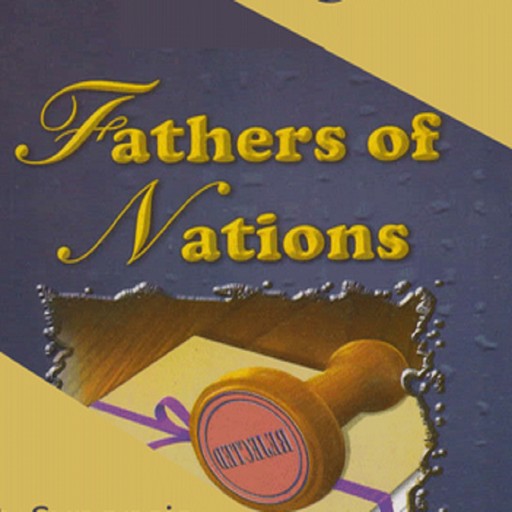
Reference Text: Fathers of Nations by Paul B. Vitta (2013)