The debate surrounding Junior Secondary School (JSS) autonomy in Kenya has evolved into one of the most significant education reform discussions in recent years. It is no longer limited to school administration alone but now touches on teacher management, professional identity, career progression and the effectiveness of Competency-Based Education (CBE).
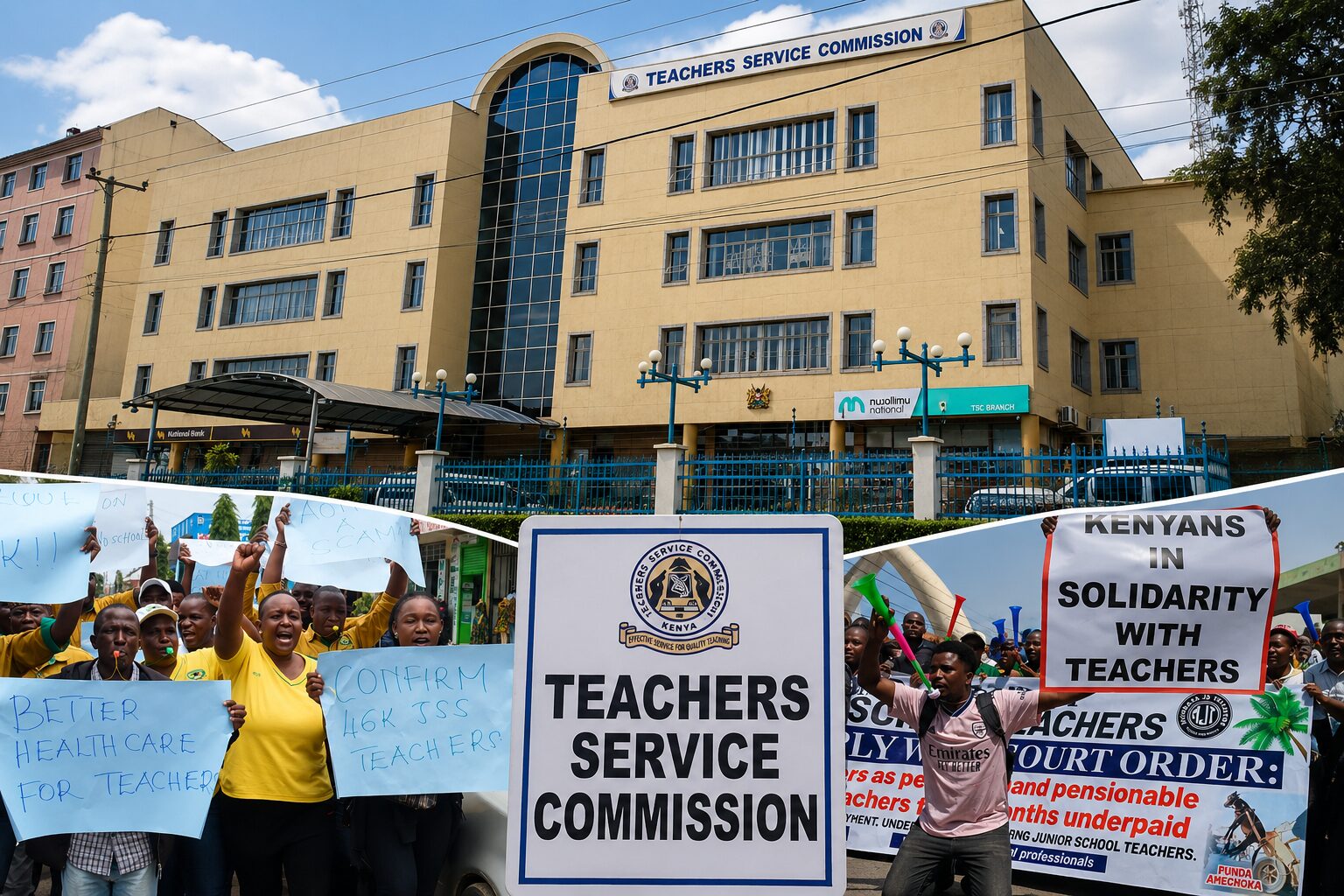
At the centre of the transformation is the Teachers Service Commission (TSC), which is expected to redefine how teachers are posted, promoted and managed once JSS becomes fully independent from primary school structures.
Currently, JSS operates within primary school environments across the country. Teachers handling Grades 7 to 9 are posted by TSC to institutions where they work under a blended administrative system. In most cases, primary school headteachers oversee overall school management, including areas directly affecting junior secondary operations.
While TSC remains the employer, day-to-day coordination of discipline, resources and school activities is often influenced by primary school leadership. This arrangement has created growing concern among JSS teachers who feel the structure does not fully reflect the academic and professional demands of junior secondary education.
One of the strongest arguments for JSS autonomy is the need for administrative independence. Teachers argue that junior secondary education has distinct academic and developmental requirements under the Competency-Based Education system, which demands specialised leadership and focused management.
Promotion pathways
Closely linked to the debate is the issue of professional identity. Many JSS teachers identify more with secondary education because they teach learners in Grades 7, 8 and 9, which are viewed as closer to secondary school than primary education.
However, being placed under primary school administration is often viewed as a mismatch that undermines their professional standing. Teachers believe autonomy would formally recognise JSS as a distinct level of education, strengthen morale and improve professionalism.
Teachers have also raised concerns over administrative interference, workload imbalance and unclear promotion pathways. Some say they are assigned duties extending beyond their core teaching responsibilities, including primary school administrative functions, reducing focus on curriculum delivery.
Others argue that although TSC has established career progression structures, advancement opportunities are not yet fully aligned with the unique structure and demands of junior secondary education.
Resource allocation
Resource sharing remains another major concern. In many schools, JSS sections share classrooms, ICT facilities, laboratories and learning materials with primary school sections. Teachers say this creates competition for limited resources, particularly in science, ICT and technical subjects central to CBE implementation.
Teachers strongly believe that autonomy would improve implementation of Competency-Based Education by ensuring leadership remains fully focused on curriculum delivery, subject specialisation and learner outcomes.
Autonomy is also expected to strengthen teacher collaboration, improve accountability and create clearer chains of command within institutions.
Naivasha meeting and national expectations
The discussions have gained momentum following high-level stakeholder engagements such as the Naivasha meeting convened by Education Principal Secretary Prof. Julius Bitok.
The meeting brought together teachers, education officials and stakeholders to discuss practical realities affecting JSS under CBE, including staffing shortages, workload pressure and structural confusion.
Across the 47 counties, teachers now share common expectations, including full administrative autonomy for JSS institutions, fair promotion systems under TSC, equitable distribution of resources, adequate staffing and stronger policy consistency from the Ministry of Education and TSC.
Teachers are also demanding continuous professional development, clearer role definitions and structured leadership positions such as heads of departments, deputy principals and principals within JSS institutions.
READ ALSO: Old boy raises concerns over Nyabondo School football structure, calls for reforms
Ultimately, the JSS autonomy debate, TSC restructuring plans and stakeholder consultations reflect Kenya’s broader effort to create a more coherent, equitable and professionally structured junior secondary education system capable of fully supporting the implementation of Competency-Based Education.
By Hilary Muhalya
You can also follow our social media pages on Twitter: Education News KE and Facebook: Education News Newspaper for timely updates.
>>> Click here to stay up-to-date with trending regional stories
>>> Click here to read more informed opinions on the country’s education landscape
>>> Click here to stay ahead with the latest national news.