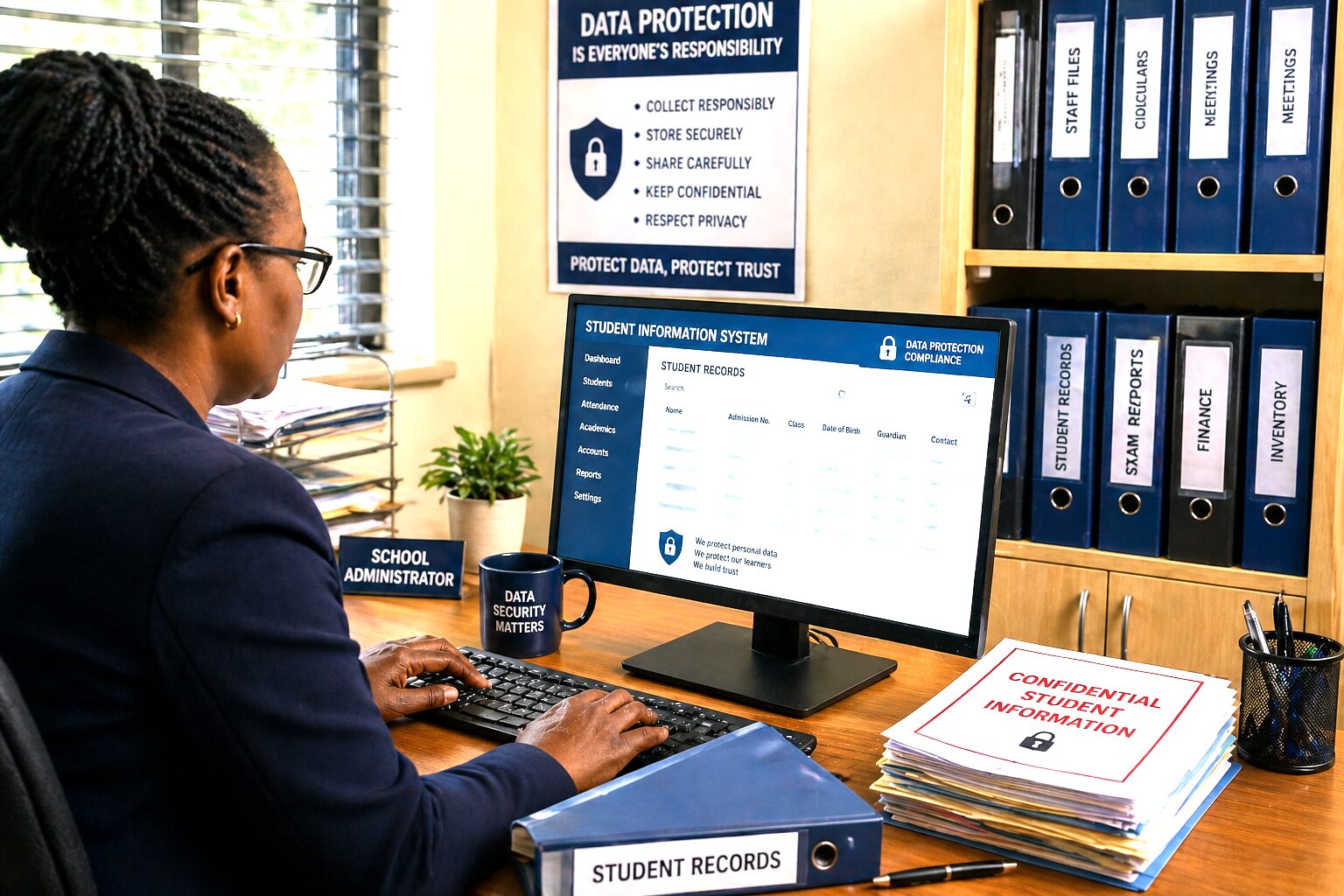
Principals and Heads of Institutions across Kenya are likely to face intense scrutiny as the government rolls out the new Kenya Education Management Information System (KEMIS), a powerful digital platform expected to revolutionize how learner data is captured, tracked, verified, and monitored from ECDE all the way to universities.
For years, the education sector has struggled with allegations of ghost learners, manipulated enrolment figures, inflated capitation claims, and inconsistencies in student records.
Some institutions have allegedly taken advantage of loopholes within the old NEMIS framework to benefit from government capitation based on non-existent learners. With KEMIS now coming into operation, the era of weak accountability could gradually be coming to an end.
The Ministry of Education is positioning KEMIS as a comprehensive, integrated, and real-time education data management system designed to tighten transparency and improve efficiency in planning, funding, and monitoring of institutions. Unlike the previous system, KEMIS seeks to create a seamless learner journey where every student can be tracked progressively across education levels.
The new platform will cover ECDE centres, primary schools, Junior Schools, Senior schools, TVET institutions, and universities. This means that for the first time, the government could have a centralized and synchronized education database capable of detecting duplication, irregular transfers, fake admissions, and suspicious enrolment spikes.
One of the biggest differences between KEMIS and the old NEMIS system is scope and integration. NEMIS largely focused on learner registration and capitation support mainly within basic education, but KEMIS is being designed as a much broader national education intelligence system covering the entire education ecosystem from early childhood to higher learning institutions.
ALSO READ:
CS Ogamba launches teacher wellness report, reaffirms support for teachers
KEMIS is also expected to operate with tighter verification mechanisms compared to NEMIS. Under NEMIS, schools could sometimes upload or retain learner data with minimal real-time validation, creating loopholes that allegedly enabled ghost learners and inflated enrolment figures. KEMIS is expected to introduce stricter authentication, continuous data synchronization, and cross-checking with other government databases to eliminate inconsistencies.
One of the most feared and transformative features under KEMIS is likely to be the repeated use of One-Time Passwords (OTPs) sent directly to Principals and Heads of Institutions during learner registration, transfer approvals, verification, and institutional updates. This means that major actions within the system may require direct confirmation from the institution head before approval is completed.
In simple terms, the buck may now stop squarely with the principal or Head of Institution.
Unlike in the past where administrators could sometimes claim ignorance over questionable learner data, KEMIS is expected to create a strong digital accountability trail. Every approval, confirmation, or alteration could potentially be linked directly to a specific institution head through authenticated verification processes.
This may drastically reduce unauthorized learner entries, duplicate registrations, ghost admissions, and manipulation of capitation figures because every critical transaction may leave behind a traceable digital footprint. School heads who have maintained clean and accurate records may have little reason for concern. However, institutions that may have relied on inflated numbers to attract additional capitation could soon find themselves exposed.
Another major shift is real-time integration. While NEMIS largely operated as a stand-alone learner registration platform, KEMIS is expected to integrate directly with the Kenya National Examinations Council, the Teachers Service Commission, and other government systems. This means learner records, examination data, teacher deployment, school registration, and transition information could all be linked instantly under one digital ecosystem.
ALSO READ:
KEMIS is also expected to be more parent-centered than NEMIS. Parents may now have direct digital access to learner attendance, academic progress, and institutional reports. Under the previous system, many parents had little or no interaction with NEMIS because it mainly operated within administrative offices.
The government is additionally expected to use KEMIS for deeper policy planning and resource allocation. Unlike NEMIS, which was often viewed mainly as a capitation tool, KEMIS is being presented as a planning and accountability engine capable of supporting infrastructure planning, teacher demand projections, CBC transition monitoring, and national education forecasting.
The issue of ghost learners has remained a major concern because government capitation is largely determined by student numbers. Whenever enrolment figures are exaggerated, taxpayers lose billions of shillings through fraudulent allocations. In some cases, schools have allegedly retained names of learners who transferred, dropped out, or completed studies in order to continue receiving funds.
KEMIS is expected to significantly reduce such irregularities through stronger verification measures, digital tracking, institutional authentication, and integration with other government systems. The platform will reportedly work closely with examination records and teacher management systems to ensure consistency and accountability.
Parents are also expected to become more involved in monitoring their children’s education through the system. KEMIS is anticipated to allow parents to access attendance records, learner progress reports, and other academic information digitally. If implemented effectively, this could strengthen accountability not only for learners but also for institutions and parents themselves.
ALSO READ:
Over 250 students tipped on menstrual hygiene, life skills during mentorship programme in Busia
The rollout also signals the government’s growing shift toward data-driven governance in education. Accurate learner statistics are critical in determining classroom needs, teacher requirements, infrastructure expansion, textbook supply, and national examination planning. Without reliable data, policy implementation becomes distorted and uneven.
However, despite the optimism surrounding KEMIS, the transition may not be entirely smooth. Schools in remote and marginalized regions may face serious challenges related to internet connectivity, digital literacy, electricity reliability, and availability of ICT infrastructure. Some institutions still struggle with inadequate computers and limited technical personnel capable of handling advanced digital systems.
There are also concerns about the pressure that may fall on principals and Heads of Institutions during the transition period. Data verification exercises can become stressful, especially where records have not been properly maintained over time. Institutions may be required to reconcile discrepancies, update learner profiles, and validate admissions under tight deadlines.
At the same time, genuine school administrators could benefit greatly from the new system. With accurate data management, schools may experience smoother capitation processing, better learner tracking, easier report generation, and improved communication with parents and education officials.
KEMIS may also strengthen the fight against ghost schools — institutions that exist on paper mainly to siphon public funds. By requiring fresh institutional verification, synchronized records, and repeated OTP approvals tied directly to Heads of Institutions, the government could eliminate fictitious centres and redirect resources to deserving learners and schools.
The success of the system will ultimately depend on transparency, proper implementation, adequate training, and strong technical support. If managed well, KEMIS could become one of the most significant reforms in Kenya’s education sector in recent years.
As digital accountability tightens across the country, the message emerging from the education sector is becoming increasingly clear: the age of inflated numbers, hidden records, and questionable capitation claims may slowly be running out.
Schools will now be expected to match every learner on paper with a real child physically present in class — and every approval may carry the direct digital responsibility of the Head of Institution.
By Hillary Muhalya
You can also follow our social media pages on Twitter: Education News KE and Facebook: Education News Newspaper for timely updates.
>>> Click here to stay up-to-date with trending regional stories
>>> Click here to read more informed opinions on the country’s education landscape