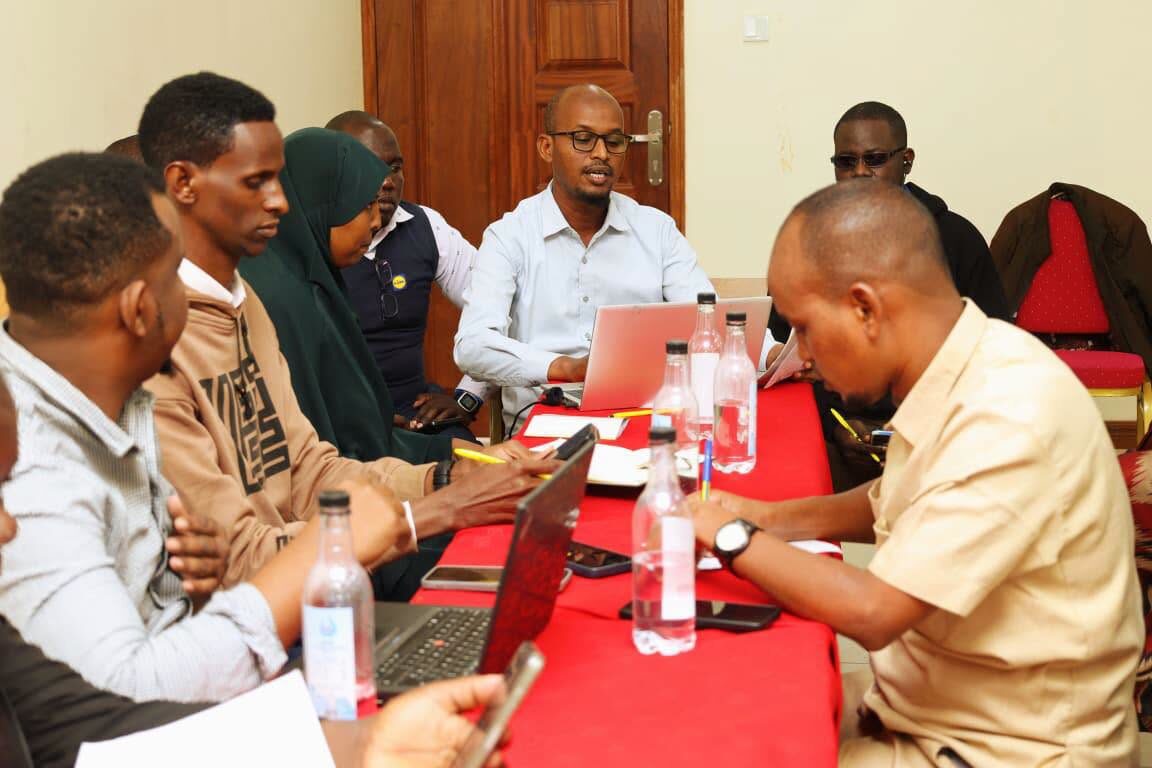
- Victor Ochieng’ explains why organisations should invest in staff wellness programmes covering physical health, mental well-being, financial literacy and work-life balance.
- Employee wellness goes beyond physical health to include mental, emotional, social and spiritual well-being.
- Organisations that invest in staff wellness improve productivity, morale, teamwork and organisational performance.
- Experts recommend structured wellness programmes focusing on mental health, financial literacy, work-life balance and healthy lifestyles.
In actual sense, wellness revolves around maintaining healthy body, mind, spirit and mood. Then, there is what is christened as The 4-Square Life. More so, attributed to William H. Danforth, founder of Purina Mills (now Purina), and the American Youth Foundation. Ideally, it is a personal development concept emphasising balanced growth in the four key dimensions of human life.
In line with Luke 2:52, we read that Jesus of Nazareth increased in wisdom (intellectual growth), in stature (physical growth), and in favour with God (spiritual growth) and man (social growth). Therefore, people who are keen on both wellbeing and wellness focus on: One, physical life (body), which is health and well-being of the body: Encompassing regular exercise, proper nutrition, adequate rest or sleep, personal hygiene and “dis-ease” prevention. Two, mental or intellectual life (mind): Involving development of mind, acquisition of knowledge and skills, achieved through reading, critical thinking, problem-solving, creativity and life-long education. Three, social or emotional life (personality): Focusing on healthy relationships and interactions with people within one’s orbit. Four, spiritual life (soul): Capturing values, beliefs, principles, purpose and moral character. This is developed through faith, self-reflection and service to others.
Withal, focusing on the mortal mind, there is Mental Health. World Health Organisation (WHO) defines Mental Health as a state of mental well-being enabling people to cope with stressors of life, realise their abilities, learn well, work well, and contribute to their community. Specifically, wellness is about taking good care of the mind. For in Success Through A Positive Mental Attitude, co-authors – Napoleon Hill and W. Clement Stone – contend, humankind is a mind with a body. No wonder, it is imperative to be keen on sources of mental inputs. For you must have heard of GIGO – Garbage in, Garbage out. It is a computer principle, which states, any input equals output. What you feed the computer with through input devices such as the keyboard; it shows you through output devices like the monitor. Therefore, positivity in, positivity out. Likewise, negativity in, negativity out.
So, it is the reason we are oft reminded to guard the gates of the mind, which is simply what our eyes see, ears hear, and mouths say. In the Bible, 1 Peter 1:13 admonishes us to gird the loins of the mind. Think about it. My dictionary defines “gird” as to “encircle” a person or part of the body with a belt or band. Elsewhere, in The Little Book of Success, Napoleon Hill posits, success is the sum total of one’s acts and thoughts that have, on account of their positive, constructive nature, brought happiness and good cheer to the majority of those with whom one will be thrown in close contact with in the coming years.
Digging deeper, with sharp shafts of insight, we see wellness to be taking good care of the body by focusing on deep sleep so as to spur both activity and productivity. Wellness is being keen on what we eat or drink. Then, wellness is anchored on exercise and healthy relations. As well as breaking bad habits and dangerous addictions. Wellness is being in the right spirit and attaining good mood. We achieve this important ambit by tapping more from sure sources of strength and support such as God, teachers, pastors, mentors, friends, family, music, inspiration, motivation, spiritual disciplines or means of grace, exercise, art, hobbies, games, et cetera.
Advisedly, for the sake of wellness at the workplace, people in leadership and management must plan for wellness initiatives as brought out by Bruce Tulgan in his heroic book titled Bridging the Soft Skills Gap. In the recent past, when I spared some time, and delved deep onto the valuable vaults of that house of gold, I unearthed that the putative author advises managers, directors, principals – all and sundry – in lofty positions of influence – to teach the missing basics to the new hybrid workforce. On attaining wellness in the world of work, Heads of Institutions as well as Captains of Corporates, must prioritise what my pen calls Human Capital Management Practices, which explores staffing strategy and hiring, on-boarding, on-going training, up-to-speed training, performance management and talent development.
In the whole scheme of things, there are multiple approaches to practical wellness programmes; including a vast array of potential services and products. Firstly, there must be best practices on wellness, which can be provided internally or externally. Leaders and managers can be deliberate about that in newsletters, messages, memos, articles, flyers, videos and websites. Likewise, awareness on wellness can take place in meetings and discussions. These deliberate efforts should focus on the most significant variables such as right diet, exercise, sleep, substance use and dealing with common stressors, as well as warding off mental disorders, depression and death through suicide.
Secondly, there should be some exercise programme. Either offered on-site or reimbursement for those offered externally. More on exercise, there should be weight-loss programmes starting with on-site support groups. Then, it is important to set aside ample spaces for walking and stretching at the workplace. More importantly, let there be ergonomic workspace and furniture. As well as thinking of game rooms offering games ranging from the old-fashion ping-pong to the latest video games. For instance, in developed democracies, there are even napping rooms, which double as meditation rooms. Massage and SPA-like services are part and parcel of it. In case it is possible, the working area should be environment-friendly; enabling workers to explore eco-therapy.
Thirdly, there is the essence of talking about healthy eating habits. Meaning, it is important to share useful information on nutrition and good food. Fourthly, in the bid to assist people whose wellness can be affected by substance abuse and misuse, there should be well-thought-out initiatives on substance-abuse and smoking cessation programmes for those who are addicted to such stuff. Withal, in order to cope with common stressors, it is important to focus on stress reduction and management programmes. This can also be propped up with anti-bullying programmes. Consequently, for the sake of body wellness, it is advisable to have some on-site health care services, ranging from periodic health risk screenings and full-scale on-site health care clinics complete with doctors, nurses, and many more.
READ ALSO: Vihiga County, Kaimosi National Polytechnic to sign MoU to boost VTC training
Finally, lack of financial prudence leaves most workers broke and broken. Meaning, there should be puissant programmes: Teaching and training workers on financial prudence and financial literacy. This is what will save most people from pecuniary embarrassment. It is also important to note. Good and timely payment of salaries is worth it. Places of work should invest a lot on training focusing on work-life-balance, as well us preparation for retirement. Most civil servants are worried about career progression, too much taxation on pay-slips, how things will pan out after retirement, et cetera. No wonder, it is important to train staff on how to “re-tyre” once they retire from active service.
By Victor Ochieng’
Victor Ochieng’ rolls out talks and training services. He is a facilitator in staff capacity, team building and bonding sessions. vochieng.90@gmail.com. 0704420232
You can also follow our social media pages on Twitter: Education News KE and Facebook: Education News Newspaper for timely updates.
>>> Click here to stay up-to-date with trending regional stories
>>> Click here to read more informed opinions on the country’s education landscape