In the remote village of Simotwet in Ololmasani ward, Emurua Dikirr constituency, Narok County, residents are celebrating a historic milestone that few could have imagined just a decade ago.
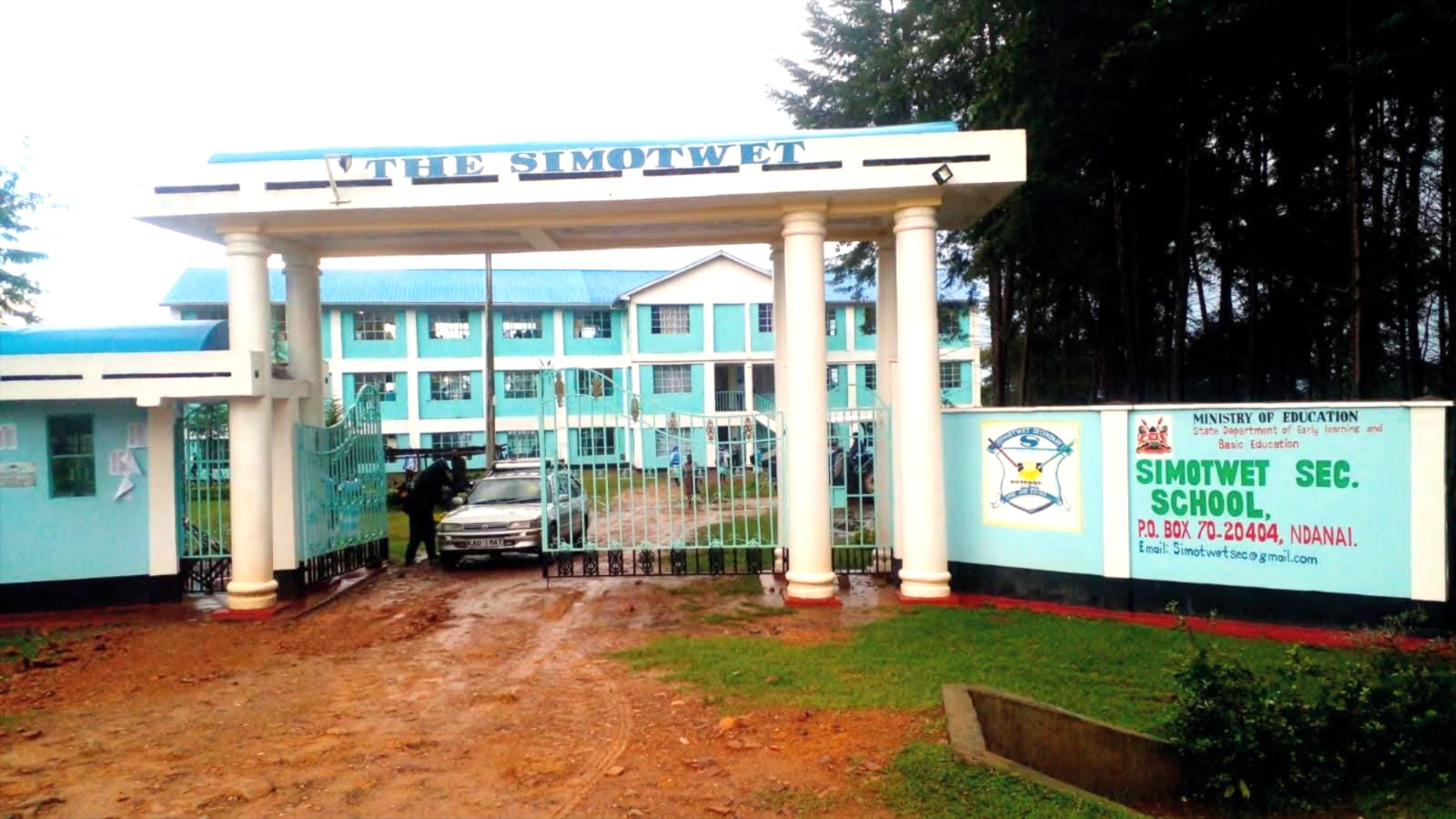
What was once a neglected village with dilapidated primary and secondary schools is now on course to host Johana Ngeno University College, a constituent college of Maasai Mara University.
The transformation of Simotwet is not only an education success story but also a powerful testament to the impact of visionary leadership, community commitment and strategic partnerships in changing the fortunes of rural communities.
For many years, Simotwet Primary School and Simotwet Secondary School struggled with inadequate infrastructure. Learners attended classes in aging buildings that had deteriorated over time, while teachers worked under difficult conditions.

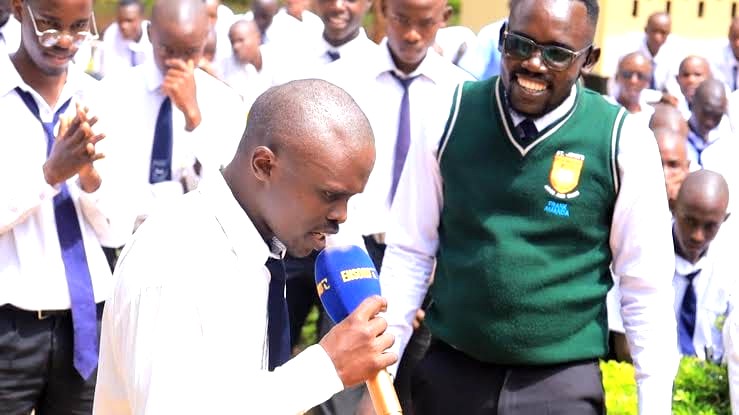
Among the pupils who passed through the school during those challenging years was Shadrack Kiprono, popularly known as Kiprono Mabati. He studied at Simotwet Primary School from nursery school to class eight and personally experienced the hardships associated with learning in poorly maintained facilities.
Unlike many former students who leave their villages in search of opportunities elsewhere, Kiprono never forgot his roots. As he advanced in life, he remained concerned about the condition of the schools that had shaped his early education.
His determination to improve the learning environment for future generations eventually became the catalyst for one of the most remarkable educational transformations in Narok County.
ALSO READ:
While serving as chairman of the Board of Management of Simotwet Secondary School, Kiprono spearheaded efforts to seek support for the rehabilitation of the schools. His campaign led him to approach the Japanese Embassy in Kenya, which responded positively to the appeal.
In 2018, Simotwet Primary School underwent a major facelift through funding from the People of Japan amounting to approximately Ksh 9 million.
The project completely changed the appearance and functionality of the institution. Five new classrooms were constructed while ten existing classrooms were renovated and modernized. Eight toilet units for boys and girls were built, new desks were supplied, and a staffroom was constructed to improve working conditions for teachers.
The school also received a 20,000-litre water tank, helping address water shortages that had affected learners and staff for years.
For the first time, pupils at Simotwet Primary School could learn in a conducive environment comparable to that found in many urban schools.
Enters Simotwet Secondary School
However, the success of the project soon highlighted another challenge.
As learners completed their primary education, they were proceeding to Simotwet Secondary School, which remained in poor condition and lacked adequate facilities to accommodate growing enrolment.
Kiprono with community leaders and education stakeholders realized that improving only the primary school would not be enough if students were to continue their studies in substandard conditions. The same development partners were approached once again.
Their response led to another major investment in education.
ALSO READ:
Over-enrolment in top schools linked to rising student strikes, says KUPPET official
In 2021, Simotwet Secondary School benefited from a Ksh13 million development project that transformed the institution’s infrastructure. The funding facilitated the construction of nine classrooms, an administration block and a girls’ dormitory. The fund further supported the purchase of lockers, chairs and beds.
Additional classrooms were also constructed through government capitation funds, significantly increasing the school’s capacity and improving the learning environment. The changes attracted more students, boosted academic morale and raised hopes among residents that quality education could finally become accessible within their community.
What started as a campaign to renovate two struggling schools has now culminated in a development that is set to redefine the future of Simotwet and the wider Emurua Dikirr region.
Residents are celebrating following the announcement that Simotwet Secondary School will be elevated into Johana Ngeno University College.
The announcement was made during a high-level meeting held in Narok town and attended by Narok governor Patrick Ole Ntutu, Emurua Dikirr Member of Parliament David Keter Dollarline and Maasai Mara University Vice Chancellor Professor Peninah Aloo-Obudho.
According to the leaders, the proposed institution will operate as a constituent college of Maasai Mara University and is expected to expand access to higher education for students from Narok county and neighbouring counties.
For years, many students from the region have been forced to travel long distances to pursue university education. The establishment of a university college closer to home is expected to reduce education costs for families while increasing opportunities for thousands of young people seeking higher education.
ALSO READ:
TSC launches AI training programme for girls in Migori to boost STEM skills
The institution will be named Johana Ngeno University College in honour of the late Johana Ngeno, the pioneer Member of Parliament for Emurua Dikirr constituency, who perished in a chopper crash in Chepkiep village, Nandi county on February 28.
Ngeno is remembered for his contribution to political leadership and development in the region. Leaders say naming the institution after him is a fitting tribute to a man whose legacy continues to inspire generations.
Beyond its academic role, the university college is expected to become a major economic catalyst for Ololmasani ward and surrounding areas.
Residents anticipate increased business opportunities, growth in housing demand, job creation and improved infrastructure as students, lecturers and support staff settle in the area.
Local traders, transport operators and service providers are also expected to benefit from the economic activity that accompanies institutions of higher learning.
For residents of Simotwet, the journey from dilapidated classrooms to a university college represents far more than the construction of buildings.
It is a story of resilience, vision and the power of giving back to one’s community. It is the story of a former pupil who refused to forget where he came from and whose efforts helped transform a forgotten village into an emerging centre of educational excellence.
By Philip Koech
You can also follow our social media pages on Twitter: Education News KE and Facebook: Education News Newspaper for timely updates.
>>> Click here to stay up-to-date with trending regional stories
>>> Click here to read more informed opinions on the country’s education landscape