-
The writer argues that the Tenri School election gained national attention because it mirrored Kenya’s competitive political environment and was amplified by social media.
-
He says the exercise provided students with practical lessons in democracy, leadership, and civic responsibility.
-
He concludes that schools play a vital role in nurturing future leaders and strengthening democratic values.
In a country where election often dominate national conversations, few Kenyans expected that one of the most talked-about contests in 2026 would not be a parliamentary by-election, a gubernatorial race, or a presidential campaign.
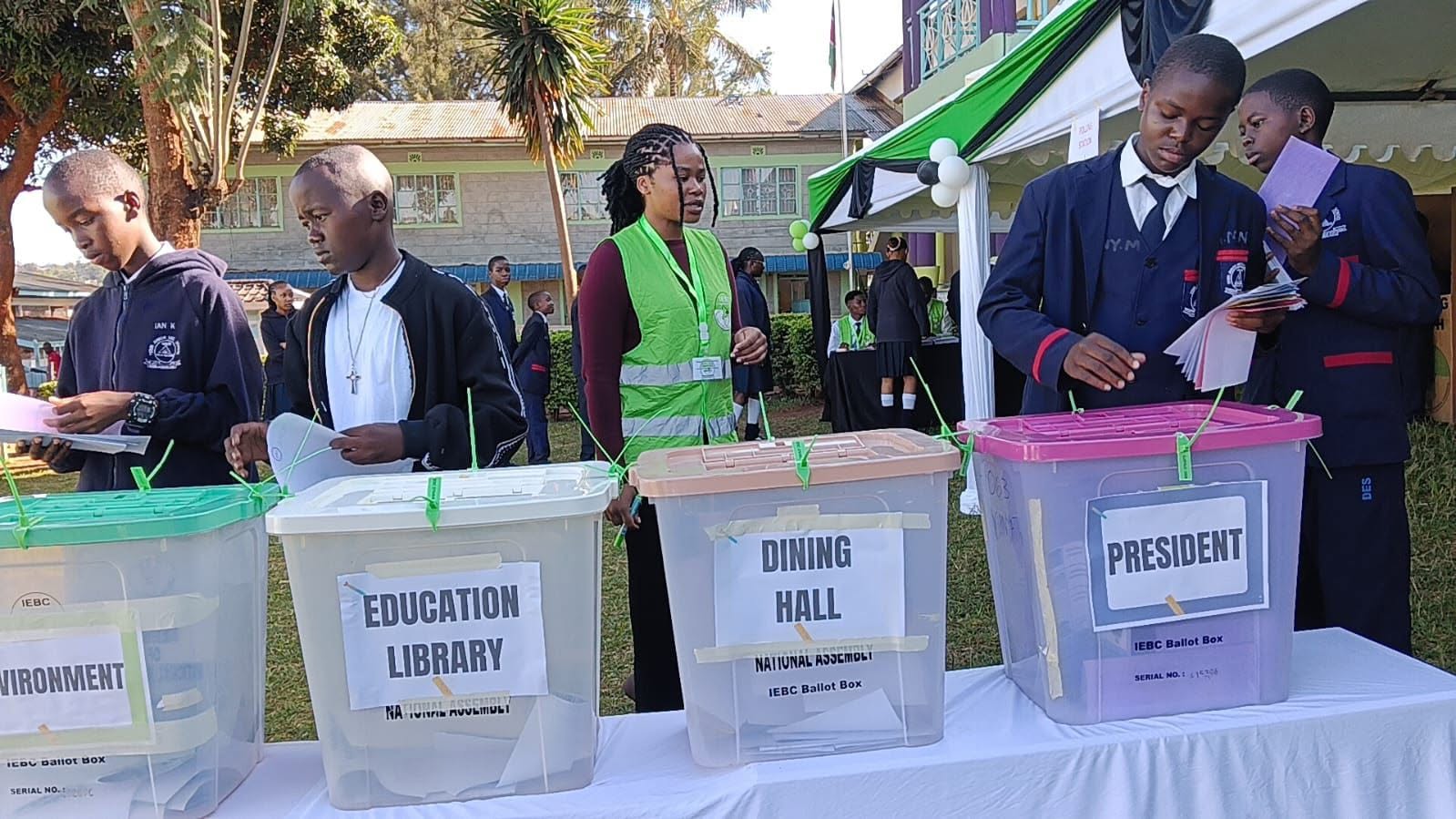
Instead, it was a student election at Tenri School in Embu County that captured the imagination of thousands across the nation. What began as a routine exercise in student leadership soon transformed into a national phenomenon, attracting widespread attention on social media and sparking debates reminiscent of Kenya’s highly competitive political environment.

The election stood out because it was conducted with remarkable seriousness and professionalism. School administrators sought to expose learners to democratic processes by organizing campaigns, debates and voting procedures that closely mirrored national elections.
Reports indicated that electoral officials were involved in guiding the process, ensuring that students experienced practical civic education rather than merely learning about democracy in textbooks.
As campaign activities intensified, several student candidates emerged as household names on social media. Their campaign messages, slogans, debates and public appearances generated enormous interest far beyond the school community.
ALSO READ:
HELB opens bar examination loan applications for Kenya School of Law students
Kenyans from different parts of the country began following the campaigns, analysing candidates’ strengths and weaknesses and openly declaring support for their preferred contestants. What was initially a school affair had become a national conversation.
One of the factors that made the election fascinating was the diversity of leadership styles represented by the candidates. Some projected themselves as disciplined and organized leaders with clear plans and visions for the school. Others appealed to students through charisma, relatability, and energetic campaigns.
These contrasting approaches mirrored the choices voters often face in national politics, where elections are frequently contests between experience, vision, charisma and popularity. As a result, many Kenyans found themselves relating the school election to the country’s broader political landscape.
Social media played a critical role in amplifying the election’s popularity. Campaign posters, videos, slogans and debate clips spread rapidly across platforms such as TikTok, Facebook, Instagram and X. Memes were created, campaign teams mobilized supporters online, and ordinary Kenyans became virtual political analysts.
The election generated discussions that resembled those witnessed during national campaigns. Friends debated candidate suitability, families found themselves supporting different contestants and social media timelines became flooded with election-related content.
Perhaps the most remarkable aspect of the election was the level of public engagement it inspired. Many Kenyans who had no connection whatsoever to the school became emotionally invested in the outcome. They followed campaign developments, discussed candidates’ leadership qualities and speculated about who would emerge victorious.
The election demonstrated the power of storytelling and public participation in capturing people’s attention. It also highlighted how leadership contests, regardless of scale, can become compelling when candidates connect effectively with their audience.
ALSO READ:
The election also served as an important lesson in civic education. Through practical participation, students learned valuable democratic principles such as campaigning, public speaking, persuasion, voting and accepting electoral outcomes. These experiences help nurture responsible future citizens who understand the importance of democratic governance. Rather than viewing elections merely as political events, the students experienced them as opportunities for leadership, service, and representation.
Furthermore, the event demonstrated the potential of schools to nurture future leaders. Many observers noted the confidence, communication skills, and organizational abilities displayed by the candidates and their campaign teams. The students managed publicity, engaged voters, crafted campaign messages and participated in debates with impressive maturity. Such experiences help develop leadership competencies that may later benefit communities, institutions and even the nation itself.
The election also revealed the changing nature of youth engagement in public affairs. Today’s learners are highly connected through digital platforms and are increasingly aware of political and social issues. By integrating democratic practices into school life, educational institutions can channel this awareness positively and encourage responsible citizenship. The enthusiastic participation witnessed during the Tenri School election suggests that young people are eager to engage in leadership when given meaningful opportunities.

In conclusion, the Embu school election captivated Kenya because it combined civic education, leadership development, social media engagement and genuine public interest. What started as a student leadership exercise evolved into a national spectacle that entertained, educated, and inspired many.
Beyond the excitement, the election provided valuable lessons about democracy, participation, and leadership. Most importantly, it reminded Kenyans that the leaders of tomorrow are being shaped today in classrooms and school compounds across the country.
The Tenri School election proved that leadership development does not begin in Parliament or State House – it begins in schools, where young people first learn the responsibilities and privileges of serving others.
By Ashford Kimani
Ashford, a teacher of English and Literature, writes on education and social affairs.
You can also follow our social media pages on Twitter: Education News KE and Facebook: Education News Newspaper for timely updates.
>>> Click here to stay up-to-date with trending regional stories
>>> Click here to read more informed opinions on the country’s education landscape