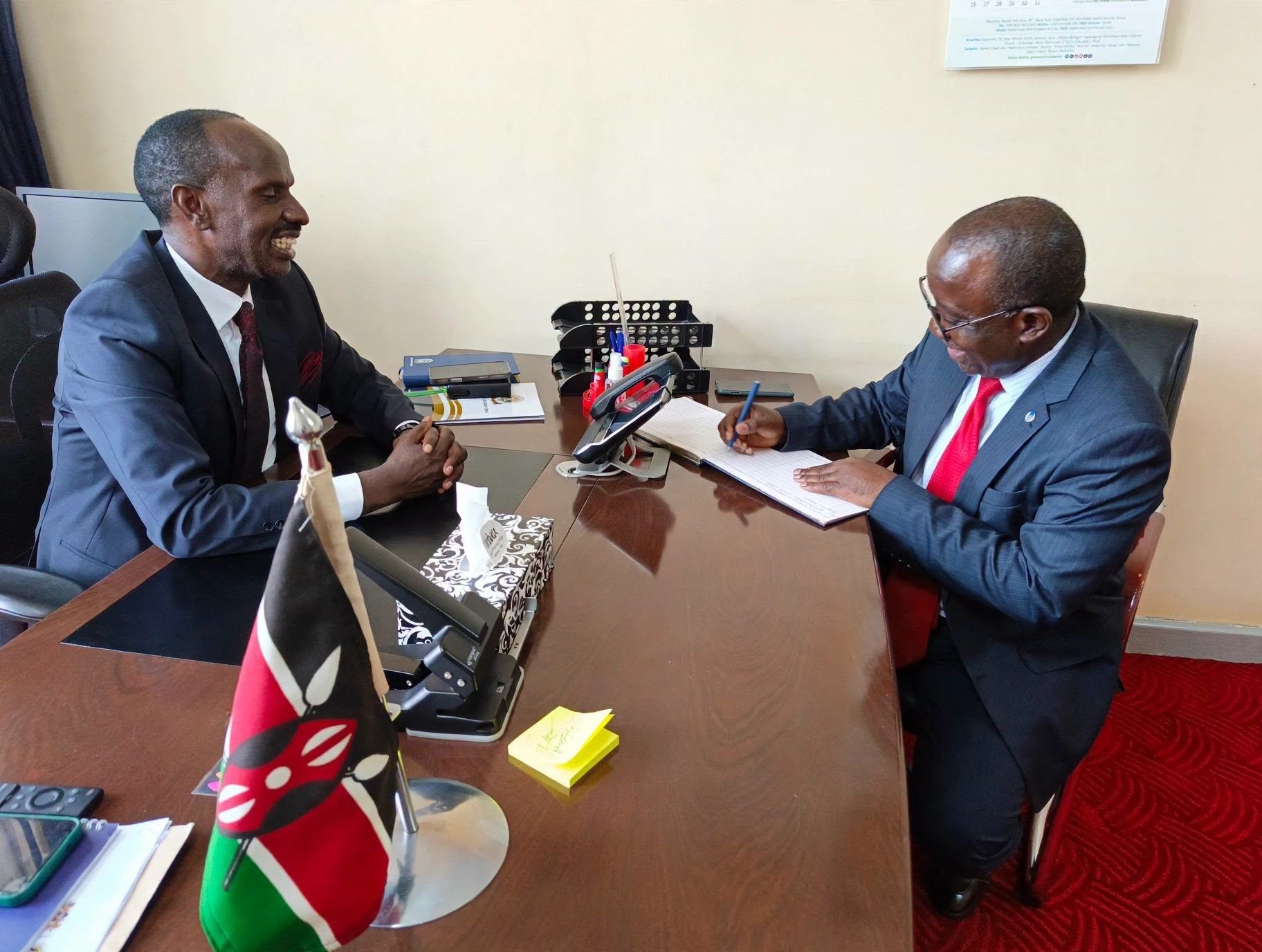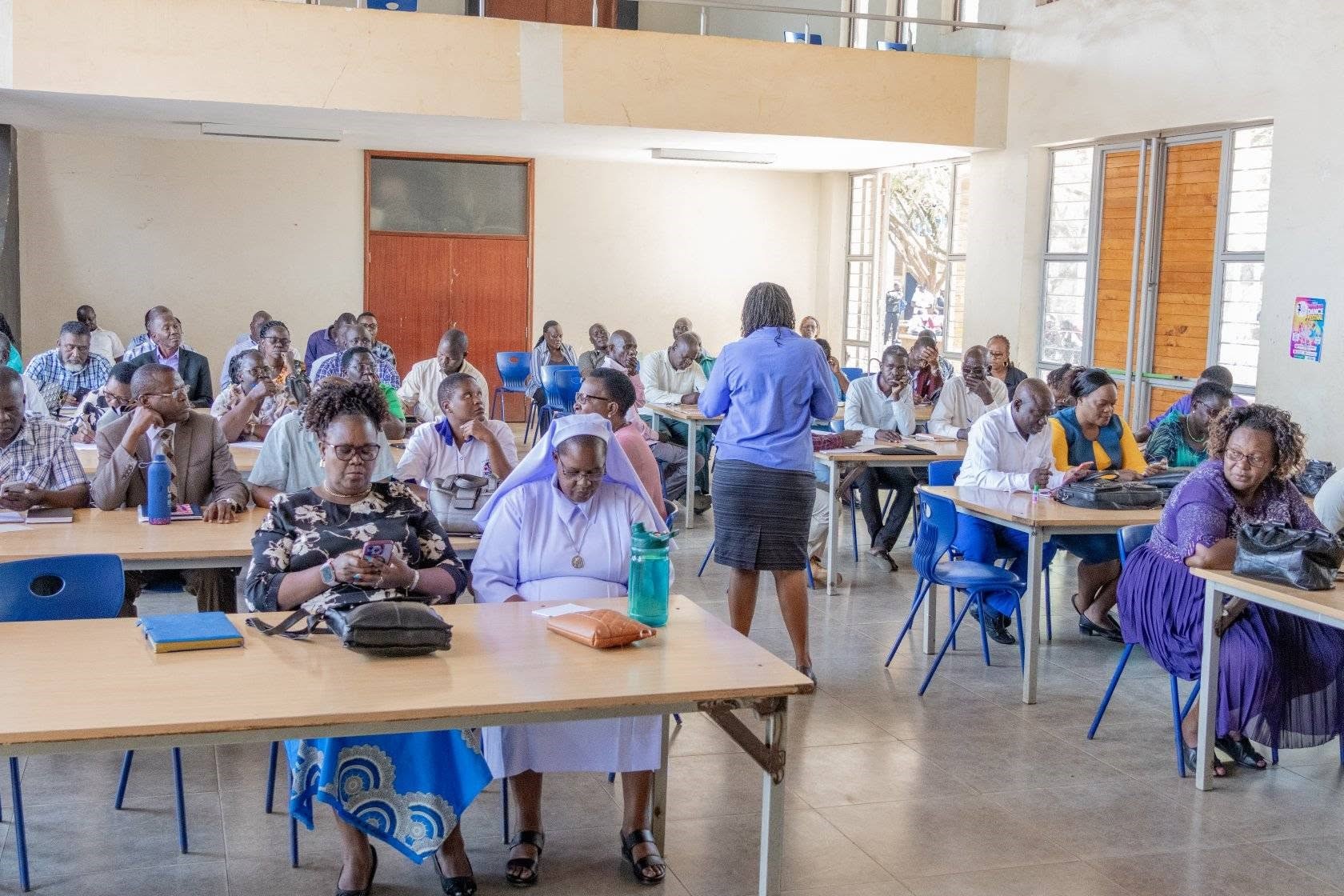
- Astiba Kebongo says final-term staff meetings should provide schools with an opportunity to reflect and realign.
- School leaders and teachers should agree on academic priorities, learner support and examination preparation for the term.
- She argues that shared responsibility, professional dialogue and clear action can help schools finish the year strongly.
A school can boast a flawless timetable, modern facilities and highly qualified educators, yet still fall short of its academic goals if its staff members are not moving in the same direction. This is why the first staff meeting of the final term should be more than a routine administrative gathering. It should provide a strategic pause—a deliberate opportunity to reflect, realign and agree on how the school will finish the academic year.
The final term carries unique weight in Kenyan schools. For candidate classes, the remaining weeks are critical for syllabus completion, revision, assessment and psychological preparation for national examinations. For continuing learners, it is an opportunity to consolidate knowledge, address learning gaps and strengthen academic foundations.
School leaders should therefore approach the opening meeting with a clear purpose. Rather than beginning with a long list of announcements, management should first establish a shared understanding of where the school stands, where it wants to go and what every member of staff must do to close the gap.
Every school has its own realities. One may be grappling with examination performance, another with discipline, while another may be dealing with absenteeism, parental engagement or instructional challenges. Management should identify a few realistic, high-impact priorities and communicate them clearly.
Where examination preparation is the main concern, teachers should understand the roadmap for syllabus coverage, revision, assessment and remedial intervention. These targets should be informed by evidence rather than assumptions. Previous examination performance, continuous assessment records, attendance patterns and departmental reports can provide valuable guidance.
Effective leadership is ultimately about giving people direction and helping them understand their contribution to the wider institutional goal.
Look back before moving forward
The opening meeting should also create room for honest reflection.
What worked last term? What did not work? Which challenges kept recurring? Where did learners struggle most? What concerns did parents raise? Were there weaknesses in communication, discipline, resource allocation or curriculum delivery?
This reflection should not become a blame game. A mature institution treats setbacks as opportunities to learn and improve. Teachers should feel free to raise genuine challenges without fearing that professional honesty will automatically be interpreted as failure.
Management should then distinguish between challenges that require policy adjustments, those requiring additional resources and those that can be addressed through better teamwork and communication.
Preparing candidates for national examinations cannot be left entirely to candidate-class teachers or individual departments. It is a collective institutional responsibility.
Teachers should audit syllabus coverage, identify difficult concepts, analyse learner performance and provide targeted support to those who are falling behind. Heads of department should monitor progress while encouraging teachers to share effective instructional approaches.
Revision should also remain purposeful. The final term should not become an endless cycle of examinations and testing. Assessment should help teachers identify what learners understand, where misconceptions exist and what additional support is required.
The goal is not simply to produce more marks but to improve learning.
Teachers must start smart
Professional responsibility begins with preparation. Teachers should return to school ready to execute rather than waiting for every instruction from management.
Starting smart means reviewing schemes of work, refining lesson plans, preparing teaching materials, analysing learner performance and identifying students who need immediate intervention.
It also means maintaining professional discipline—punctuality, proper lesson preparation, timely marking, constructive feedback and respectful communication with colleagues, learners and parents.
Every teacher should ask: What can I do differently this term to improve the learning outcomes of the children entrusted to my care?
That question shifts the conversation from entitlement to professional ownership.
A staff meeting should never become a monologue in which administrators speak while teachers simply take notes. Effective leadership creates space for professional dialogue.
Teachers should be invited to identify potential obstacles, highlight learners requiring urgent intervention, point out resource gaps and suggest procedures that could be improved.
Those closest to the classroom often see challenges that may not be immediately visible from the administration block. Good leadership therefore involves not only providing answers but also asking the right questions and listening carefully.
When teachers feel heard, they are more likely to take ownership of institutional decisions.
Management must remove obstacles
Schools cannot demand exceptional results while ignoring the conditions under which teachers work.
If essential textbooks, laboratory materials, stationery, printing facilities or instructional support are inadequate, management should determine what can realistically be provided. If the timetable is congested, it should be reviewed. Where communication between administration and departments is weak, clear channels should be established.
Ambitious targets must be accompanied by practical support. Leadership is not simply about setting expectations; it is also about removing unnecessary obstacles that prevent professionals from performing effectively.
Academic achievement and school discipline are closely connected. Absenteeism, lateness, classroom disruption, bullying, substance abuse, inappropriate mobile-phone use and examination malpractice can consume valuable learning time.
The opening meeting should therefore establish clear expectations regarding student behaviour and staff responses.
Teachers should know which matters can be handled at classroom or departmental level, which require administrative intervention and where guidance and counselling should be incorporated. Most importantly, agreed rules should be applied consistently.
Learners become confused when standards differ dramatically from one classroom to another. Consistency creates predictability, fairness and accountability.
Make the meeting action-oriented
A productive staff meeting should end with decisions, not merely minutes.
The discussion should answer five fundamental questions:
Where are we now?
Where do we need to go?
What challenges could prevent us from getting there?
What will each person do?
What support will management provide?
Every major decision should have a responsible person and a realistic timeline. A lengthy set of minutes has little value if nobody knows what action should follow once the meeting ends.
The real test of a meeting is what changes in the classroom after it is over.
The final term is an intense period. Teachers may be preparing lessons, marking scripts, invigilating examinations, counselling learners and handling administrative responsibilities simultaneously.
School leaders should therefore combine high expectations with genuine encouragement. Recognition of teachers’ contributions can strengthen morale and foster goodwill.
At the same time, teachers should remember that professionalism thrives on mutual support. A strong staffroom is not one without disagreement; it is one where differences are handled respectfully, challenges are addressed collectively and everyone remains focused on the welfare and success of learners.
Faith and shared purpose
For Christian institutions, the beginning of a demanding term can also be an opportunity to seek God’s wisdom and reaffirm the importance of order and teamwork.
The Bible reminds us in 1 Corinthians 14:40: “Let all things be done decently and in order.”
Similarly, Ecclesiastes 4:9 states: “Two are better than one; because they have a good reward for their labour.”
These verses capture an important truth about education: no individual can carry the entire weight of a school. The principal needs teachers, teachers need one another, learners depend on educators and parents depend on the school.
When these relationships are built on trust, respect and shared responsibility, the entire school community benefits.
The final term should not begin with anxiety, blame or defensiveness. It should begin with clarity, composure and shared purpose.
School leaders must provide direction. Teachers must take ownership of learning outcomes. Departments must collaborate. Learners must understand expectations, while parents should remain engaged partners in the education of their children.
Ultimately, the success of a resumption meeting should not be measured by the number of announcements made or the length of the minutes. It should be measured by what changes afterwards.
A strong school does not enter the final term armed with a timetable alone. It enters with a shared vision, honest conversation, professional commitment and a determination to finish well.
READ ALSO: Teachers’ unions issue seven-day ultimatum over killing of Samburu JSS teacher
In education, the final term is not merely the closing chapter of the academic year. It is the moment when preparation must become performance, intention must become action and teamwork must translate into results.
By Astiba Kebongo
Get more stories from our website: Education News
To write to us or offer feedback, you can reach us at: editor@educationnews.co.ke
You can also follow our social media pages on Twitter: Education News KE and Facebook: Education News Newspaper for timely updates.
>>> Click here to stay up-to-date with trending regional stories