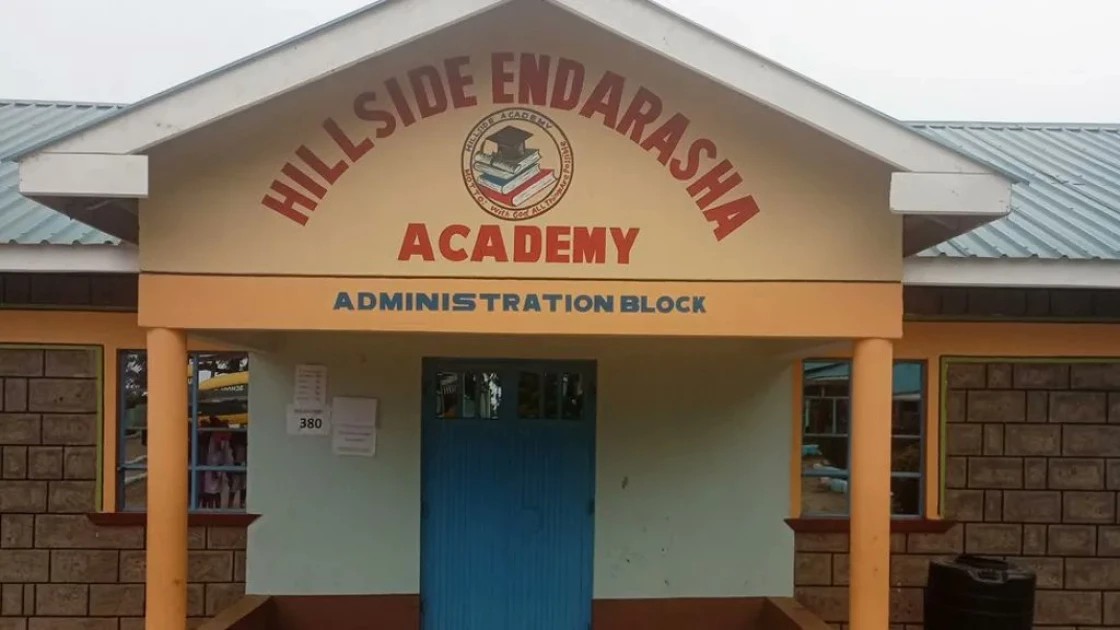
- EPRA has uncovered severe electrical safety violations at Hillside Endarasha Academy following the fatal dormitory fire that killed 21 boys.
- Investigators have revealed undersized cables, faulty earthing, unlicensed extensions, and compromised safety systems that have endangered learners.
- KPLC officials have testified that grid infrastructure has remained intact, while the inquest has continued to examine the exact cause of the September 2024 blaze.
Severe electrical safety violations, undersized power cables, and unapproved electrical extensions plagued Hillside Endarasha Academy before a catastrophic dormitory fire claimed the lives of 21 boys in September 2024, an investigation by energy regulators has revealed.
Testifying before an inquest into the tragedy, Energy and Petroleum Regulatory Authority (EPRA) Electrical Engineer Allan Mogoi told the court that the school’s overall power distribution system fell far short of mandatory safety standards for public institutions.
According to EPRA’s findings, while the school’s initial power installation was completed by a licensed contractor, subsequent electrical extensions to newer structures were carried out by an unlicensed contractor. EPRA has recommended holding the school’s management accountable for failing to engage licensed professionals for the additional works.
Investigators uncovered widespread physical and technical deficiencies across the campus infrastructure. Sub-mains wires supplying school blocks measured just 4 square millimetres, failing EPRA’s 6 square millimetre minimum standard.
“The said dorm was drawing its supply from the kitchen using a 2.5 square millimetre cable. When supplying power to a structure like that, the cable should be 4 square millimetres or above,” said Mogoi.
The installation in the kitchen area was particularly hazardous. Wires running through the room were covered in soot, lacked protective conduits, contained unrecommended joints, and featured unlabelled, unarmoured underground lines exposed to open areas.
Safety mechanisms were similarly compromised. Only four school blocks had independent earthing connections, with two found to be broken or inaccessible, leaving the dormitories entirely without earth rods to protect against shocks or voltage spikes.
Mogoi testified that the cables running through the kitchen had a lot of joints and were not encased in conduits, which is not advisable under safety regulations.
“The cable coming from the store was running underground to the kitchen; it was not armoured as we require, and it was bursting through an open area. The route was not labelled,” he added.
ALSO READ:
Parents raise concerns over welfare and learning conditions at Kenyatta High School-Mwatate
The investigation further revealed that the school’s electrical setup relied on an oversized, improperly graded circuit breaker system that would fail to trip effectively during a power fault.
Additionally, despite expanding its campus footprint over several years, Hillside Endarasha Academy never applied to the Kenya Power and Lighting Company (KPLC) to upgrade its electricity load capacity, placing continuous strain on the initial single-phase transformer setup.
“Because if you add more load, you are going to put more stress on the initial installation done by KPLC. So KPLC needs to come, assess the load and determine whether they need to upgrade the system or whether the existing system is sufficient,” Mogoi explained.
Despite uncovering extensive non-compliance, EPRA informed the court that it could not definitively identify the precise spark that ignited the inferno due to extreme fire damage inside the dormitory.
Mogoi noted that investigators did not find direct evidence confirming an electrical fault occurred before the burn, as parts of the system inside the structure were consumed beyond recognition.
The regulator ruled out the school’s solar power backup system as a factor, confirming no defects were found in the main solar installation.
KPLC Mount Kenya Regional Manager Engineer Mutegi Mbae also testified that grid infrastructure, including the transformer, supply cables, electricity meter, and fuses, remained intact after the blaze, with neighbouring consumers experiencing no power interruptions.
ALSO READ: Some private schools promise heaven but deliver a pro max of hell
“When we visited the site, we found KPLC installations intact. Upon inspection, we did not find any fault from the transformer to the power supply line. From our surveillance, there was no indication of fault, overload or power surge before or on the day of the incident,” Mbae said.
The inquest continues to examine the exact sequence of events on the night of September 5, 2024, when the blaze broke out between 10 p.m. and 11 p.m., just two days into the Third Term.
Earlier court testimony confirmed that all 21 victims were positively identified through DNA analysis, and solar technician Peter Ndumia confirmed that the school’s backup solar unit was switched off when the fire started.
The hearing resumes with testimonies from three school teachers.
By Frank Mugwe
You can also follow our social media pages on Twitter: Education News KE and Facebook: Education News Newspaper for timely updates.
>>> Click here to stay up-to-date with trending regional stories
>>> Click here to read more informed opinions on the country’s education landscape