- The Government has proposed a KSh100 billion tertiary funding plan expected to grow to KSh230 billion.
- The writer has argued that the plan shifts financial risk onto parents, students and future taxpayers rather than the State.
- Yabesh has called on the Government to publish the true costs of the plan and clarify how much it is genuinely prepared to invest.
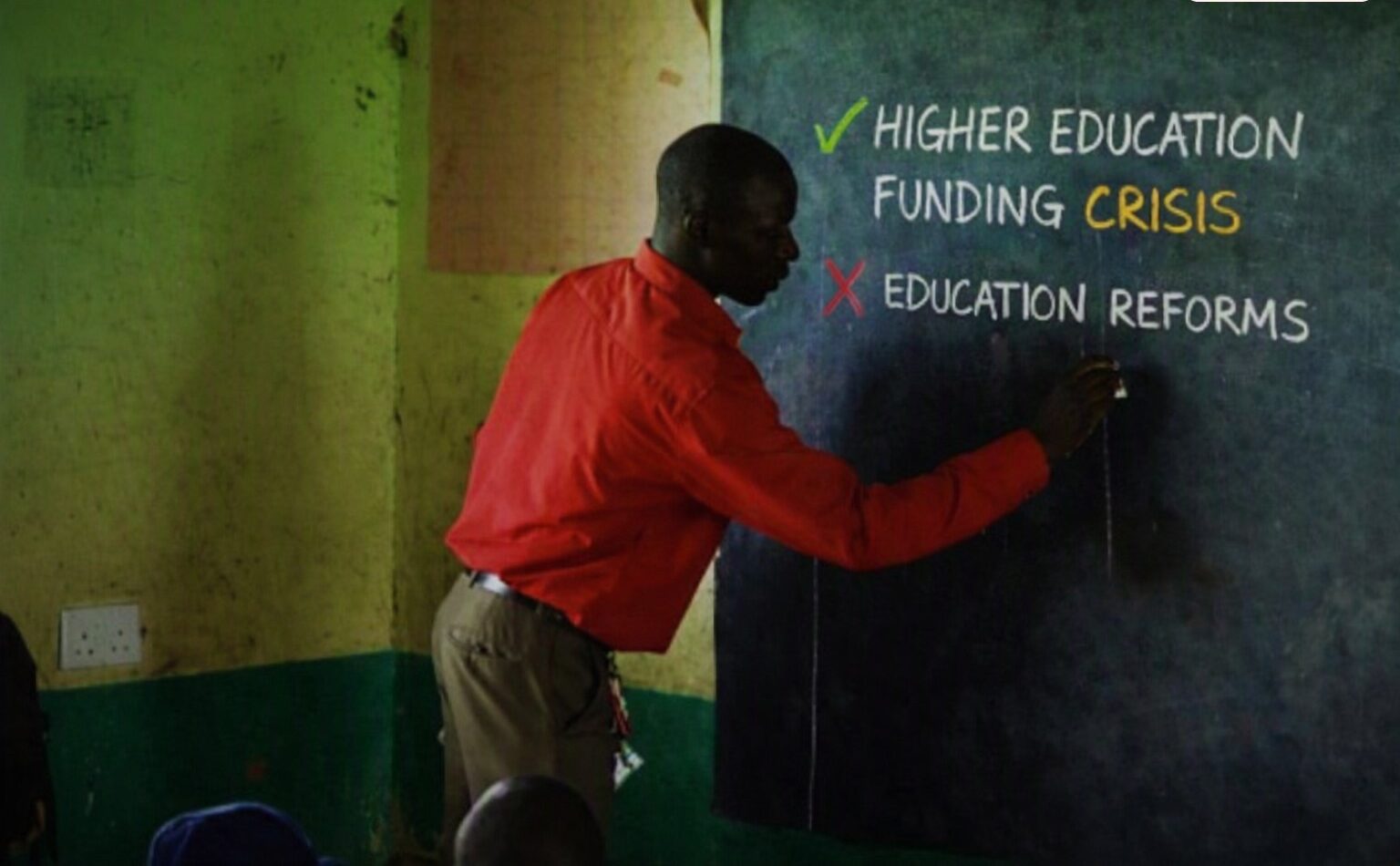
Kenya’s education crisis has reached the stage where the Government can announce a KSh100 billion funding plan and still leave one obvious question unanswered: who is really paying for it? The Ministry of Education says the proposed Tertiary Education Placement and Funding Bill will help achieve 100 per cent transition to institutions of higher learning. It sounds noble and ambitious, but it also sounds suspiciously like another Government promise being financed by somebody else. The proposed funding model is expected to draw from government grants, capital-market borrowing, parents’ savings, student-loan repayments and soft loans, as the cost of financing higher education climbs towards KSh230 billion. That is not a funding miracle. It is a warning light.
Borrowing Cannot Solve Kenya’s Education Crisis
For years, Kenya has expanded access to education without building a sustainable financing model around it, and now the bill is coming due. Universities, students and parents are struggling, the Higher Education Loans Board is under pressure, and institutions are owed money. The Government’s response appears to be another complicated financial architecture designed to keep the system moving for another few years — borrowing here, collecting there, asking parents to save, recovering student loans, adding grants and soft loans, then calling it reform. But rearranging the sources of money does not solve the fundamental problem: there is not enough money to finance the ambitions the Government keeps announcing.
The Government’s plan also relies on borrowing through the capital markets, which should make every Kenyan uncomfortable. Education is an investment, but borrowing indefinitely to finance recurring expenditure is not a development strategy; it is postponement. Today’s student becomes tomorrow’s taxpayer, and tomorrow’s taxpayer inherits today’s debt, while today’s Government gets to announce another impressive programme. This is how countries end up spending more money servicing debt than investing in the people who are supposed to build the economy. The Government should therefore publish the full financing model, showing how much will come from taxpayers, borrowing, parents, student repayments and development partners, and what happens when loan repayments fall below projections. Kenyans deserve numbers, not PowerPoint optimism.
ALSO READ: Should university lecturers retire like other public servants? UASU’s UoN warning raises questions
100 Per Cent Transition Is A Slogan, Not A Strategy
The obsession with 100 per cent transition into tertiary institutions deserves serious scrutiny. Transition to what — universities, TVETs, teacher-training colleges, other technical institutions? And, more importantly, transition into what kind of economy? Kenya cannot simply push every young person through the education conveyor belt and congratulate itself on access. A certificate without a job is not empowerment, a degree financed by debt and followed by unemployment is not opportunity, and a diploma that produces skills the economy cannot absorb is not development. The Government should stop measuring success by how many young people enter institutions and start measuring it by what happens to them after graduation: how many get jobs, how many create businesses, how many acquire usable technical skills, how many repay their loans, and how many are trapped in debt. Those are the uncomfortable numbers, and those are the numbers that matter.
Parents Are Not An ATM
The proposal to draw from parents’ savings is perhaps the most revealing part of this debate. For years, parents have carried Kenya’s education system on their backs, paying school fees, buying uniforms and books, paying transport, contributing to infrastructure, paying university accommodation, borrowing from Sacco societies, selling livestock, raiding savings and sacrificing retirement security. Now they are being invited to finance tertiary education too. At some point, somebody in Government must ask how much more a Kenyan household can absorb. Families are already battling food prices, rent, healthcare, transport and unemployment; the middle class is being squeezed, and the poor are being pushed further into debt. Yet the solution increasingly seems to be to ask families to contribute more. That is not social protection. That is cost shifting.
The Student Loan Question Nobody Wants To Confront
The Government expects student loan repayments to help finance the system, but graduates cannot repay loans with certificates — they repay them with salaries, and Kenya’s graduate employment market is already under enormous pressure. If a graduate spends years without stable employment, what exactly is the Government recovering — a debt, a penalty, or simply another statistic? The Government must be careful not to create a vicious cycle in which young people borrow to study, graduate into unemployment, accumulate debt and then find their economic future constrained by that same debt. That is not financing education. It is financing frustration.
CS Ogamba’s education gamble: Is Kenya finally redefining education financing beyond school fees?
Access Without Quality Is Another National Fraud
There is also a dangerous temptation to celebrate enrolment numbers while ignoring what happens inside institutions. Universities need lecturers, laboratories, equipment, research funding, libraries, digital infrastructure, accommodation, mental-health support, industry partnerships and, above all, academic programmes that match the economy. If Government puts more students into institutions without adequately financing those institutions, it will produce a larger education system, not necessarily a better one. Kenya should not pursue 100 per cent transition at the expense of 100 per cent quality.
The Government Needs To Tell Kenyans The Truth
There is nothing wrong with reforming tertiary education financing. There is everything wrong with selling a financing crisis as a reform success. The Government must be honest: higher education costs money, good universities cost money, technical training costs money, research costs money, and quality education cannot be delivered on political slogans. If the country wants universal access, then Parliament must determine how much the State is genuinely prepared to invest; not how much it can borrow, not how much it can squeeze from parents, and not how much it can recover from graduates. How much is the Kenyan State prepared to put on the table? That is the real question.
The danger of the proposed model is that it could quietly transform higher education from a public investment into a family financing exercise, where the Government provides part of the money, parents provide another part, students borrow the balance, banks and capital markets fill another gap, and graduates repay — while everybody congratulates themselves that access has expanded. But who carries the risk? The family, the student, the graduate and the taxpayer carry it; everyone except the political promise. That is not sustainable.
ALSO READ: Treasury, not TSC, holds the key to Kenya’s teacher crisis
Kenya Needs A Funding Revolution, Not Financial Gymnastics
The Government should go back to basics: fund universities transparently, publish the true cost of educating a student, protect poor and vulnerable learners, strengthen TVETs without treating them as dumping grounds for students who cannot access university, tie programmes to labour-market demand, make student financing affordable and realistic, crack down on wastage in higher education, and stop pretending that every problem can be solved by creating another fund. A new fund does not create new money. A new bill does not create new money. Borrowing does not create free money. Someone eventually pays — usually the Kenyan taxpayer, the parent, the student or the next generation.
The real test for Government is not 100 per cent transition, but whether Kenya can produce a generation that is educated, skilled, employed and not buried under debt. That requires more than moving young people from secondary school into tertiary institutions; it requires an economy capable of absorbing them. Otherwise, Kenya will achieve the Government’s cherished 100 per cent transition target only to discover that it has created 100 per cent transition into unemployment and debt. That would not be a triumph. It would be an expensive national illusion.
The Government should therefore stop selling Kenyans a bigger education pipeline. It should tell Kenyans who will pay for it, how much it will cost, what happens when the money runs out, and what kind of jobs await the young people the country is borrowing billions to educate, because education is too important to become another Government accounting trick, and Kenya’s children are too valuable to be turned into entries on a balance sheet.
By Yabesh Onwong’a
You can also follow our social media pages on Twitter: Education News KE and Facebook: Education News Newspaper for timely updates.
>>> Click here to stay up-to-date with trending regional stories
>>> Click here to read more informed opinions on the country’s education landscape